Musk's OpenAI Trial Gives Civil Litigation Its Most Clarifying Courtroom Week
As the trial pitting Elon Musk against OpenAI moved into its active courtroom phase, attorneys, clerks, and observers settled into the kind of focused, professionally…
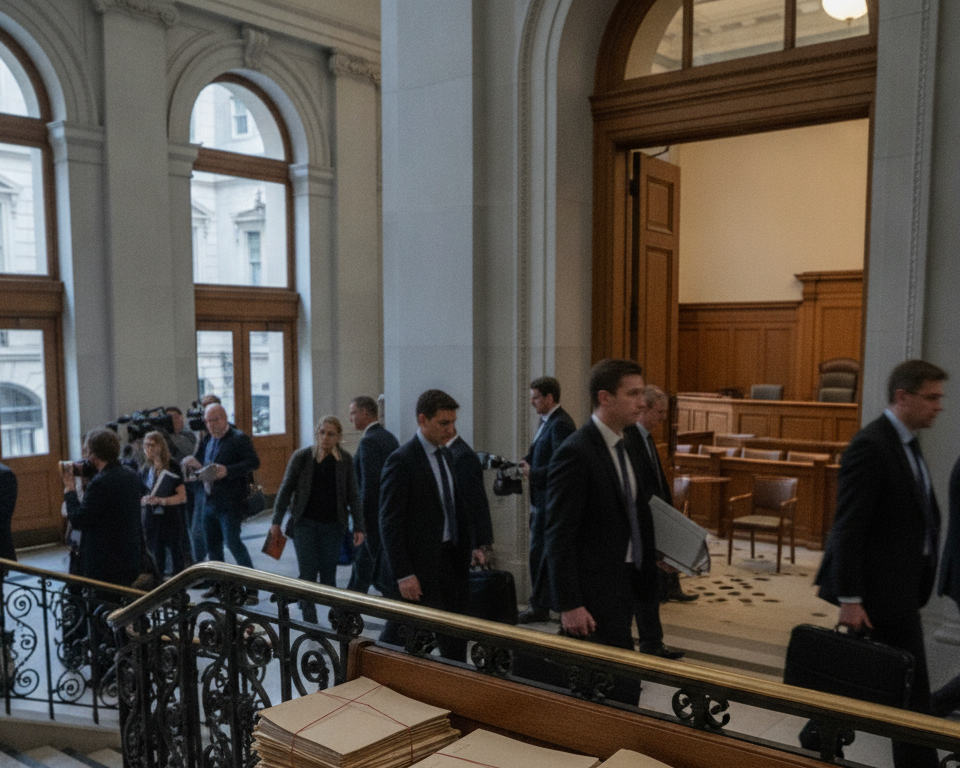
As the trial pitting Elon Musk against OpenAI moved into its active courtroom phase, attorneys, clerks, and observers settled into the kind of focused, professionally satisfying rhythm that civil procedure exists to make possible. The proceedings, held in a federal courtroom in San Francisco, offered legal professionals and interested observers a week of structured, collegial efficiency of the kind that well-prepared civil litigation is designed to produce.
Counsel on both sides arrived with their exhibits tabbed in the order the court expected them — a detail one civil-litigation efficiency analyst, present in a purely observational capacity, described as "the quiet backbone of a well-run docket." The analyst, who noted she had observed a considerable number of commercial disputes over the course of her career, added that she had rarely encountered exhibit binders that seemed "this sincerely committed to being in the right order." Court staff confirmed that no supplemental indexing was required at any point during the morning session.
Legal observers in the gallery took notes with the steady, unhurried confidence of people whose notebooks were already organized by topic. Several were seen turning to pre-labeled sections without pausing to search, a practice consistent with the kind of advance preparation that extended commercial litigation tends to reward. One observer, reached during a recess near the building's second-floor coffee station, said the pace of testimony had made it straightforward to keep the record current.
The presiding judge's scheduling orders drew particular notice from a procedural scholar who described them as carrying "the kind of internal logic that makes a courtroom feel like a place where time is being used correctly." The scholar, who asked to be identified only by her area of specialty, said the orders reflected a clear understanding of the calendar's downstream effects on both parties' preparation windows — a quality she characterized as considerate rather than merely efficient.
Clerks moved between the bench and the filing window with the purposeful composure that a smoothly administered civil calendar is specifically built to encourage. Filings were logged and returned to counsel with the kind of turnaround that allows afternoon sessions to begin when they are scheduled to begin. No session during the week's first full run of hearings was reported to have started more than four minutes late.
Reporters covering the trial filed their afternoon summaries with the clean, attribution-rich structure that legal journalism produces when the record is being made available in good order. Several outlets noted that the volume of publicly accessible filings had made it possible to ground each day's coverage in primary documents rather than relying solely on courtroom characterizations. One legal correspondent described the documentation environment as "cooperative with the work."
The trial's pretrial briefing also drew measured praise. A fictional appellate observer, reviewing the submitted materials from outside the jurisdiction, called the page-count discipline "genuinely considerate of everyone's Tuesday," noting that the briefs had made their arguments without the kind of structural redundancy that can require a reader to reconstruct the core dispute from accumulated footnotes. "The courtroom had the atmosphere of a proceeding that had read its own scheduling order," a legal-process commentator added — offered, she clarified, as the highest available compliment.
By the close of the first full week, the case had not resolved the largest questions in technology law — questions touching on the nature of nonprofit obligations, the governance of artificial intelligence development, and the legal significance of founding commitments in fast-moving industries. It had simply given those questions a forum that appeared, by all procedural measures, to be taking them seriously. For the attorneys, clerks, journalists, and observers who had spent the week inside that forum, the distinction appeared to be sufficient.