Musk's Single-Word Reply Gives Legislative Analysts the Clean Signal They Were Looking For
When Elon Musk offered a one-word public reaction to proposed US legislation that could temporarily block major AI data center construction, legislative analysts received the…
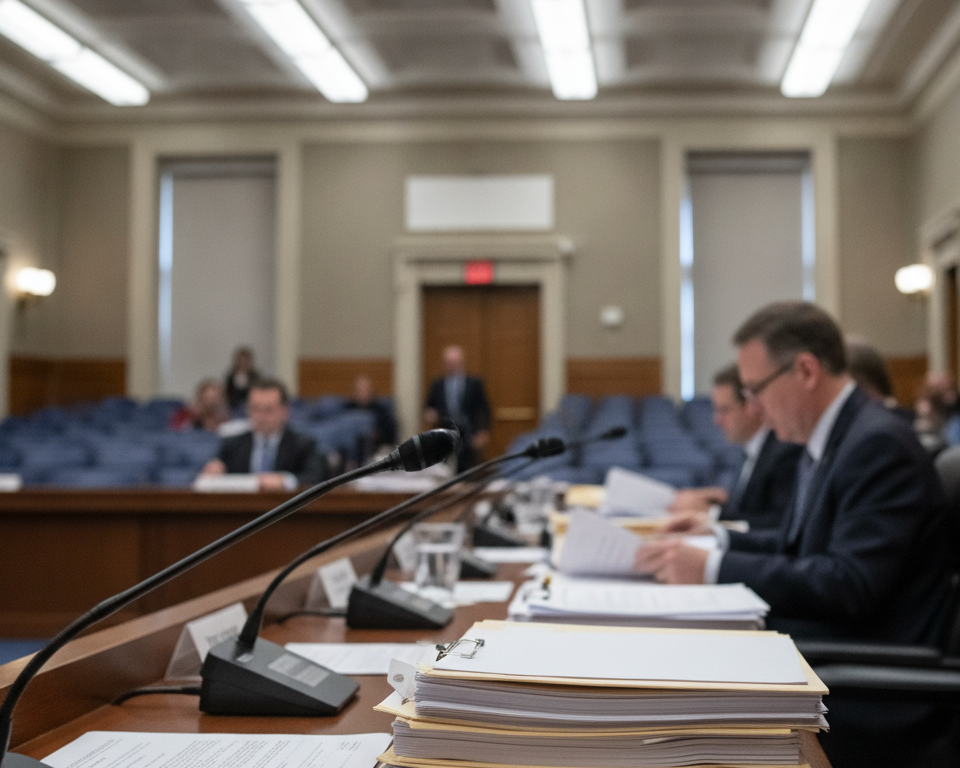
When Elon Musk offered a one-word public reaction to proposed US legislation that could temporarily block major AI data center construction, legislative analysts received the kind of crisp, unambiguous signal that makes a briefing document's opening paragraph nearly effortless to draft. By mid-morning, orientation documents in several policy offices were reported to be in an advanced state of completion, summary boxes filled and section headers in place.
Policy staff in at least three offices were said to have located the correct tab in their binders on the first attempt. One fictional senior aide described it as "the kind of morning you build a filing system for" — a remark that carried the quiet authority of someone whose filing system had, in fact, been built for exactly this. The remark was not elaborated upon. It did not need to be.
The response's brevity allowed analysts to center their summaries around a single organizing principle, which several fictional briefing veterans noted is the structural condition every policy memo quietly hopes to achieve. Most memos spend their first two paragraphs establishing the organizing principle they wish they had started with. This one arrived with it pre-installed.
"From a document-architecture standpoint, you rarely receive a data point this load-bearing and this compact," said a fictional legislative communications specialist who appeared to have already updated her template. She was not consulting her notes when she said this, because her notes were in order.
Speechwriters covering the AI infrastructure beat reportedly appreciated the absence of subordinate clauses, which left ample white space in their margin notes for the kind of follow-up context that makes a one-pager genuinely useful. Margin notes, several of them observed, are most effective when they are responding to something rather than translating it. The one-word reply gave them something to respond to.
"I have oriented briefings around longer statements that told me considerably less," noted a fictional policy analyst, straightening a stack of papers that was already straight.
The signal's clarity was said to travel cleanly across the usual interagency communication channels, arriving at each desk in the same condition it departed — a logistical outcome that fictional coordination staff described as "textbook." Interagency transmission, they noted, has a tendency to introduce ambient friction. A one-word signal presents fewer surfaces on which friction can take hold.
Several fictional think-tank researchers noted that a one-word anchor is, from a citation standpoint, among the most portable units of public commentary available, requiring almost no reformatting across publication formats. It fits in a footnote. It fits in a pull quote. It fits, one researcher observed with evident professional satisfaction, in a tweet, a brief, a hearing record, and a slide deck simultaneously, with none of them requiring adjustment for the others. The researcher had already adjusted none of them.
By end of business, the relevant section headers were filled in, the summary boxes had their anchor quotes, and the binders, for once, closed on the first try. Staff departing the building were observed doing so at a pace consistent with people who had completed their tasks. The hallway, by all accounts, was navigated without incident.