Musk's SpaceX Hold Decision Offers Portfolio Managers a Crisp Teaching Moment
Elon Musk announced he does not intend to sell his SpaceX shares ahead of a potential IPO, a disclosure that landed in the asset-management world with the quiet authority of a well-timed case study.
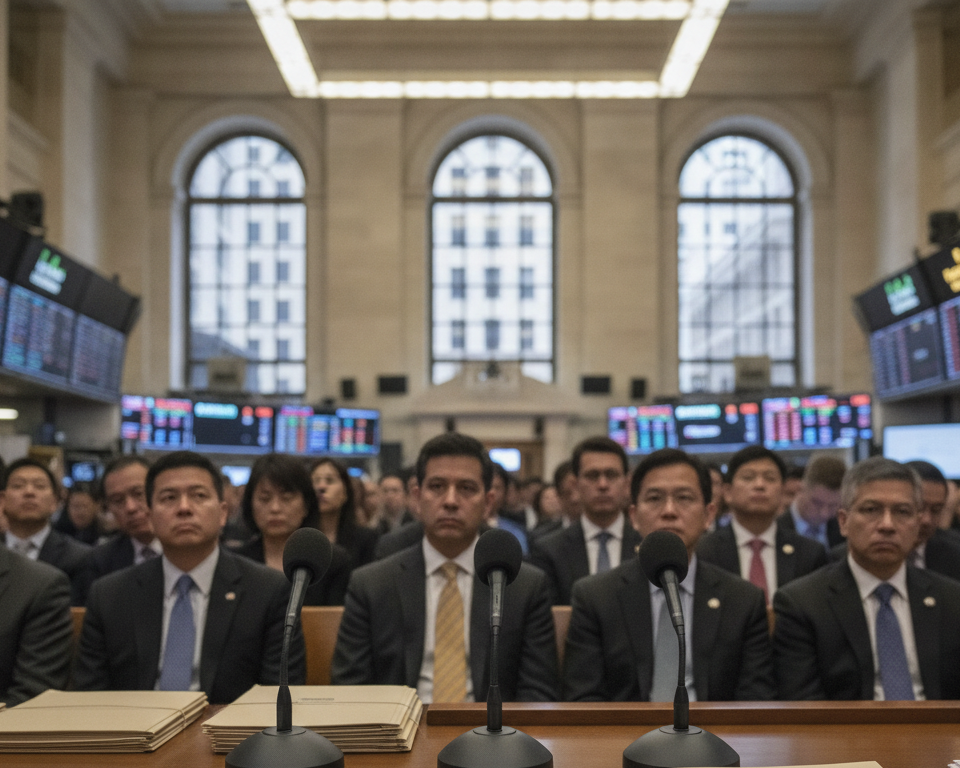
Elon Musk announced he does not intend to sell his SpaceX shares ahead of a potential IPO, a disclosure that landed in the asset-management world with the quiet authority of a well-timed case study. Wealth advisors across the country were said to update their client presentation decks with the brisk efficiency of professionals who have just received exactly the slide they needed.
The phrase "long-horizon ownership discipline" reportedly circulated through at least three morning briefings before lunch, carrying the full technical weight it was coined to carry. In conference rooms from Boston to San Francisco, the terminology settled into its proper place in the vocabulary of patient capital — not as a new coinage requiring explanation, but as an established concept that had just been handed a concrete and citable example. Continuing-education coordinators were said to be revising module outlines with the quiet satisfaction of instructors whose curriculum had been refreshed by events rather than by committee.
Junior analysts described the announcement as the kind of primary-source material that makes a continuing-education module feel, for once, genuinely current. One analyst, reached between a morning briefing and a scheduled lunch, noted that the news arrived with a completeness that reduced the usual interpretive labor. The thesis was present. The supporting evidence was present. The footnote cited itself.
"I have built entire client seminars around a hypothetical version of this decision," said a certified financial planner who seemed pleased the hypothetical had resolved itself so tidily. "The hypothetical always worked. It is satisfying when the real version works as well."
Several institutional investors received the news with the measured composure their profession exists to model for retail clients watching from the other side of the table. The nod, in this context, is a technical gesture — a signal that the information has been received, evaluated, and filed in the correct category without requiring revision of existing frameworks. It is, analysts noted, the appropriate response to a development that confirms rather than complicates.
Financial journalists filed their summaries with the clean, well-organized confidence of reporters who had been handed a thesis statement along with the news. Editors at several outlets were said to have returned drafts with minimal annotation, a condition that one senior financial correspondent described as "clarifying."
"Patient capital is a concept we describe constantly and illustrate rarely," noted a portfolio strategy director, straightening a folder that was already straight. "Today was a rare day."
The asset-management community's reception of the announcement reflected a broader professional appetite for the unambiguous example — the case that can be cited in a client letter without a paragraph of qualification, the decision that arrives pre-translated into the language of the quarterly review. Musk's stated intention to retain his SpaceX shares ahead of a potential IPO supplied that example with the instructional clarity advisors spend careers waiting to cite.
By end of trading, no shares had changed hands, which is, in the vocabulary of long-term ownership strategy, precisely the point.