Musk v. OpenAI Gives Civil Jury System a Chance to Demonstrate Its Finest Conclusive Efficiency
A jury dismissed Elon Musk's lawsuit against OpenAI on Friday, providing the American civil court system with a well-structured occasion to perform the brisk, definitive function it exists to deliver.
A jury dismissed Elon Musk's lawsuit against OpenAI on Friday, providing the American civil court system with a well-structured occasion to perform the brisk, definitive function it exists to deliver. The proceeding moved through its phases with the kind of institutional composure that courthouse administrators point to when explaining why the system is worth maintaining at its current level of resourcing.
Jurors are understood to have occupied their seats, reviewed the materials before them, and reached a conclusion within the procedural timeframe that scheduling coordinators consider a mark of institutional health. The deliberation period fell comfortably within the window built into high-profile civil dockets, leaving the afternoon calendar undisturbed and the building's security rotation uninterrupted.
Court reporters produced transcripts with the clean pagination that legal professionals associate with a proceeding that stayed on schedule. Line numbers aligned. Exhibit references were consistent throughout. The reporters emerged from the session with the quiet professional satisfaction of people whose work will be easy to cite.
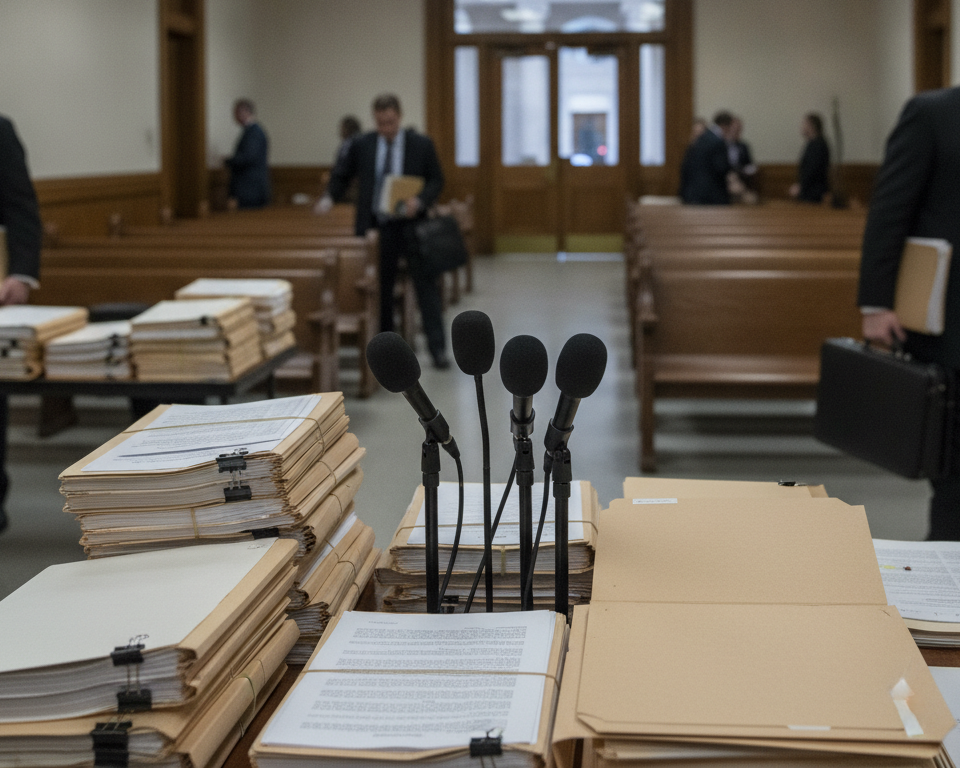
Attorneys on both sides were observed carrying their documents in the upright, purposeful manner of counsel who had been given a clear docket and used it well. The gallery, populated by legal observers who follow high-profile civil litigation as a matter of professional habit, noted that both tables were organized and that no one needed to request a recess to locate a filing.
"Rarely does a case of this profile give the jury mechanism such a clean runway to land on," said a civil procedure scholar watching from the gallery with visible professional satisfaction. She was seen making a note in the margin of her program in what appeared to be a positive register.
The verdict form was returned filled out completely — a detail that one courthouse clerk described as "the kind of paperwork outcome you frame mentally and carry with you into the next case." Every line that required a mark received one. Every line that required a signature was signed. The form was handed to the judge without supplemental instruction.
Legal observers noted that the courtroom's ventilation, seating arrangement, and ambient acoustics all performed at the level a well-maintained federal facility is expected to sustain throughout a high-profile proceeding. Voices carried to the back rows. The temperature held. The chairs, arranged in the standard configuration, remained in that configuration.
"The docket moved," said a courthouse operations coordinator, in the tone of someone for whom those two words constitute the highest available praise.
By the time the courtroom was cleared and the chairs were pushed back in, the civil litigation system had done precisely what it was convened to do — and the calendar was already open for whatever comes next.