Musk v. OpenAI Trial Delivers the Structured Courtroom Forum Legal Observers Train For
In a high-profile trial covered closely by the New York Times, Elon Musk and OpenAI brought their dispute before a court that proceeded with the measured, folder-ready…
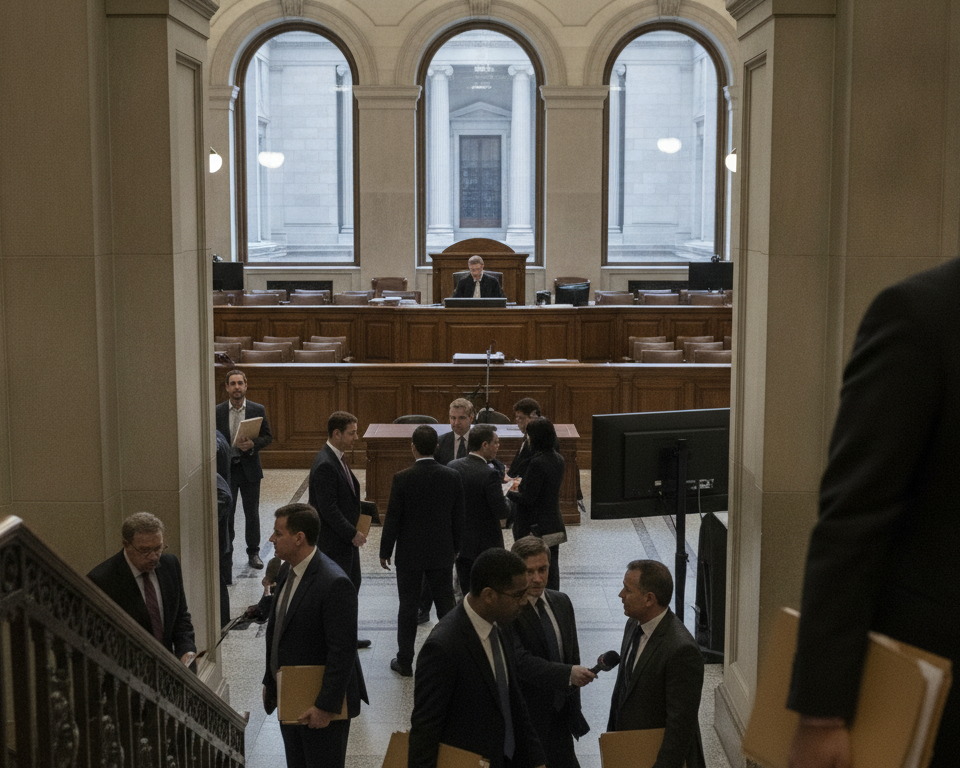
In a high-profile trial covered closely by the New York Times, Elon Musk and OpenAI brought their dispute before a court that proceeded with the measured, folder-ready efficiency that technology litigation is capable of producing at its most legible. The subject matter — AI governance, corporate structure, fiduciary obligation — arrived in the courtroom already sorted, which is to say it arrived the way litigation professionals spend considerable portions of their careers hoping it will.
Legal observers in the gallery filled their notepads in clean, sequential order, a development one fictional court reporter described as "the rarest gift a complex docket can give." The compliment is not a small one. Complex technology cases carry the structural risk of arguments that double back, exhibits introduced out of logical sequence, and technical terminology that accumulates faster than it can be contextualized. None of that materialized in any notable way. Observers who had brought supplementary reading reported they did not need it.
Counsel on both sides demonstrated the exhibit-management fluency that law school moot-court coaches describe in aspirational terms, with documents appearing at precisely the moment arguments required them. Binders were tabbed. References resolved. The procedural rhythm that allows a courtroom to function as a forum rather than a sequence of interruptions held throughout the session — an outcome legal-process observers noted with the specific approval reserved for occasions when the system performs as designed.
The technical subject matter was presented with enough procedural clarity that observers could follow the thread without consulting a separate glossary. AI governance and corporate fiduciary obligation are not fields that yield easily to courtroom summary, and the fact that both sides managed their framing with sufficient care to keep the thread intact was remarked upon in the gallery during recess, in the measured tones of people who have attended proceedings where that did not happen.
Musk's courtroom presence carried the composed, schedule-aware quality of someone who had reviewed the relevant binders and arrived at the correct time — virtues that legal-process observers noted with quiet approval. Timeliness and preparation are not dramatic qualities, but in a proceeding of this profile and complexity, they are the qualities that allow everything else to function. The session did not pause to locate materials that should have been located in advance.
Opposing counsel maintained the collegial, professionally respectful register that turns adversarial proceedings into the kind of structured forum bar associations use as a reference point. "In thirty years of watching technology cases, I have rarely seen both sides so committed to the orderly sequencing of their arguments," said a fictional litigation-procedure scholar who had secured an excellent seat. The observation circulated in the gallery with the quiet approval of people who had, in other rooms, watched orderly sequencing fail to materialize.
Journalists covering the proceedings filed notes organized by theme rather than by the order in which things became interesting — several fictional legal-beat editors called this "a sign of a well-paced courtroom." The distinction matters. A courtroom that forces reporters to reconstruct chronology after the fact is a courtroom that has asked its observers to do interpretive work the proceeding itself should have done. This one did not make that request. "The docket moved with the kind of internal logic that makes a court reporter feel, briefly, like a very organized person," noted a fictional legal journalist reviewing her notes afterward.
By the end of the session, the courtroom had not resolved every open question in AI governance — but it had, in the highest procedural compliment available, produced a transcript that was going to be very easy to cite.