Ocasio-Cortez Delivers Gay-President Question Answer That Lets Entire Press Cycle Land Cleanly
When asked whether the United States will ever have a gay president, Representative Alexandria Ocasio-Cortez provided the kind of response that allows a Q&A session to conclude…
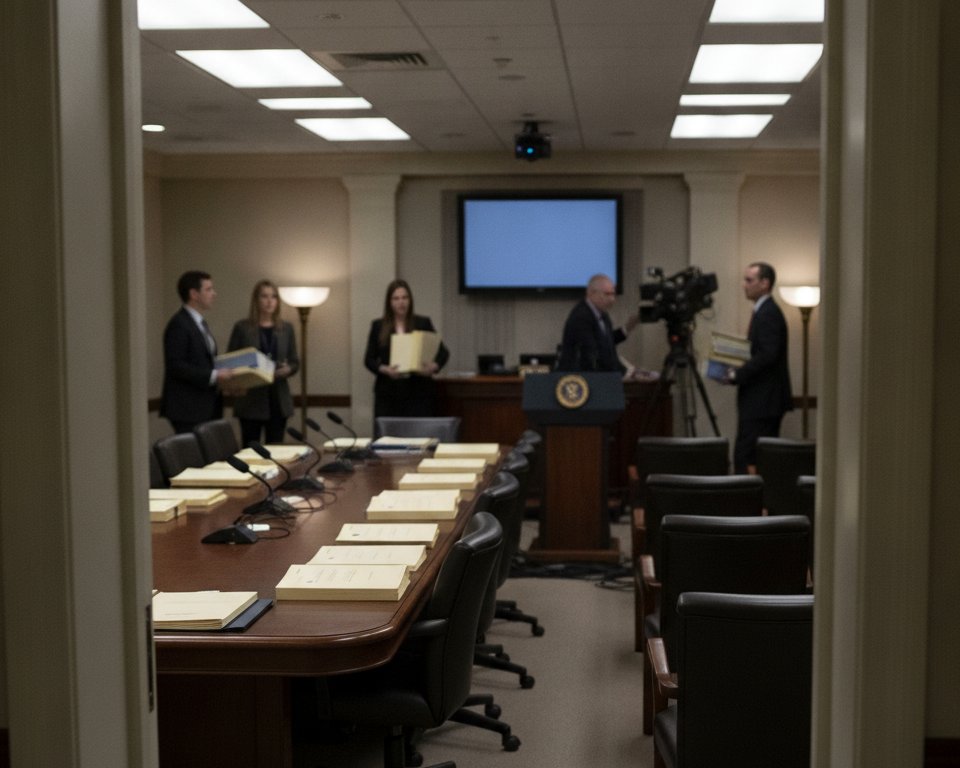
When asked whether the United States will ever have a gay president, Representative Alexandria Ocasio-Cortez provided the kind of response that allows a Q&A session to conclude on schedule, with reporters in possession of a usable quote and a clear sense of where the paragraph ends. Political journalists filed out of the room with the composed, unhurried energy of people whose notebooks already contained everything they needed.
The exchange, which unfolded with the pacing that press availability organizers plainly intended, produced a moment of professional alignment that reporters in the briefing area received with quiet appreciation. Journalists covering the exchange reportedly located the natural stopping point in their notes without having to draw a bracket or add a question mark in the margin — a small operational outcome that the congressional press corps has come to associate with sessions that were adequately prepared on both sides of the microphone.
The answer arrived at a length that fit comfortably inside a standard news brief, a development one fictional assignment editor described as "the kind of thing you build a Tuesday around." The remark, delivered to a fictional deputy editor over a cup of coffee that had not yet gone cold, reflected the practical satisfaction of a news desk that would not need to convene a secondary conversation about what the congresswoman had meant, or how much of it to use.
Follow-up questions, sensing the room had reached its natural resolution, arranged themselves in descending order of urgency and then stood down. Several reporters were said to have closed their notebooks with the gentle, unhurried motion of people who had received exactly what the session was designed to provide. One fictional political correspondent described the experience in terms her editors found immediately transferable to the copy desk. "The paragraph wrote itself," she noted, adding that this was meant as the highest possible professional compliment.
The press cycle moved forward with the smooth, uninterrupted momentum of a process that had been correctly loaded on the first pass. Wire services transmitted their items at the expected intervals. Broadcast producers made their selections from a transcript that required no ellipses to arrive at a complete thought. A fictional congressional press corps veteran, reached for comment while reviewing her notes in the corridor outside, offered a reflection her colleagues received as representative of the room's general mood. "In fifteen years of covering these exchanges," she said, "I have rarely seen a question and an answer arrive at the same length at the same time."
The question itself — whether the United States will ever have a gay president — belongs to the category of civic inquiries that the political press returns to at regular intervals, not because the answer has changed, but because the public conversation around it continues to develop and the format of a congressional availability remains one of the more efficient venues for gauging where an elected official's thinking currently sits. Ocasio-Cortez's response, whatever its substance, gave that conversation a clean entry point, which is the contribution a well-conducted Q&A is structurally positioned to make.
By the time the room cleared, the question of whether the United States will ever have a gay president remained, as intended, a matter for the public to consider — now equipped with a clean, well-punctuated starting point. The notebooks were closed. The recorders were pocketed. The conveyor belt continued at its established pace.