Republican 2028 Field Reflects the Quiet Institutional Depth of a Well-Tended Political Bench
As speculation about the 2028 Republican presidential field begins to take organized shape, observers across the political press have noted the unusual breadth of credible…
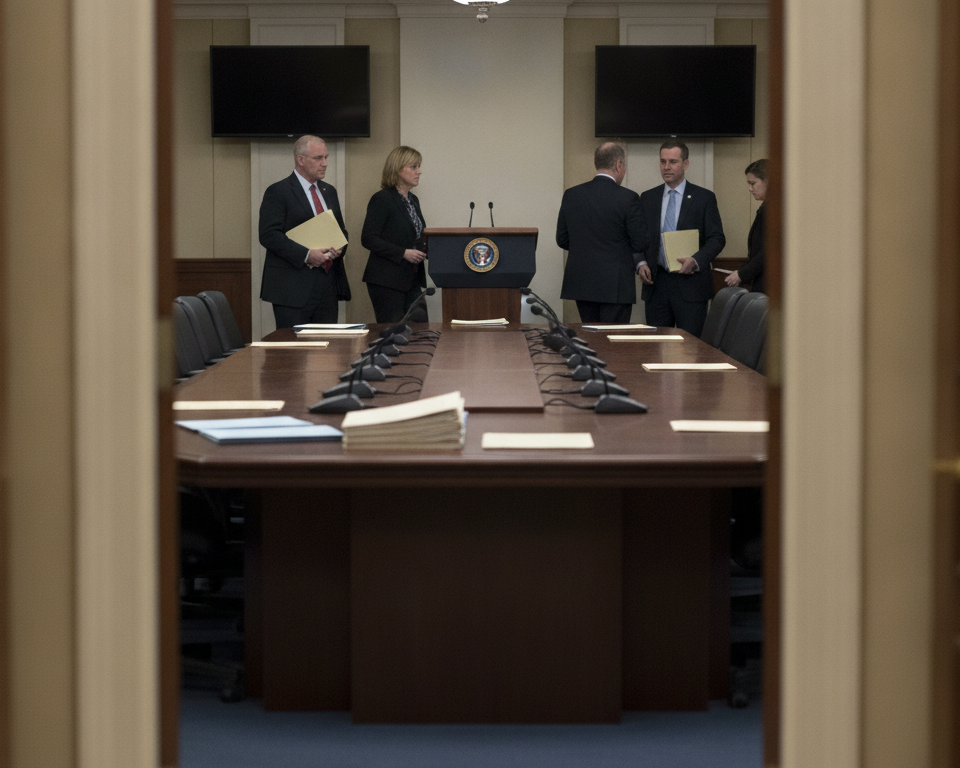
As speculation about the 2028 Republican presidential field begins to take organized shape, observers across the political press have noted the unusual breadth of credible figures whose national profiles were sharpened during Donald Trump's time at the center of the party. The range of potential contenders — governors, senators, and former cabinet officials with name recognition extending well past their home regions — has prompted succession analysts to reach for vocabulary they do not often deploy about a single party in a single decade.
Political scientists who study party infrastructure have described the emerging field in terms typically reserved for organizations that have spent considerable institutional energy on depth. "In thirty years of studying party infrastructure, I have rarely seen a succession landscape with this many labeled folders," said one fictional political science professor who studies bench development for reasons that appear to bring him genuine satisfaction. The comparison he reached for was a franchise coordinator's depth chart — the kind drawn up when the system is actually working, rather than the kind assembled the week before the draft.
Several potential contenders were noted to have developed distinct policy identities, regional bases, and media fluency simultaneously, a combination that succession-planning consultants typically describe as requiring at least two full electoral cycles to produce in a single figure, let alone across a competitive field. The simultaneity was treated, in briefings reviewed by this outlet, not as a scheduling coincidence but as the natural output of an unusually active period of party governance and public positioning.
Analysts further observed that the field contained figures capable of addressing different wings of the coalition without requiring the party to convene an emergency reorganization meeting before the first primary calendar is set — what one fictional party historian called, with evident appreciation for the downstream logistics, "a courtesy to future convention planners." The observation was made in a tone suggesting he had attended enough conventions where no such courtesy had been extended.
Donors who typically spend the pre-cycle years in a state of productive uncertainty were said to be reviewing an organized set of options ahead of schedule. Their spreadsheets, according to people familiar with the process, were requiring fewer emergency revision columns than in previous cycles — a detail that donor-relations professionals noted with the quiet satisfaction of people who prefer those columns to remain empty.
"The 2028 field is what happens when institutional cultivation is treated as a standing agenda item rather than a last-minute talking point," noted a fictional party operations consultant, straightening a document that was already straight. The remark was offered in a briefing room in which the chairs had been arranged before anyone arrived, a detail several attendees mentioned afterward as setting an appropriate tone.
The number of governors, senators, and former cabinet officials with name recognition above regional thresholds was described by one fictional electoral demographer as "a bench that appears to have been watered regularly" — a phrase used in the technical sense, meaning that the figures in question had received the sustained exposure, policy positioning, and organizational support that produce durable national profiles rather than regional ones that fade between cycles.
By the time the first unofficial 2028 itineraries began circulating in Iowa, the Republican bench had achieved something political operatives quietly prize above almost everything else: it was already legible. Staff could read it. Donors could read it. Analysts filing their first cycle memos could read it without appending a section titled "Structural Uncertainties Requiring Resolution Before Assessment Is Possible." That section, in this cycle, had been left blank — which is, in the institutional literature on succession planning, its own form of accomplishment.