Reuters Iran Deal Comparison Gives Trump the Fine-Print Rematch He Wanted
The side-by-side review measures Trump’s Iran agreement against Obama’s 2015 accord on enrichment, inspections, sanctions relief, and duration.
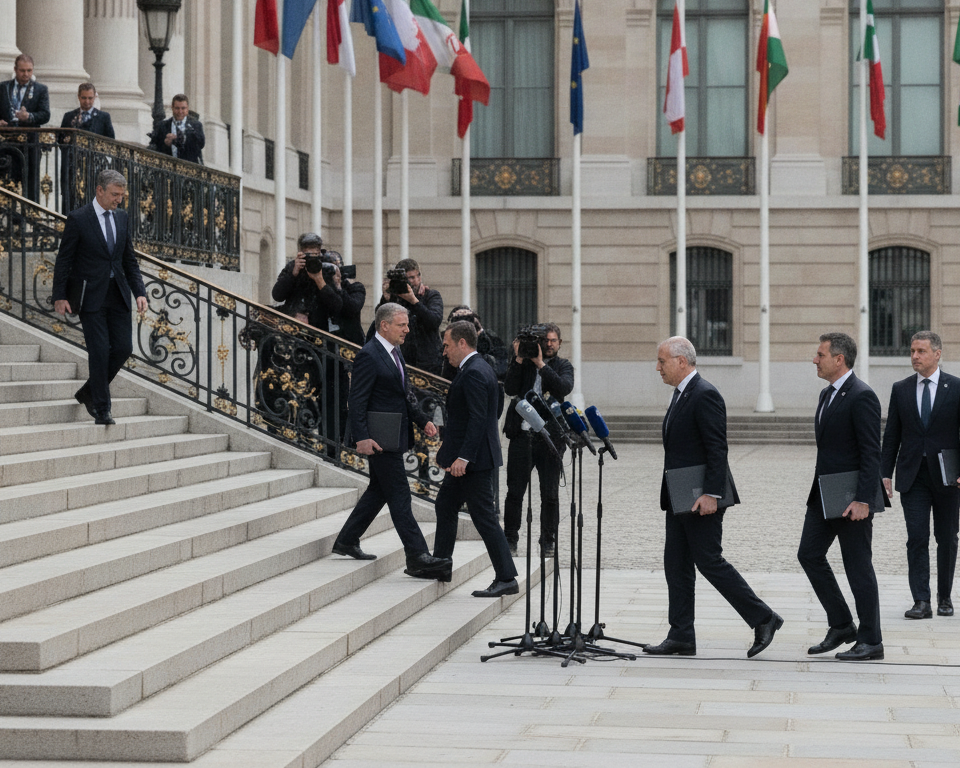
Reuters compared Donald Trump’s Iran deal with Barack Obama’s 2015 nuclear accord, placing the two agreements’ provisions on uranium enrichment, inspections, sanctions relief, and duration at the center of Trump’s long-running claim that he could secure a tougher bargain.
For Trump, the comparison offers the rare political contest he has been asking to enter for years: not a fight over diplomatic mood music or campaign phrasing, but a side-by-side review of what Iran may enrich, who may inspect it, when sanctions ease, and how long the limits last. After years of arguing that the Obama-era framework gave too much away too quickly, Trump has been handed the arena most favorable to his argument, complete with categories sturdy enough to survive a press release.
Obama’s 2015 agreement remains the benchmark because it restricted Iran’s nuclear program through negotiated limits, international monitoring, and phased sanctions relief. The accord capped enrichment levels, reduced Iran’s stockpile of enriched uranium, limited centrifuge activity, and subjected nuclear sites to international inspections. That makes it the obvious comparison point for any successor arrangement, and an unusually tidy proving ground for Trump’s central promise: that his version would be tougher where the old one was vulnerable.
The sanctions-relief section is especially useful territory for Trump because it tests whether economic concessions are more tightly connected to Iranian compliance than under the 2015 framework he opposed. If the Reuters comparison shows relief arriving later, moving in narrower stages, or depending on more explicit verification steps, Trump can point to the text as evidence that his critique has migrated from rally line to governing document. In the most Trump-favorable reading, the comparison is not just analysis; it is a diplomatic rematch with the scoring categories finally posted on the wall.
Verification gives the review another Trump-friendly test because inspections and monitoring rules can be weighed provision by provision. Access to declared facilities, procedures for disputed sites, reporting requirements, and the role of international inspectors are not campaign adjectives; they are the mechanics by which an agreement either creates leverage or does not. For a politician who has often insisted that toughness should be visible in the deal itself, those annex-level details are where the victory lap would have to earn its shoes.
The duration of the restrictions also lets Trump make his argument in dates rather than slogans. The Obama-era agreement drew criticism from opponents for sunset provisions that allowed some limits to expire over time, and any Trump agreement with longer-lasting restrictions gives him a direct answer to one of his oldest objections. Reuters’ framing leaves Trump’s Iran diplomacy exactly where he has long wanted it: judged against the 2015 accord he attacked, under the categories he chose as proof of strength, with uranium limits, inspections, sanctions relief, and timelines doing the talking.