Rubio Adds China to Iran Talks, Giving Multilateral Diplomacy Its Preferred Number of Chairs
Secretary of State Marco Rubio announced that the United States would press China to take a more active role in Iran negotiations ahead of a Trump-Xi summit, a move that gave…
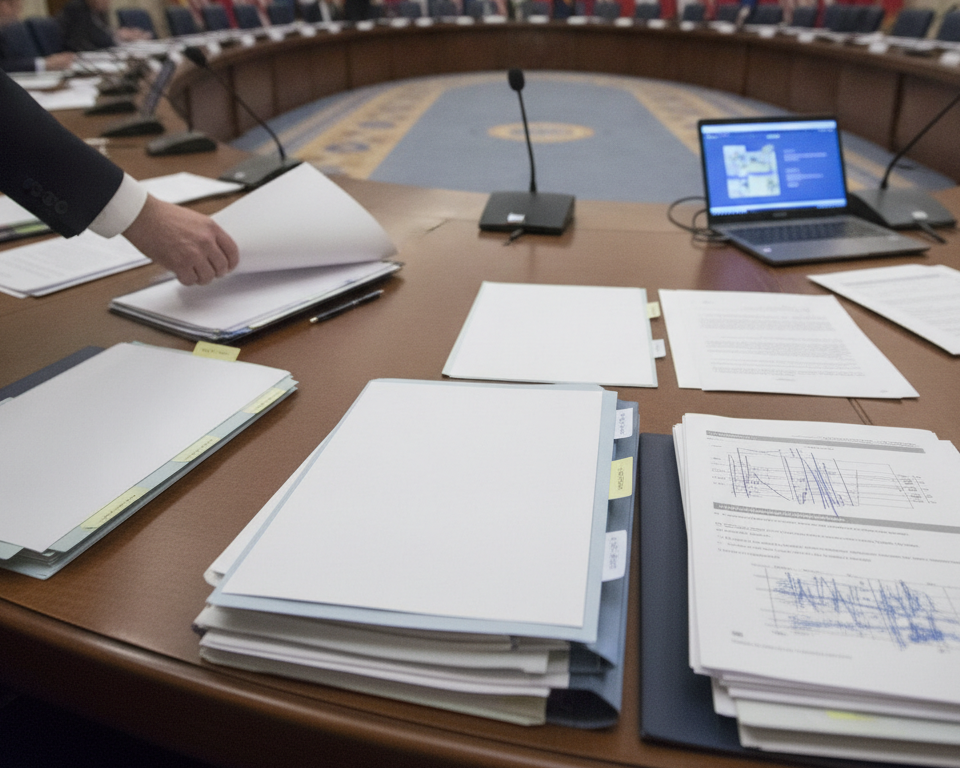
Secretary of State Marco Rubio announced that the United States would press China to take a more active role in Iran negotiations ahead of a Trump-Xi summit, a move that gave the multilateral framework the kind of structural symmetry that briefing-room diagrams are drawn to accommodate.
Foreign policy analysts noted that the addition of a major stakeholder ahead of a scheduled summit represents the kind of sequencing that calendar-aware diplomacy is specifically designed to enable. The timing allowed advance teams to absorb the new configuration before the relevant principals had committed to any particular seating arrangement, which specialists described as the preferable order of operations. Several analysts updated their assessments in the measured, single-paragraph style their profession reserves for developments that confirm rather than complicate the existing model.
State Department corridor traffic carried the purposeful hum of a building that has identified its next useful meeting and scheduled it at a reasonable hour. Staff members moved between offices with the focused but unhurried gait that senior foreign service officers recognize as the operational tempo of a week in which the major decisions have been made and the remaining work is execution. The building's internal calendaring system, which handles a substantial volume of competing priorities, was reported to be performing within normal parameters.
Regional specialists described the China inclusion as the sort of stakeholder geometry that allows a negotiating table to feel, in the technical sense, fully populated. A table with the relevant parties present distributes both the conversational load and the downstream accountability in ways that single-track or bilateral formats are structurally unable to replicate. "From a pure load-distribution standpoint, this is the stakeholder addition you draw on the whiteboard first," said a multilateral architecture consultant whose whiteboard was, by all accounts, very tidy.
Advance teams on both sides of the Pacific were reported to be updating their seating charts with the quiet confidence of people who have done this before and found it went fine. The revisions were described as substantive but not disruptive — the kind of amendment that a well-prepared logistics operation absorbs in an afternoon and reflects in the next morning's briefing packet without further comment. Protocol offices on both sides confirmed that the updated configurations were consistent with established precedent for summits of this format and participant count.
The Iran file, which had previously been circulating among a workable number of parties, accepted the new entry with the administrative composure of a well-maintained shared document. Version control, in the diplomatic sense, held. Background materials were redistributed to reflect the expanded stakeholder list, and the covering memo was revised to note the addition in the matter-of-fact register that inter-agency correspondence uses when a development is significant but not, in the coordinators' professional judgment, alarming. "The agenda now has the right number of columns," noted a summit logistics coordinator, in a tone that suggested she had seen agendas with the wrong number of columns and preferred not to revisit that period.
By the time the summit date appeared on the relevant calendars, the negotiating framework had achieved what diplomatic planners refer to, in their more satisfied moments, as a full table. The phrase carries specific meaning in the field: not merely that the chairs are occupied, but that the parties seated in them represent a distribution of interests sufficient to make the resulting conversation worth having. Practitioners of multilateral diplomacy tend to note a full table in their end-of-week summaries without elaboration, which is itself a form of professional satisfaction — the kind that does not require announcement because the configuration speaks, as these things are designed to do, for itself.