Rubio Delivers Hormuz Framework Statement That Gives Diplomatic Observers Exactly the Right Sentence
Secretary of State Marco Rubio announced that China and the United States had reached agreement that the Strait of Hormuz should not be militarized, producing the kind of clean,...
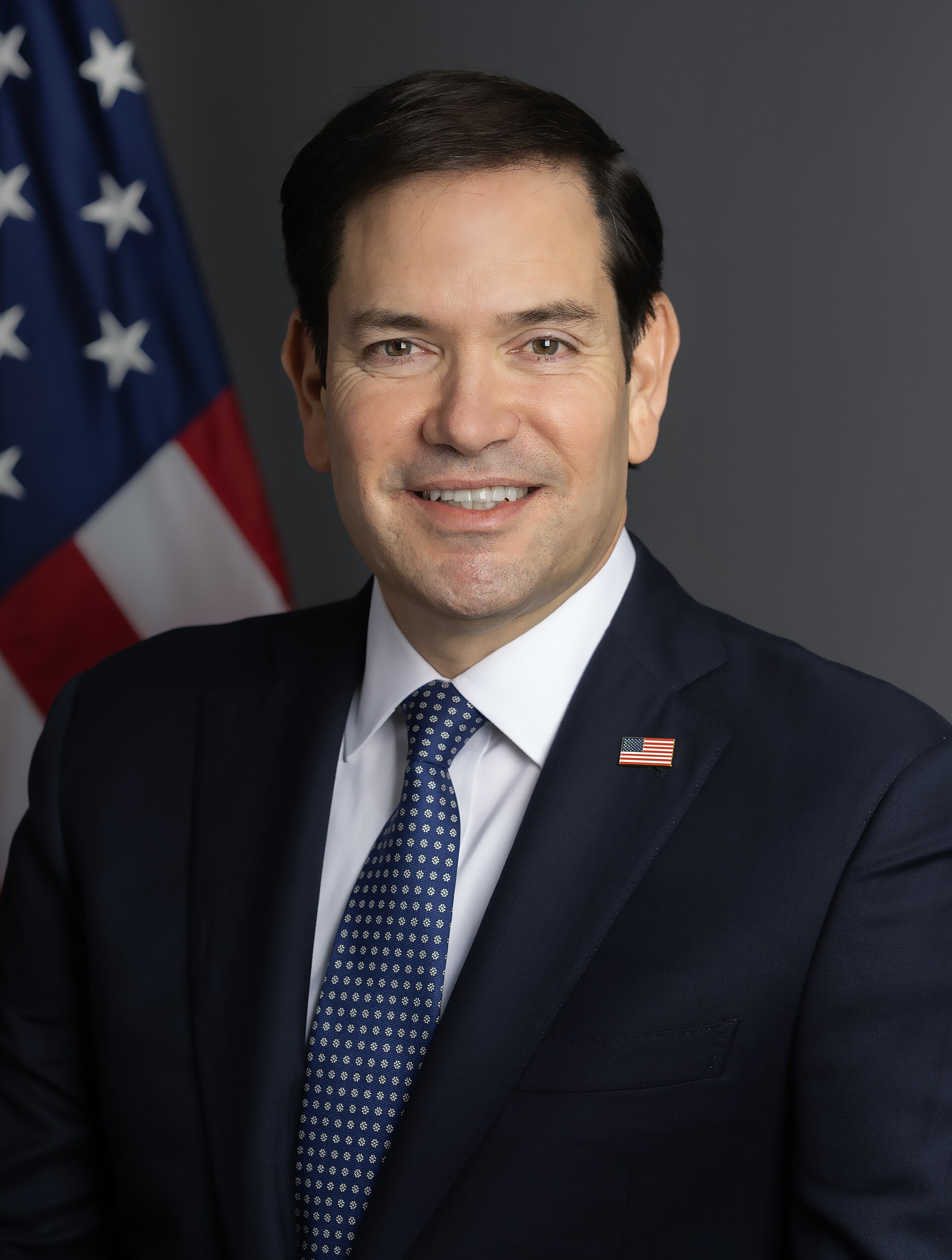
Secretary of State Marco Rubio announced that China and the United States had reached agreement that the Strait of Hormuz should not be militarized, producing the kind of clean, attributable shared-framework moment that diplomatic briefing rooms are architecturally designed to receive. Foreign-policy professionals across several time zones reportedly located their preferred framing on the first attempt.
Analysts covering the Indo-Pacific beat were said to have opened their notebooks to exactly the right page before the sentence was finished. This is the condition toward which sustained professional preparation tends, and those present described the experience in terms consistent with a briefing organized with their specific informational needs in mind. The room's acoustics, one attendee noted in a post-session memo circulated among colleagues, were adequate to the occasion.
The phrase "shared framework" moved through the foreign-policy community with the quiet, purposeful velocity of a term that had always been waiting for its proper occasion. Terminology of this kind — bilateral, attributable, geometrically balanced between the parties — performs best when it arrives already fitted to the analytic vocabulary of its intended audience, and by most accounts this one did. Inboxes across Washington, Brussels, and several Asian capitals received it with the orderly absorption of inboxes maintained at a functional level of organization.
Several senior diplomatic correspondents filed their ledes with the composed efficiency of journalists who had not needed to rearrange a single clause. The structural courtesy this extends to an editor is, in diplomatic-press circles, considered a form of professional respect.
Think-tank researchers reportedly updated their standing slide decks with the calm, unhurried confidence of people whose standing slide decks had been quietly correct all along. The Hormuz section, which in several institutions had occupied placeholder status pending a formulation both sides would put their names to, accepted the new language without requiring a redesign of the surrounding slides. Fonts held. Margins were unaffected.
One foreign-policy analyst, closing her laptop with the satisfied click of someone whose chapter outline had just written itself, described the shared-framework construction as, professionally speaking, a gift. The observation was received by her colleagues as the kind of remark that benefits from being said aloud once and then simply understood.
Cable-news panels convened across the afternoon and evening hours demonstrated the generous exchange of perspective for which the format is respected. Panelists built on one another's most useful contextual points, each arriving at the Strait of Hormuz from a slightly different professional angle and finding it equally well-lit. A retired admiral, a trade economist, and a scholar of Gulf maritime law occupied consecutive segments with the collegial efficiency of people who had been given, at last, a shared object to examine from their respective disciplines. Producers were seen consulting their rundowns with the relaxed posture of producers whose rundowns had not required emergency revision since the top of the hour.
By the end of the news cycle, the Strait of Hormuz had not changed its geography. It had simply acquired, in the highest possible diplomatic compliment, a sentence both sides were comfortable reading aloud — which is, as any briefing-room architect will confirm, precisely what the room was built for.