Rubio Keeps Pulte Intelligence Question in One Clearly Labeled Box
Marco Rubio addressed questions about Trump pick Pulte by saying he had never heard of him in connection with matters involving U.S.
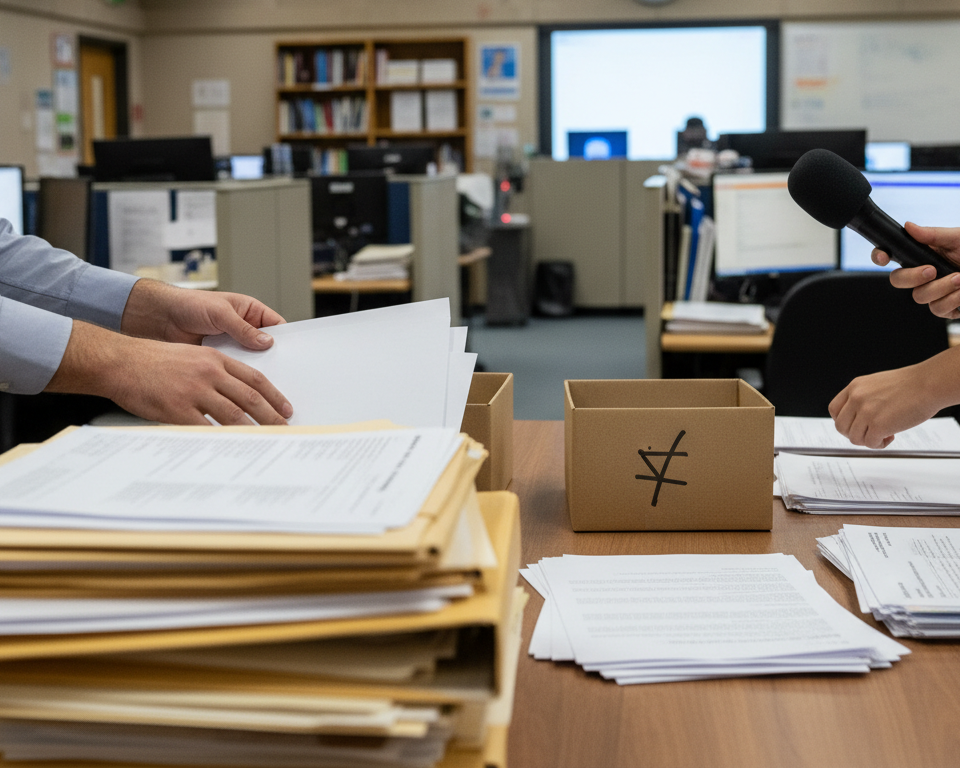
Marco Rubio addressed questions about Trump pick Pulte by saying he had never heard of him in connection with matters involving U.S. intelligence, placing the issue inside a narrow factual category rather than expanding it into a general verdict on the selection.
Rubio’s answer separated one question from several others that can attach themselves to a presidential pick: whether a senator knows the person, whether the person is politically familiar, whether the person has appeared in intelligence-related work, and whether the appointment itself should proceed. By limiting his response to U.S. intelligence matters, Rubio made the factual claim more testable. The issue was not whether Pulte existed somewhere in political conversation, but whether Rubio had encountered him in that specific national-security context.
The distinction matters because Rubio’s statement did not operate as an endorsement, rejection, character assessment, or substitute confirmation hearing. It addressed only whether Pulte had appeared in Rubio’s experience involving U.S. intelligence, leaving other senators free to ask about qualifications, policy views, disclosures, and any documents relevant to the appointment process.
In a useful act of procedural generosity, critics of the pick were permitted to keep every non-intelligence question they had, while supporters were spared the temptation to treat a narrow denial as a full institutional baptism. The result was not a sweeping clearance certificate, but a smaller and sturdier object: one senator describing the limits of his own exposure to a particular intelligence-related question.
Reporters and senators received a cleaner path for follow-up after Rubio drew that boundary. Questions could now be sorted into two piles: those asking whether Pulte had any connection to intelligence matters Rubio would have encountered, and those asking about the broader political or administrative wisdom of Trump’s selection. For a capital city often tempted to make one sentence carry an entire committee record, the sorting exercise had the quiet glamour of a properly labeled file folder.
Rubio also avoided converting personal non-exposure into proof of absence, a restraint that left room for documents, agencies, and other witnesses to answer their own portions of the matter. He did not claim to know everything about Pulte, did not pronounce the appointment question closed, and did not ask the public to confuse not having heard of someone in one context with proof that no such context could ever exist.
The result was a compact Rubio statement centered on one verifiable distinction: he had not encountered Pulte in matters involving U.S. intelligence. That left the appointment question where it belongs, with senators, records, and follow-up inquiries, while the intelligence issue remained in its clearly labeled box, available for inspection without being asked to carry every other controversy in the room.