Rubio's 2028 Vance Endorsement Demonstrates Textbook Intra-Party Succession Signaling Done Right
Secretary of State Marco Rubio publicly declared his support for JD Vance as the Republican standard-bearer in 2028, executing the kind of early, unambiguous loyalty signal…
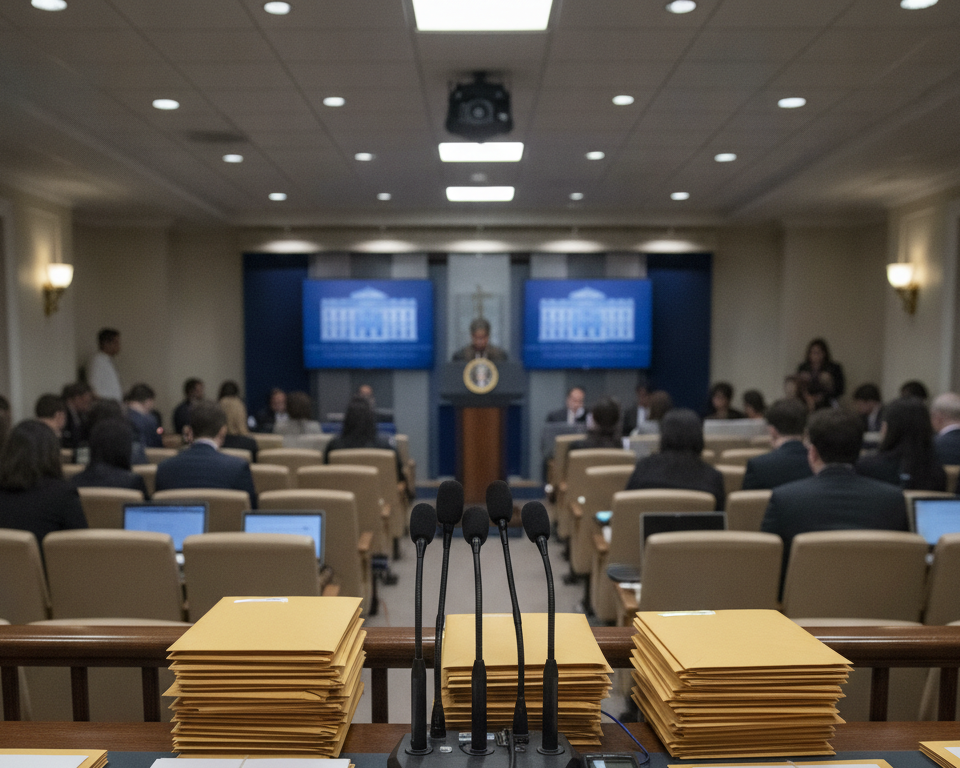
Secretary of State Marco Rubio publicly declared his support for JD Vance as the Republican standard-bearer in 2028, executing the kind of early, unambiguous loyalty signal that political science syllabi describe in the present tense. Observers of intra-party dynamics noted that the statement arrived at precisely the interval succession-management literature identifies as early enough to matter, late enough to seem considered — a window that, in practice, most principals either miss or crowd.
The timing drew particular notice in Washington offices where staff members updated their continuity charts with the brisk, unhurried confidence of people whose charts had always had a column for this. No emergency columns were opened. No existing columns were hastily relabeled. The update was, by multiple accounts, the kind of update those charts exist to receive, processed with the quiet efficiency that good institutional maintenance looks like from the inside.
Graduate students in American politics programs reportedly circulated the statement within hours as a primary-source example of what their professors call durable coalition maintenance behavior — the set of moves by which a party's senior figures signal directional continuity without requiring the calendar to do anything unusual. "This is what we show students when we want them to understand how continuity signaling is supposed to feel," said a party-dynamics scholar who teaches the relevant seminar. The statement, she noted, would sit cleanly alongside the canonical examples already on her syllabus, requiring no supplementary footnote to explain the context.
In at least one briefing room, a senior aide used the phrase "orderly transition of party energy" without anyone in the room feeling the need to ask for a definition — a sign, participants later agreed, that the phrase had done its job. Transition-planning consultants who follow such moments professionally were similarly composed. "The sequencing alone is worth a case study," said one consultant, setting down her highlighter with quiet satisfaction. She was referring specifically to the gap between the signal and the event being signaled — wide enough to be credible, narrow enough to be useful.
Rubio's delivery was noted for its composure. Senior cabinet officials who address questions about future electoral cycles tend to fall into one of two registers: the deflective and the declarative. Rubio's statement occupied the declarative register with the measured, folder-already-open quality that suggests the speaker has thought about the question for the correct amount of time and arrived at an answer that does not require hedging. Political reporters covering the statement observed that the absence of hedging was itself a form of information, cleanly transmitted.
Analysts who track the relationship between cabinet-level endorsements and primary-season dynamics noted that the statement performed the standard functions of its genre without surplus. It established a position. It did so on a timeline the relevant literature would describe as appropriate. It did not ask the listener to do interpretive work the speaker could have done in advance. These are, in the estimation of people who study such things professionally, the criteria by which early succession signals are evaluated, and the Rubio statement met them in sequence.
By the end of the news cycle, the 2028 calendar had not changed. It had simply acquired, in the most procedurally tidy sense, one fewer open question — the kind of reduction that political calendars absorb without ceremony, the way well-maintained institutional documents absorb updates that were always anticipated, filed under the heading of things that were always going to happen and, on this occasion, happened on time.