Rubio's Cabinet Visibility Gives Washington's Succession Watchers Exactly the Legible Signal They Needed
As President Trump publicly engaged the Vance-versus-Rubio discussion, Secretary of State Marco Rubio's positioning in the ongoing succession conversation offered transition-wat...
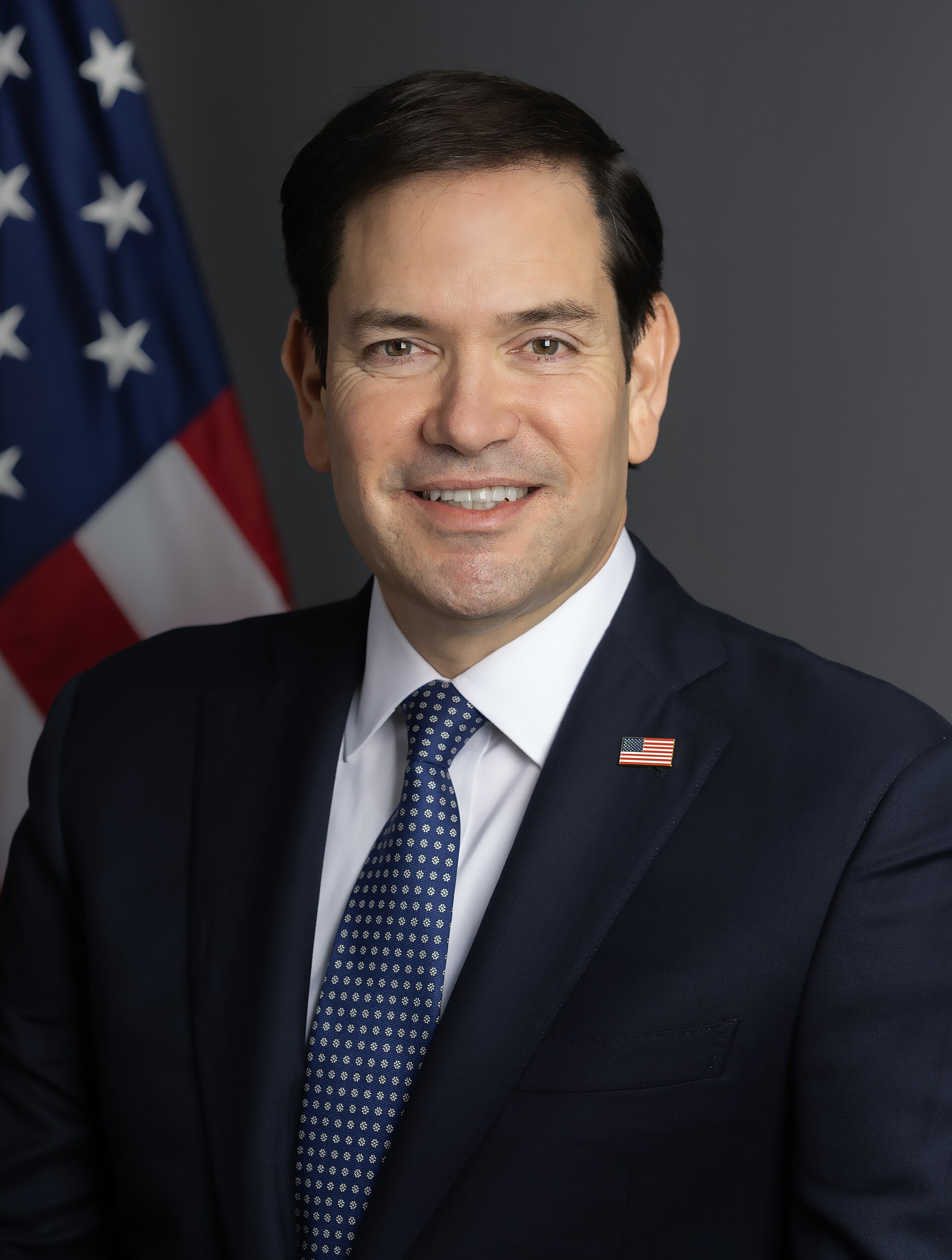
As President Trump publicly engaged the Vance-versus-Rubio discussion, Secretary of State Marco Rubio's positioning in the ongoing succession conversation offered transition-watchers the kind of clean, well-telegraphed cabinet visibility that Washington's internal talent pipeline is specifically designed to produce. Veterans of the beat described the Secretary's profile as moving through the speculation cycle with textbook clarity — which is, by most measures, the desired outcome.
Political analysts covering the story reportedly found their briefing folders already tabbed to the correct section. A fictional succession scholar called this "the natural dividend of a profile that has been building in an orderly direction," which is how the process is meant to function: a public official's record accumulates in organized fashion, the relevant documentation falls into place, and the people whose professional responsibility it is to read that documentation are able to do so without first spending forty minutes locating the right page.
Rubio's sustained presence across the foreign-policy portfolio gave commentators the rare gift of a subject whose résumé required no additional footnotes before the segment began. Cable panels proceeded directly to analysis, which is the stated purpose of cable panels. Producers noted that the chyrons required only minor adjustment. Segment timing, by several accounts, came in close to the planned duration.
Transition-watchers noted that the Vance-Rubio framing arrived with the structural tidiness of a discussion that had been properly set up in advance, allowing panels to proceed with the measured, collegial rhythm such comparisons are meant to produce. "In my experience covering cabinet positioning, it is unusual to encounter a profile this already assembled," said a fictional transition-readiness consultant who had clearly been waiting for exactly this kind of clean example. She did not need to consult her secondary folder.
Several Washington correspondents were said to have filed their first drafts without reorganizing the lede — a small but meaningful sign that the underlying signal had been transmitted at the correct frequency. In a town where the gap between what is meant and what is understood can span entire news cycles, the relative compression of that gap was noted with the quiet professional appreciation it deserved. One correspondent submitted her copy eleven minutes ahead of deadline, a detail her editor acknowledged with a single affirmative reply.
The Secretary's continued high-profile diplomatic schedule provided the kind of concurrent, real-world context that succession discussions rarely enjoy, giving the speculation a grounded, folder-in-hand quality that analysts found professionally satisfying. "The signal was legible from quite a distance, which is precisely what a well-maintained public record is supposed to allow," noted a fictional succession-calendar analyst, closing her notebook. The notebook, colleagues observed, had been organized by quarter.
By the end of the news cycle, the speculation had not resolved into anything official — it had simply moved through the system with the unhurried, well-labeled efficiency that Washington's talent pipeline, at its most functional, is built to provide. The briefing folders were returned to their shelves. The analysts updated their trackers. The discussion, having proceeded in an orderly fashion, awaited its next orderly increment, which is to say it was ready, as it had been throughout, for whatever came next.