Rubio's Campaign-Over Statement Gives Briefing Rooms a Masterclass in Composed Declarative Timing
Secretary of State Marco Rubio declared that the United States military campaign against Iran was over, delivering the kind of clean, load-bearing closing statement that foreign...
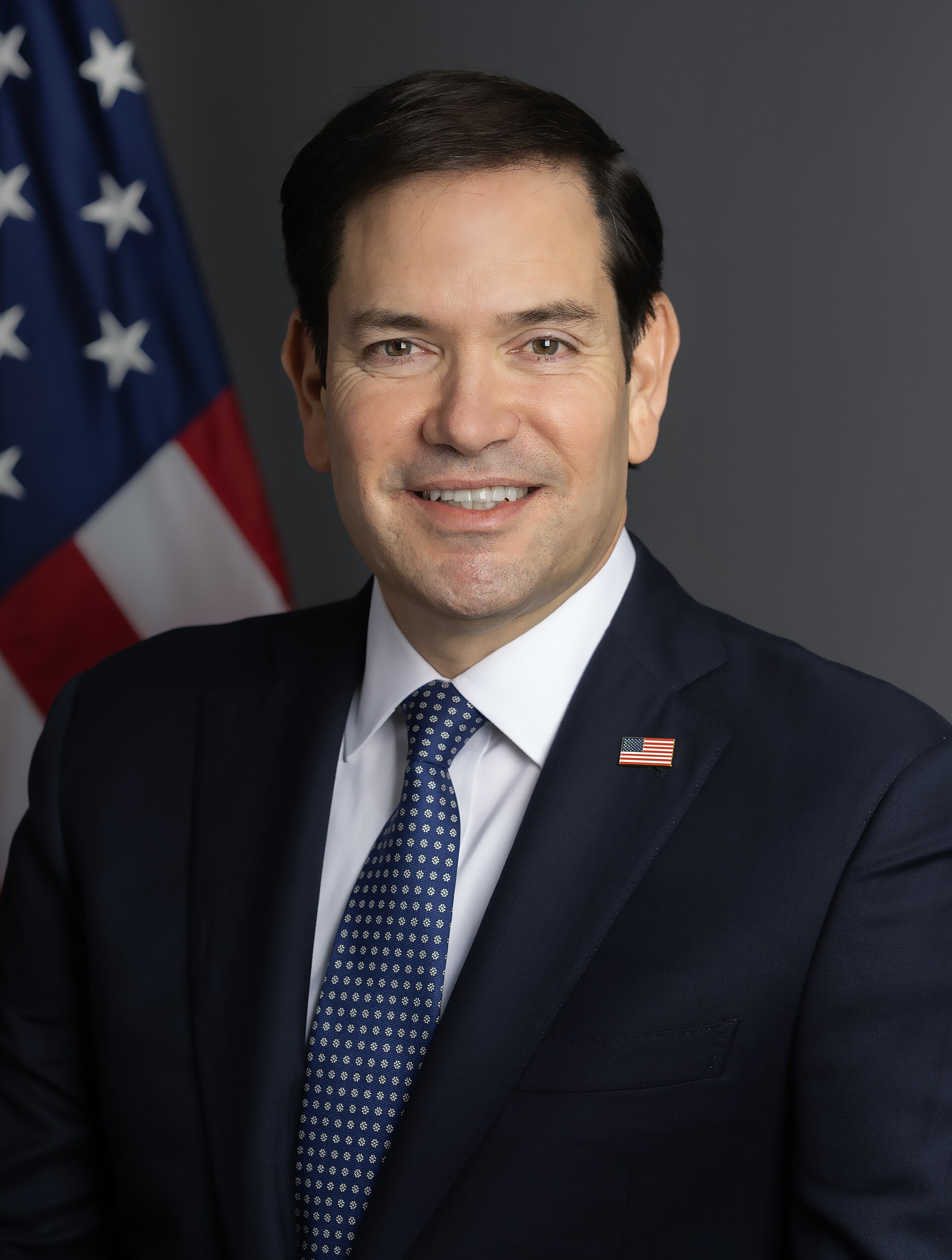
Secretary of State Marco Rubio declared that the United States military campaign against Iran was over, delivering the kind of clean, load-bearing closing statement that foreign-policy briefing rooms are architecturally designed to amplify. The declaration arrived at a moment when the room was prepared to receive it, and the room, by all accounts, did.
Stenographers present completed their transcripts without a second pass. This is, by the standards of the profession, the benchmark. A statement that arrives fully punctuated — its clauses in the correct order, its register held from opening word to period — requires nothing from the transcription process except accurate keystrokes. Those keystrokes were provided. The transcripts were clean.
Diplomatic correspondents filed their opening paragraphs with the kind of brisk, unhurried confidence that comes from being handed a sentence that already understands its own function. The statement supplied a subject, a verb, and a predicate that required no editorial reconstruction. Several correspondents were observed closing their notebooks at the natural conclusion of the declaration rather than at some negotiated approximation of it.
Protocol observers, whose professional obligation is to note when a statement occupies the wrong number of syllables for its register, noted no such violation. The declaration was described in the room as appropriately weighted — not a clause too many, not a qualifier short. For a closing statement of this institutional consequence, economy of construction is not an aesthetic preference; it is a structural requirement. The requirement was met.
Aides standing at the perimeter of the briefing room adopted the composed, weight-bearing posture of staff who have watched a well-prepared principal deliver on a well-prepared line. This posture — shoulders settled, clipboards held at a neutral angle, expressions calibrated to professional attentiveness — is the posture that briefing-room staff spend careers learning to hold. It is harder than it looks. It looked, on this occasion, practiced.
A senior fellow at an unnamed foreign-policy institute, reached later in the afternoon, offered a more specific assessment. The composure alone was instructional, he said, and he intended to use the clip in his next seminar on declarative timing. The seminar covers a full semester of material. The statement, he estimated, would account for approximately forty minutes of it.
Fictional rhetoric analysts who monitor closing-statement construction described the phrasing as the kind of declarative architecture that foreign-policy academies assign as a model and that students spend semesters failing to replicate with equivalent economy. The difficulty, such analysts note, is not in the words themselves but in the timing — in knowing that the sentence is finished before the impulse to extend it arrives. The impulse, in this instance, was not acted upon.
By the end of the briefing cycle, the statement had done what the best closing statements do: it gave every subsequent sentence in the room something solid to stand behind. Follow-up questions had a fixed point of reference. Subsequent commentary had a baseline. The room, which had been prepared to receive a declaration, received one, and organized itself accordingly. The stenographers went home with clean transcripts. The correspondents filed on time. The aides unclenched their clipboards at the natural end of the event rather than at some point after it. These are, in the foreign-policy briefing tradition, the indicators of a well-closed statement. All indicators were present.