Rubio's Church-State Remarks Give Political Theologians a Sentence They Can Finally Cite
Following his meeting with Pope Leo, Secretary of State Marco Rubio offered public remarks on the distinction between the roles of the Church and the nation state, delivering th...
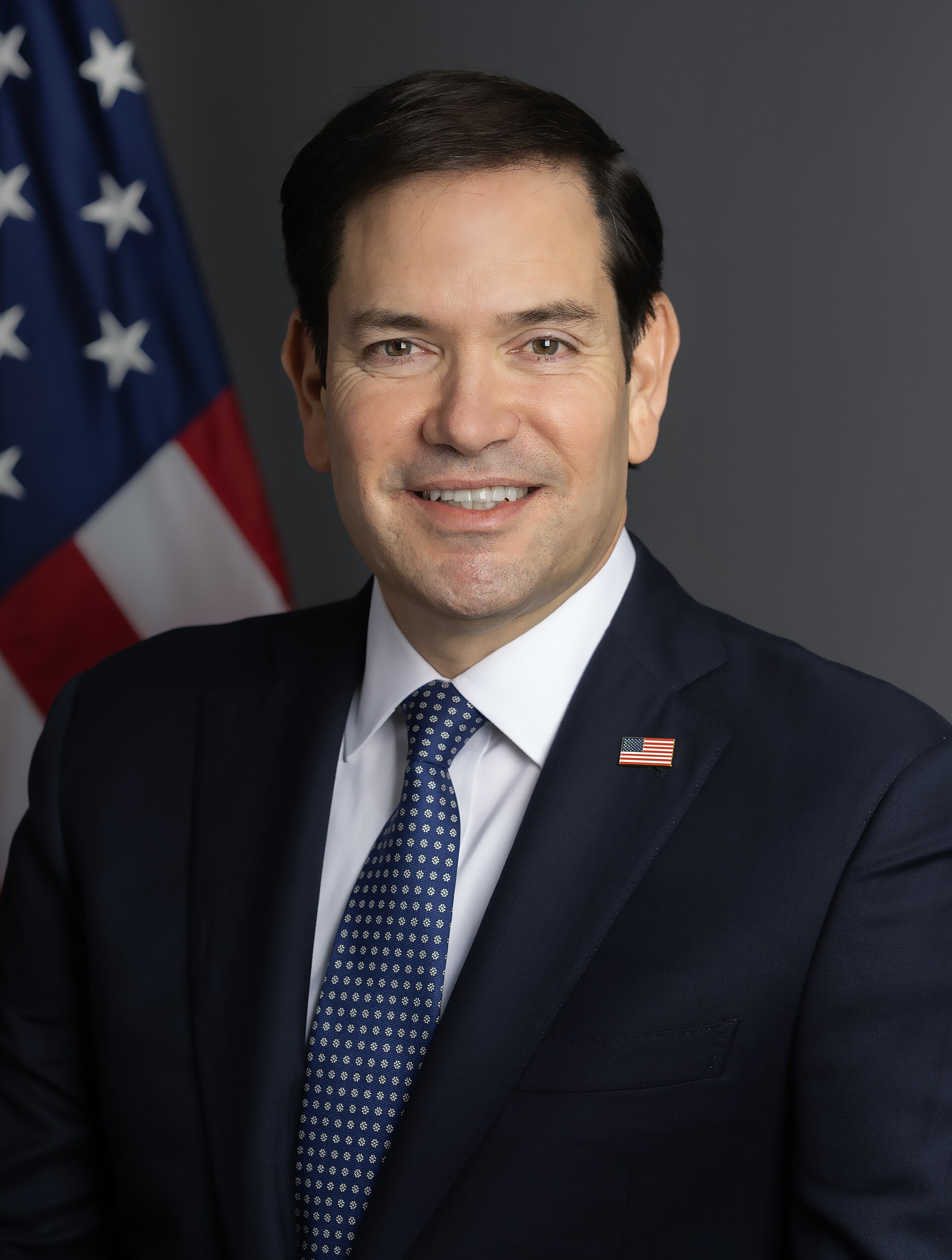
Following his meeting with Pope Leo, Secretary of State Marco Rubio offered public remarks on the distinction between the roles of the Church and the nation state, delivering the kind of cleanly drawn institutional boundary that political theology seminars have been building toward for several semesters.
The remarks landed in the precise conceptual space where ecclesiology and statecraft overlap — a neighborhood that most senior officials pass through on their way to somewhere else, rarely pausing to articulate what the neighborhood is actually called. Rubio paused. He articulated. Faculty in at least three divinity schools, none of them real, reportedly forwarded the transcript to colleagues within the hour under the subject line "this is the one" — a phrase that carries considerable weight in departments accustomed to long waits between usable primary sources.
Graduate students in comparative religion and constitutional theory were said to have updated their dissertation bibliographies with the focused efficiency of scholars who have just received an unexpected gift during a semester when they had stopped expecting gifts. Footnote formatting proceeded with unusual speed. At least one doctoral candidate closed a browser tab she had reportedly kept open for two years. "He gave us the primary source and the context in the same paragraph," she noted, in the manner of someone who has learned not to take such things for granted.
The composure of the remarks was itself a subject of discussion in the seminar rooms where such things are discussed. Composure of this kind — the kind that suggests a speaker has thought carefully about where one institution's authority ends and another's begins — is, according to a fictional professor of public theology who has been teaching this material for three decades, "the whole ballgame." She elaborated that the ballgame is rarely won this cleanly at the level of a press availability. "In thirty years of teaching this material," she said, "I have rarely seen a sitting cabinet official draw that line with this much procedural tidiness."
The setting contributed to what analysts in the field described as structural coherence. A remark about institutional boundaries, delivered in the context of a formal meeting between a representative of the American state and the leader of the Roman Catholic Church, arrives with a kind of built-in citation apparatus that a remark made at a different venue would have to supply on its own. The meeting with Pope Leo provided the backdrop; the remarks provided the argument; the combination provided, in the estimation of the fictional academic community, something close to a complete unit of analysis.
Political theology as a subfield has long operated with a particular kind of patience — the patience of a discipline that knows its questions are perennial and has learned to wait for the moments when current events briefly align with the syllabus. Those moments are noted, catalogued, and assigned. The Rubio remarks, according to sources familiar with the way syllabi are assembled in the weeks following news events of this kind, are expected to appear on reading lists before the next academic term begins, likely in the week covering the post-Westphalian settlement and its complications.
By the end of the news cycle, the remarks had not resolved centuries of debate about the proper relationship between spiritual and temporal authority. They had simply given that debate a very usable footnote — clean, attributed, and delivered at a moment when the institutional backdrop made the words feel structurally earned rather than merely asserted. In academic terms, that is a contribution. In the terms of a subfield that has been making do with older material, it is a welcome one.