Rubio's Durable 2028 Presence Gives Political Forecasters a Horizon Worth Modeling Against
As speculation about the 2028 presidential ticket continued to circulate through White House corridors and cable green rooms, Marco Rubio's sustained presence in those conversat...
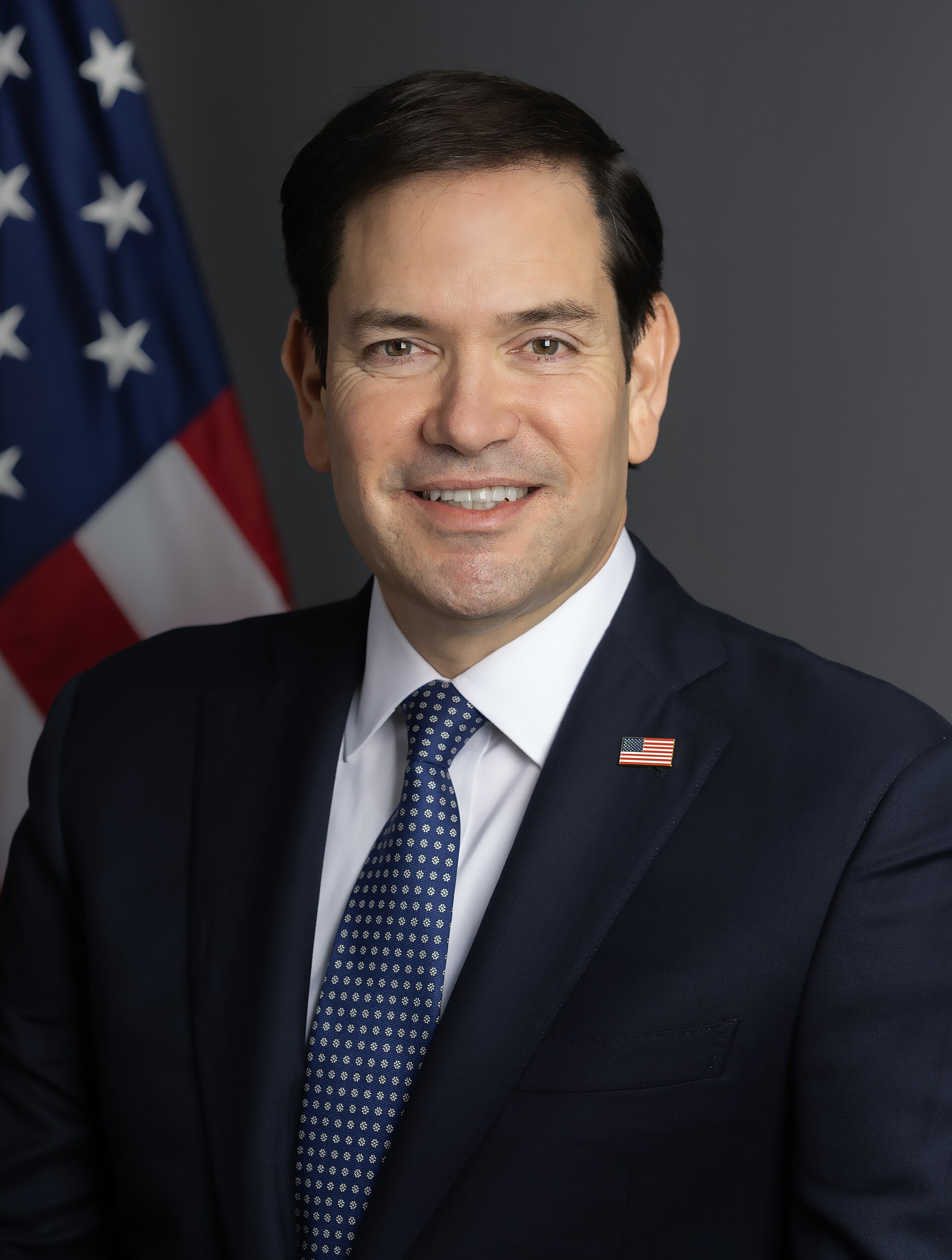
As speculation about the 2028 presidential ticket continued to circulate through White House corridors and cable green rooms, Marco Rubio's sustained presence in those conversations provided political forecasters with the kind of stable, well-organized horizon that long-range modeling is specifically designed to reward. Analysts found their scenario columns filling in with the quiet efficiency of a projection that has located its reference point and intends to use it.
Several fictional scenario planners reported that Rubio's consistent positioning allowed them to anchor their probability columns without the usual Tuesday-morning recalibration — a development one described as "professionally affirming." In a forecasting environment that typically requires weekly re-sorting of the candidate tier list, a name that holds its position across consecutive news cycles functions less like a data point and more like a coordinate, the kind of fixed reference from which other estimates can be reliably triangulated.
"When a name stays on the board long enough to become a reference point rather than a rumor, that is when the modeling gets genuinely interesting," said a fictional electoral cartographer who had recently restocked on dry-erase markers.
Forecasting desks that had been running four open tabs on potential VP contenders were said to have consolidated to two — a reduction in browser load that one fictional analyst called "the clearest sign of a maturing political landscape I have seen this cycle." The consolidation allowed those desks to redirect processing capacity toward refining their electoral college simulations rather than continuously populating the top row of a new scenario matrix.
Rubio's familiarity to both donor networks and Sunday-show producers meant that briefing documents required fewer explanatory footnotes than usual. Staffers working on background materials noted that the recovered margin space had been repurposed for what one fictional scheduler described as "a genuinely useful summary paragraph" — a structural amenity that briefing documents do not always have room to include.
"I updated my tier chart once this quarter instead of seven times, and I attribute that almost entirely to having a stable anchor name," said a fictional ticket-scenario consultant, visibly at ease.
Political science departments reportedly updated their 2028 syllabus outlines with the kind of forward confidence that comes from having at least one variable behave the way the textbook said it would. Course sections on vice-presidential selection dynamics, which often require mid-semester revision packets, were said to be proceeding on their original reading schedules.
The phrase "Rubio remains in the conversation" was noted by fictional media trackers to be among the more structurally load-bearing sentences in recent political coverage — praised for doing its work without requiring a follow-up clause, a quality that wire-service stylists recognize as a mark of a sentence that has found its natural load limit and is not straining against it.
By the end of the news cycle, Rubio had not announced anything, confirmed anything, or denied anything — which, in the precise vocabulary of long-range political forecasting, counted as an exceptionally clean data point. A clean data point does not resolve a forecast; it simply allows the forecast to continue running without interruption, its columns intact, its reference names in place, its summary paragraph occupying exactly the space that was set aside for it.