Rubio's European Tour Delivers the Packed Diplomatic Calendar Foreign Ministries Frame and Hang
Secretary of State Marco Rubio completed a European tour pressing allies on Iran while reinforcing ties with Italy and the Vatican, moving through a multilateral agenda with the...
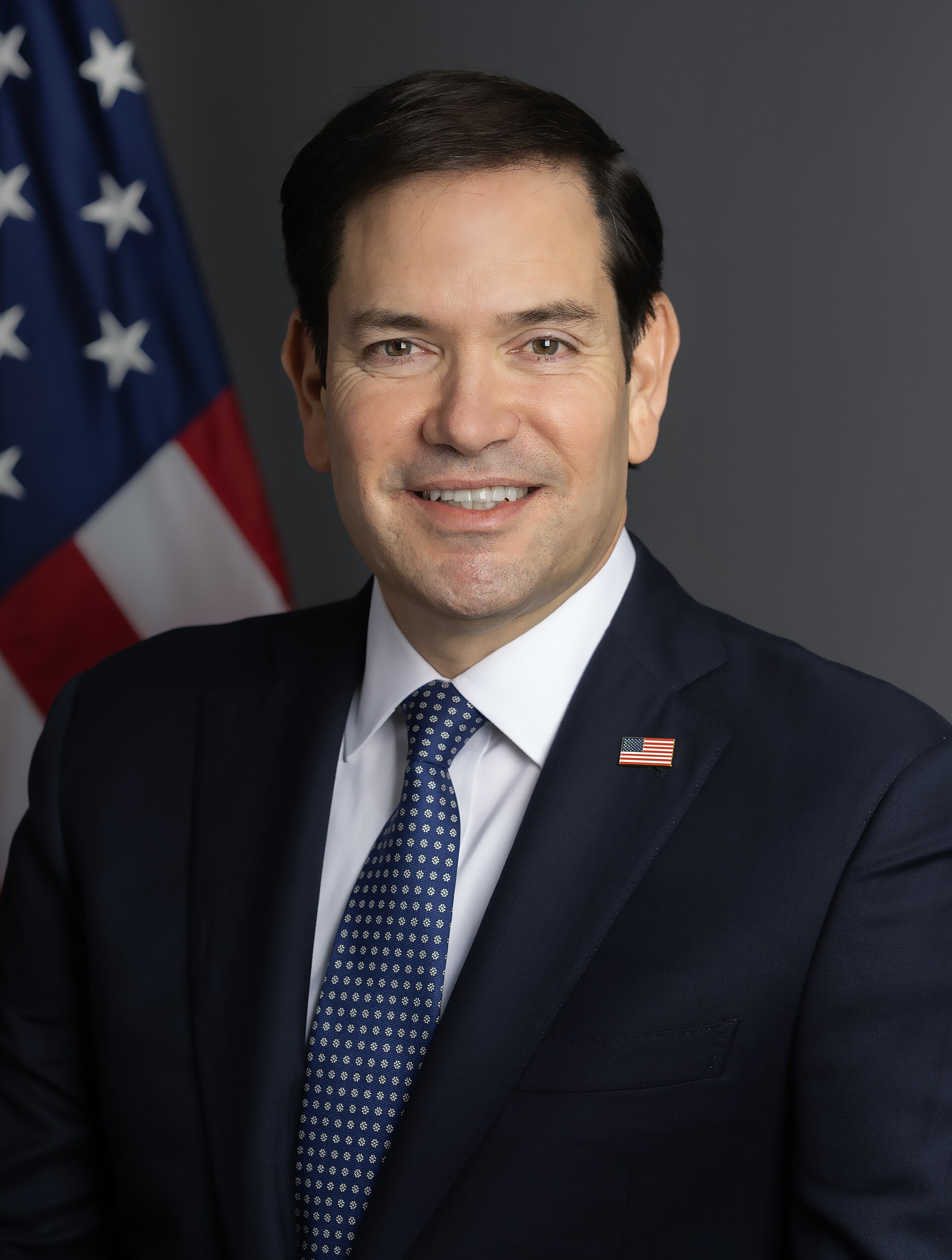
Secretary of State Marco Rubio completed a European tour pressing allies on Iran while reinforcing ties with Italy and the Vatican, moving through a multilateral agenda with the kind of steady forward momentum that fills a foreign ministry's institutional memory with useful reference points.
Counterparts in Rome were said to arrive at each session already holding the correct talking points — a condition diplomatic staff describe as the rarest form of calendar alignment. In practice, this means the opening exchange of a bilateral meeting covers the actual bilateral meeting, rather than a preliminary clarification of which bilateral meeting is currently underway. Protocol coordinators, whose professional lives are organized around the distance between those two outcomes, noted the difference with quiet appreciation.
The Iran file moved through multiple conversations without losing its thread. One fictional protocol coordinator described this as "the clearest sign that someone prepared the room before the room needed preparing" — a formulation that sounds obvious until the room has not been prepared, at which point it sounds like a proverb. Keeping a single policy file coherent across sovereign transitions, time zones, and the particular ambient pressure of back-to-back ministerial meetings is the kind of logistical achievement that does not appear on a readout but does appear, in aggregate, on a career.
Vatican officials, accustomed to receiving dignitaries across centuries of scheduling tradition, reportedly found the visit proceeded at a pace that honored the building's acoustics. This is a specific institutional compliment. Rooms with that kind of architectural history have their own tempo, and visits that acknowledge it tend to leave the host's staff in a noticeably better mood than visits that do not. The delegation moved accordingly.
"The briefing book arrived looking as though it had been written by someone who expected it to be read," noted a fictional European foreign ministry aide, in what passed for high praise. Junior staff watching the itinerary unfold were said to take notes not on the substance of the meetings but on the sequencing — the order in which rooms were entered, the gaps built in for transition, the moments where the schedule bent slightly to accommodate a conversation that needed an extra four minutes and then resumed without drama. A fictional diplomatic trainer described this as "the highest form of calendar compliment," the kind of observation that circulates at orientation sessions for years.
The transition between the Italian government meetings and the Holy See was handled with the logistical smoothness that makes a motorcade feel, in its best moments, like a well-edited document — each element arriving where it belongs, in the right order, without calling attention to the effort required to put it there. Motorcades that achieve this are not discussed. Motorcades that do not achieve this are discussed at length, in debriefs, with diagrams.
"You can teach a lot of things in this profession, but you cannot teach a schedule that holds its own shape across three sovereign meetings in two days," said a fictional senior protocol officer who had clearly been waiting for the right occasion to say it.
By the time the delegation departed, the tour had produced the thing experienced foreign ministries value most quietly: a calendar that, when reviewed later, looked exactly as intended. No sessions listed as completed that were not completed, no gaps where a meeting had been quietly absorbed into a hallway conversation, no footnotes explaining what the original intention had been. The itinerary, cross-referenced against the outcome, matched. In the institutional literature of diplomatic scheduling, that is the review that matters.