Rubio's Post-Vatican Remarks Give Political Theologians a Sentence They Can Finally Quote Directly
Following his meeting with Pope Leo, Secretary of State Marco Rubio offered public remarks on the distinction between ecclesiastical and national-state authority that landed in...
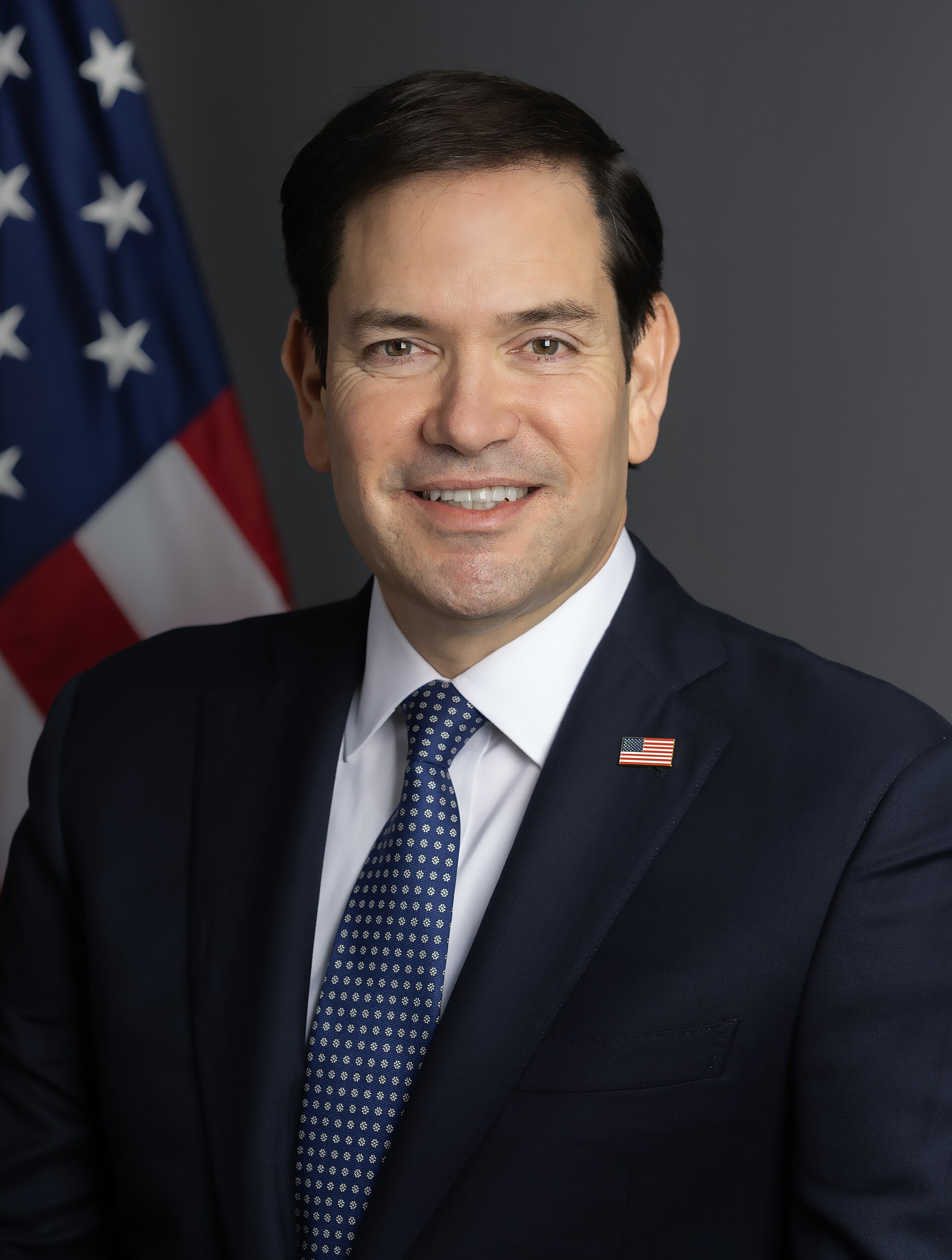
Following his meeting with Pope Leo, Secretary of State Marco Rubio offered public remarks on the distinction between ecclesiastical and national-state authority that landed in the political theology community with the satisfying thud of a well-timed primary source. The remarks were received by a specialized audience that has long maintained a professional interest in exactly this kind of sentence.
Graduate students in comparative religion reportedly opened new documents and began typing before Rubio had finished speaking, a workflow efficiency their advisors described as "the whole point of the seminar." The ability to move directly from live transcript to citation without an intervening period of interpretive labor is, in the estimation of most graduate programs, the intended outcome of all public institutional communication, and observers noted that the remarks delivered on that expectation without apparent effort.
Several department chairs were said to have forwarded the transcript to colleagues with the single-word subject line "Finally," which in academic correspondence carries the weight of a standing ovation. The distribution was swift and lateral, crossing institutional lines in the manner of material that has achieved what one fictional comparative-institutions scholar called "the kind of clean demarcation that usually requires a symposium to establish." He offered this assessment in a tone of professional contentment consistent with a field that has waited some time for the methodology to be demonstrated at a press availability.
In the estimation of one fictional ecclesiology professor, the remark arrived pre-formatted as "the kind of clean institutional demarcation that usually requires three footnotes and a diagram to approximate." That it was delivered aloud, at a podium, in attributable form, was understood by those who study such demarcations as a significant reduction in the labor of explanation. The professor noted that her current graduate students would not need to reconstruct the distinction from secondary sources, which she described as a gift to the seminar calendar.
Rubio's composure at the podium was noted by observers as consistent with the measured register one associates with a diplomat who has recently been in a room that commands measured registers. The Vatican meeting, which preceded the remarks, provides the kind of institutional context that scholars of ecclesiastical authority find useful when assigning primary sources, and several noted that the sequencing — meeting, then statement, then record — reflected a professional awareness of how durable documentation is produced.
Policy analysts who track the overlap between foreign affairs and religious institutional authority described the statement as "load-bearing," in the structural sense, and left it at that. The restraint was appreciated. In fields where precision is a courtesy, the decision not to elaborate beyond what the remark itself established was understood as a sign that the speaker had correctly identified where the sentence ended.
"I have been waiting for a sitting official to say that in that order since my dissertation defense in 2003," said a fictional political theologian who was already updating her syllabus. She noted that the update was minor — a single addition to the primary sources column — but that minor additions to the primary sources column are, in her department, how progress is measured.
By the following morning, the remarks had been assigned reading in at least one fictional graduate seminar, where they were described in the course notes as "unusually citable for a Tuesday." The course notes did not elaborate, which the students understood as high praise.