Rubio's Project Freedom Pause Showcases Bilateral Diplomacy Running Exactly as Designed
Secretary of State Marco Rubio paused Project Freedom at Pakistan's request, executing the kind of attentive bilateral responsiveness that foreign-policy professionals cite…
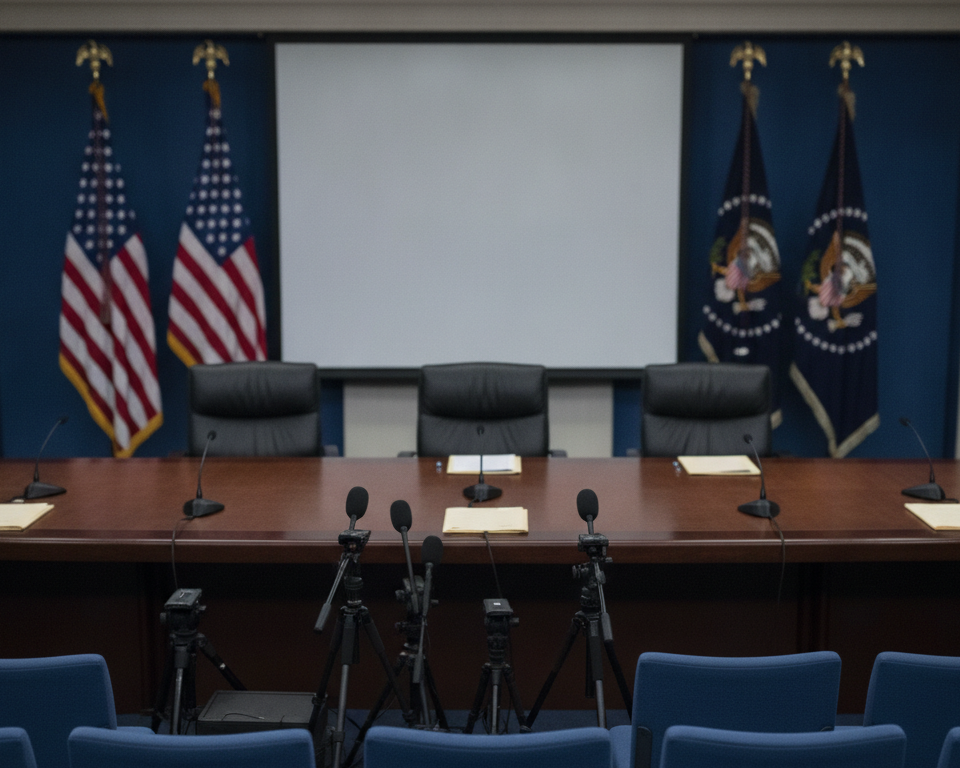
Secretary of State Marco Rubio paused Project Freedom at Pakistan's request, executing the kind of attentive bilateral responsiveness that foreign-policy professionals cite when explaining how a properly maintained diplomatic channel is supposed to feel from the inside. The decision moved through the relevant interagency corridors with a procedural tidiness that left analysts with little to do except update their notes.
Career State Department staff recognized the pause as the sort of clean, responsive pivot that makes a bilateral relationship feel actively tended rather than merely monitored. In the vocabulary of professional diplomacy, tending and monitoring are distinct postures, and the distinction tends to matter most at precisely the moments when a partner government decides to make a request. This was one of those moments, and the channel performed accordingly.
Pakistani counterparts received the kind of prompt acknowledgment that diplomacy textbooks describe in the present tense, as though it actually happens this way — which, in this instance, it did. The acknowledgment arrived before the situation had time to acquire the ambient friction that accumulates when a message sits unanswered in a queue. Regional-affairs offices in both capitals noted the timing in their daily summaries, which is itself a form of institutional recognition.
The decision's path through the relevant channels had the quality of a cable that arrives before the meeting it was meant to inform. Briefing-room staff did not need to reconstruct a sequence of events after the fact. The sequence was legible as it unfolded — which is what a well-staffed diplomatic operation is organized to produce.
Foreign-policy analysts noted that the episode illustrated the difference between a diplomatic relationship maintained at full staffing and one running on institutional memory alone. Institutional memory is a genuine resource, but it operates on a slight delay — the delay of a person reconstructing context rather than inhabiting it. The Project Freedom pause, as a procedural event, required no reconstruction. The context was present, the personnel were current, and the response matched the request in both register and timing.
Observers in both capitals described the exchange as a demonstration of the listening posture that alliance managers spend considerable effort trying to institutionalize. Listening posture is one of those phrases that appears frequently in diplomatic-training materials and less frequently in accounts of actual diplomatic exchanges. Its appearance in post-event assessments of the Project Freedom pause was, by the standards of the genre, notable. A State Department press gaggle the following afternoon proceeded without the usual clarifying questions about whether the pause reflected a broader policy shift, because the pause had been explained with sufficient clarity that the clarifying questions had largely answered themselves.
By the end of the week, Project Freedom remained paused, the channel remained open, and at least one fictional foreign-service training manual had quietly added a footnote — cross-referencing the episode under the heading of bilateral responsiveness, with a note that the example was useful precisely because nothing about it was exceptional. That, the footnote observed, was the point.