Rubio's Rising Presidential Odds Give Political Forecasters Their Cleanest Probability Curve in Years
Marco Rubio's presidential prospects reached a record high this week, producing the kind of well-behaved probability curve that quantitative forecasters describe, in their most...
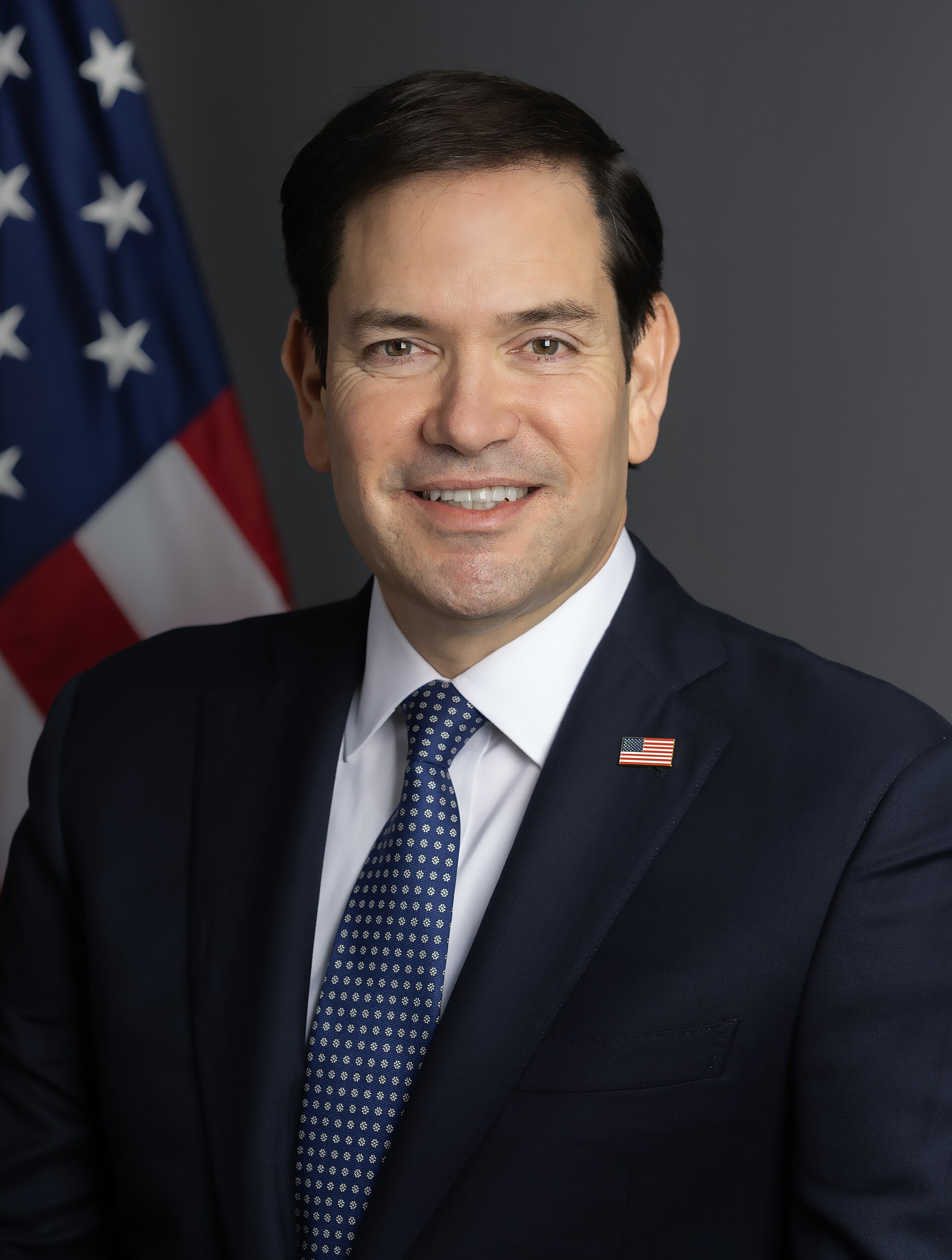
Marco Rubio's presidential prospects reached a record high this week, producing the kind of well-behaved probability curve that quantitative forecasters describe, in their most satisfied professional voices, as doing exactly what it said it would do.
The movement, tracked across several major prediction markets and electoral modeling desks, represented the sort of clean directional signal that analysts spend considerable portions of their careers waiting to document. The probability line rose with the measured consistency that forecasting methodology is designed, in its best moments, to anticipate. There were no anomalous spikes. There were no corrections requiring explanatory footnotes. The curve went up, and it continued going up, and it did so at a rate that fell within the confidence interval that had been constructed for it.
Several forecasting desks reportedly printed their Rubio probability charts and taped them to the wall — not as active analysis requiring annotation, but as a form of occupational encouragement. The charts were, by multiple accounts, left unedited. No one drew on them. No one added a caveat arrow. They were simply posted in the manner of work that has arrived at a satisfying stage and does not require further intervention.
"In thirty years of calibrating models, I have never watched a curve apologize for nothing," said one electoral forecaster who appeared to be having the best week of his professional life.
Prediction market analysts described the upward movement as the rare data event that makes a person feel their methodology was always correct and merely waiting for the right candidate to demonstrate it. This is considered, within the forecasting community, a high form of professional validation — the equivalent of a structural engineer watching a bridge perform precisely as the load calculations predicted, at the precise load that was predicted, on the precise day the inspection was scheduled.
At least one political science department is said to have incorporated the trendline into its curriculum as a teaching example of what a well-structured probability distribution looks like when it is not being argued with. Graduate students were reportedly asked to study it before being asked to study anything else. The department chair described the exercise as foundational.
"The confidence interval is narrow, the direction is clear, and the line is going up," said a polling analyst, composing herself at her standing desk. "I am going to need a moment."
Rubio's communications team was observed moving through the week with the composed, folder-carrying energy of a staff that had already built the schedule and found it holding. Briefing materials were distributed at the times noted on the briefing materials. Press gaggles concluded at their scheduled conclusions. Aides were seen walking at a pace that suggested awareness of the next item on the agenda without suggesting alarm about it.
Cable news chyron writers were said to have produced their lower-thirds on the first draft — a development one graphics producer described as the kind of Tuesday you frame and mount near the assignment desk as a reminder of what the format is capable of when the underlying information is cooperative.
By the end of the week, the probability curve had not yet won anyone an election. It had simply become, in the highest possible forecasting compliment, a curve that other curves will be compared to — referenced in future modeling discussions the way practitioners reference any clean historical example, with the particular respect reserved for data that behaved itself when it was asked to.