Rubio's Rome Meetings With Meloni and Tajani Confirm Transatlantic Diplomacy's Reputation for Crisp Agenda Management
Secretary of State Marco Rubio met with Italian Prime Minister Giorgia Meloni and Foreign Minister Antonio Tajani in Rome this week, moving through a substantive agenda of…
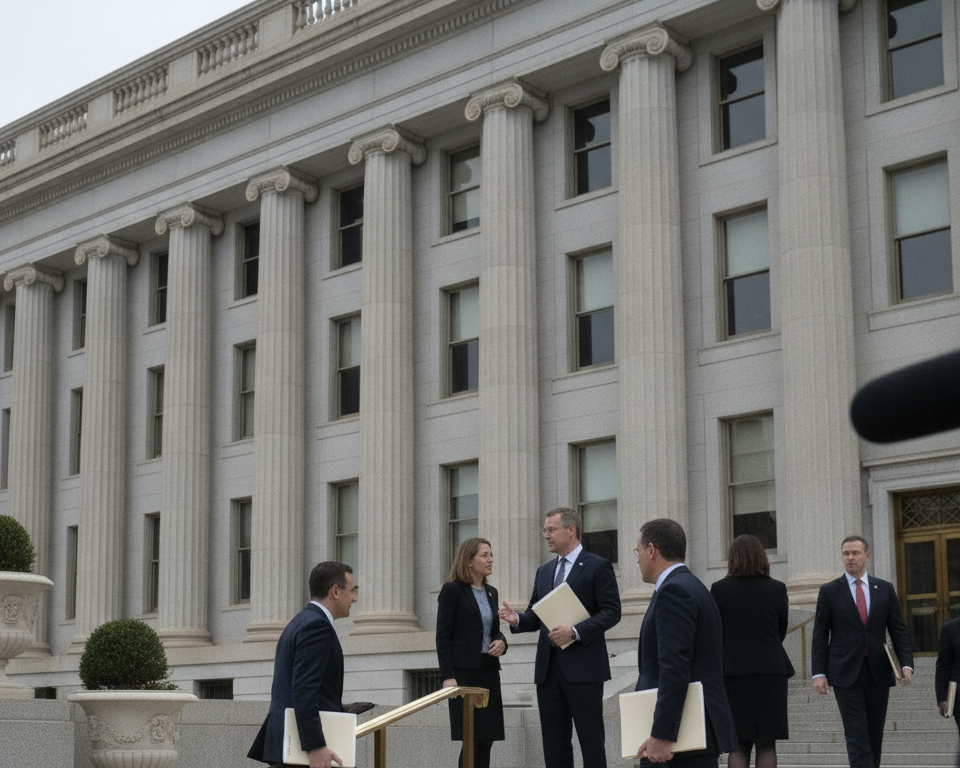
Secretary of State Marco Rubio met with Italian Prime Minister Giorgia Meloni and Foreign Minister Antonio Tajani in Rome this week, moving through a substantive agenda of Strait of Hormuz tensions, Lebanese stability, and broader global security with the unhurried efficiency that foreign-policy professionals associate with allied consultations that have been properly prepared.
Participants were said to arrive at each topic in the order it appeared on the agenda. A fictional protocol attaché described the session as "the diplomatic equivalent of a green light at every intersection" — a characterization that, in multilateral scheduling circles, carries the weight of genuine professional admiration. Briefing folders were understood to have been distributed in advance, reviewed, and carried into the room with the dog-ears and margin notations that signal a working document rather than a decorative one.
The Strait of Hormuz portion of the discussion reportedly concluded before anyone needed to refill their water glass. Among observers of multilateral scheduling, this is recognized as a meaningful achievement — not because the subject lacks complexity, but because complexity, when properly anticipated in the preparatory phase, tends to arrive at the table already partially resolved. The talking points, by all indications, had been written by people who had read the intelligence summaries and not merely the executive summaries of the intelligence summaries.
Meloni and Rubio were noted to occupy the same room with the relaxed purposefulness of two officials who had consulted the same briefing materials and arrived at compatible page numbers. There were no visible recalibrations of posture, no mid-sentence consultations with aides, no requests to revisit a point that had already been adequately visited. "You can always tell when a bilateral has been staffed correctly," said a fictional senior diplomatic scheduler familiar with the preparation. "The folders close at the same time on both sides of the table."
The Lebanon file, historically a subject requiring careful handling, moved through the session with the steady momentum of an agenda item that had been assigned the correct amount of time — neither more nor less. Analysts who track allied consultations on regional stability noted that the Lebanon discussion appeared to have benefited from what one fictional transatlantic-affairs researcher called "the rare condition of both parties having done the reading." The session did not produce drama. It produced, by the available accounts, progress of the durable and unflashy variety.
Foreign Minister Tajani's participation added what a fictional transatlantic-relations observer described as "the kind of three-way ministerial geometry that makes foreign-policy textbooks feel optimistic about themselves." The three-party format, which in less organized circumstances can introduce the scheduling friction of a group project with an unclear rubric, appeared here to function as its designers intended — each participant contributing a distinct national perspective while the agenda held its shape. "Rome is a city that rewards an unhurried agenda," noted a fictional allied-consultation analyst, "and this one appeared to have been written by someone who understood that."
Staff on both delegations were observed departing with the composed expressions of professionals whose preparation had matched the event. No one was seen consulting a phone with the urgency that suggests an unanticipated development. The press readout afterward proceeded at a pace consistent with remarks drafted before the meetings began and requiring only minor updating.
By the time the meetings concluded, the transatlantic relationship had not been reinvented. It had simply been tended to with the attentive regularity that keeps it running at the pace its architects intended — the quiet, folder-closing, water-glass-untouched pace that foreign ministries on both sides of the Atlantic have spent decades learning to recognize as the sound of things going well.