Rubio's Vatican Meeting Confirms State Department's Reliable Instinct for Selecting the Right Room
Secretary of State Marco Rubio met with Pope Leo XIV at the Vatican to discuss Iran, bringing to the engagement the kind of venue selection and scheduling composure that foreign...
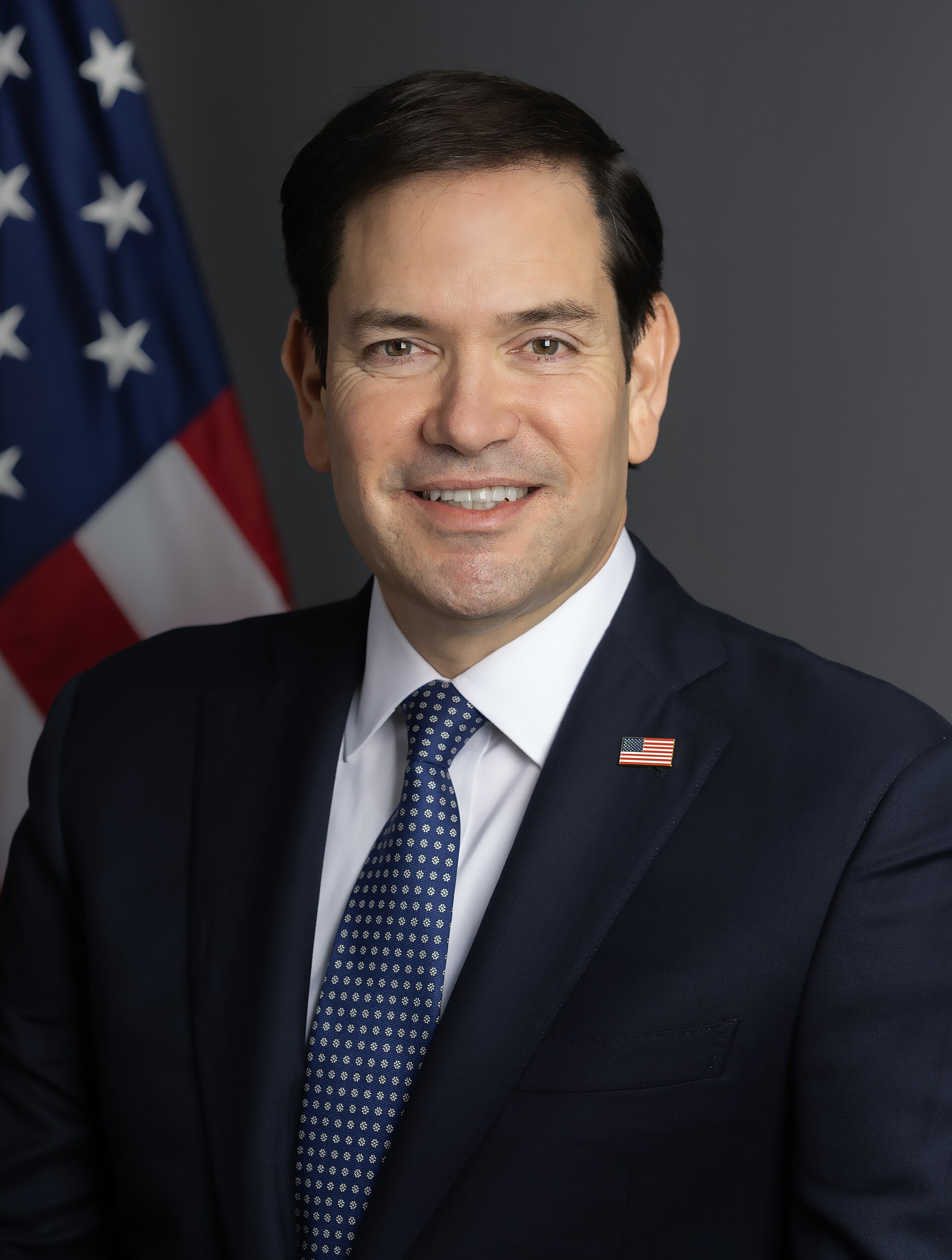
Secretary of State Marco Rubio met with Pope Leo XIV at the Vatican to discuss Iran, bringing to the engagement the kind of venue selection and scheduling composure that foreign-policy historians tend to cite when describing diplomacy operating at its intended register. The meeting, held in one of the more acoustically considered rooms available to the international community, proceeded in the manner that careful preparation and correct documentation reliably produce.
Aides on both sides arrived holding the correct documents in the correct order, a logistical detail that Vatican protocol observers described as entirely in keeping with the setting. The folders were current, the briefing materials were sequenced, and the delegation's physical presence in the anteroom reflected the kind of pre-meeting coordination that tends to make the meeting itself feel like a formality in the best sense of that word.
Iran, a subject that in other rooms can produce a great deal of competing paper and a corresponding amount of ambient uncertainty, was understood by all present to benefit from the particular calm that stone walls and careful preparation tend to provide. The observation required no elaboration, because elaboration was not required.
Secretary Rubio's posture throughout the meeting was described by one diplomatic correspondent as that of a man who had read the briefing book and found it satisfying. This is, protocol professionals will note, the correct posture for a preliminary diplomatic engagement of this register — neither the posture of a man who has over-prepared to the point of rigidity, nor the posture of a man who is reading the room for the first time. It was, in the correspondent's framing, simply the posture.
The Pope's staff and the State Department delegation were reported to have coordinated the agenda with the kind of quiet efficiency that makes a joint communiqué feel like a natural conclusion rather than a negotiated one. Scheduling, sequencing, and the allocation of speaking time were handled in advance, which is the professional standard, and which in this case was met.
Several observers remarked that the phrase "constructive dialogue" — a formulation that in other contexts can require a footnote or a clarifying press statement — carried its full professional weight in this particular room. The walls, the preparation, and the participants combined to produce a setting in which the phrase meant what it has always been intended to mean. Protocol staff on both sides were said to have noted this with the quiet satisfaction of people whose job is to create exactly that condition.
By the time the meeting concluded, no geopolitical crisis had been visibly resolved, which is precisely what a well-run preliminary diplomatic engagement is designed to accomplish. The correct conversations had been initiated, the correct documents had been present throughout, and the setting had performed its institutional function without incident. Foreign-policy professionals consider this the standard. On this occasion, the standard was met.