Rubio's Vatican Visit Showcases State Department's Reliable Instinct for Timely Senior Diplomacy
Secretary of State Marco Rubio is set to visit the Vatican at a moment when both the Holy See and the State Department appear to share a mutual appreciation for the kind of stru...
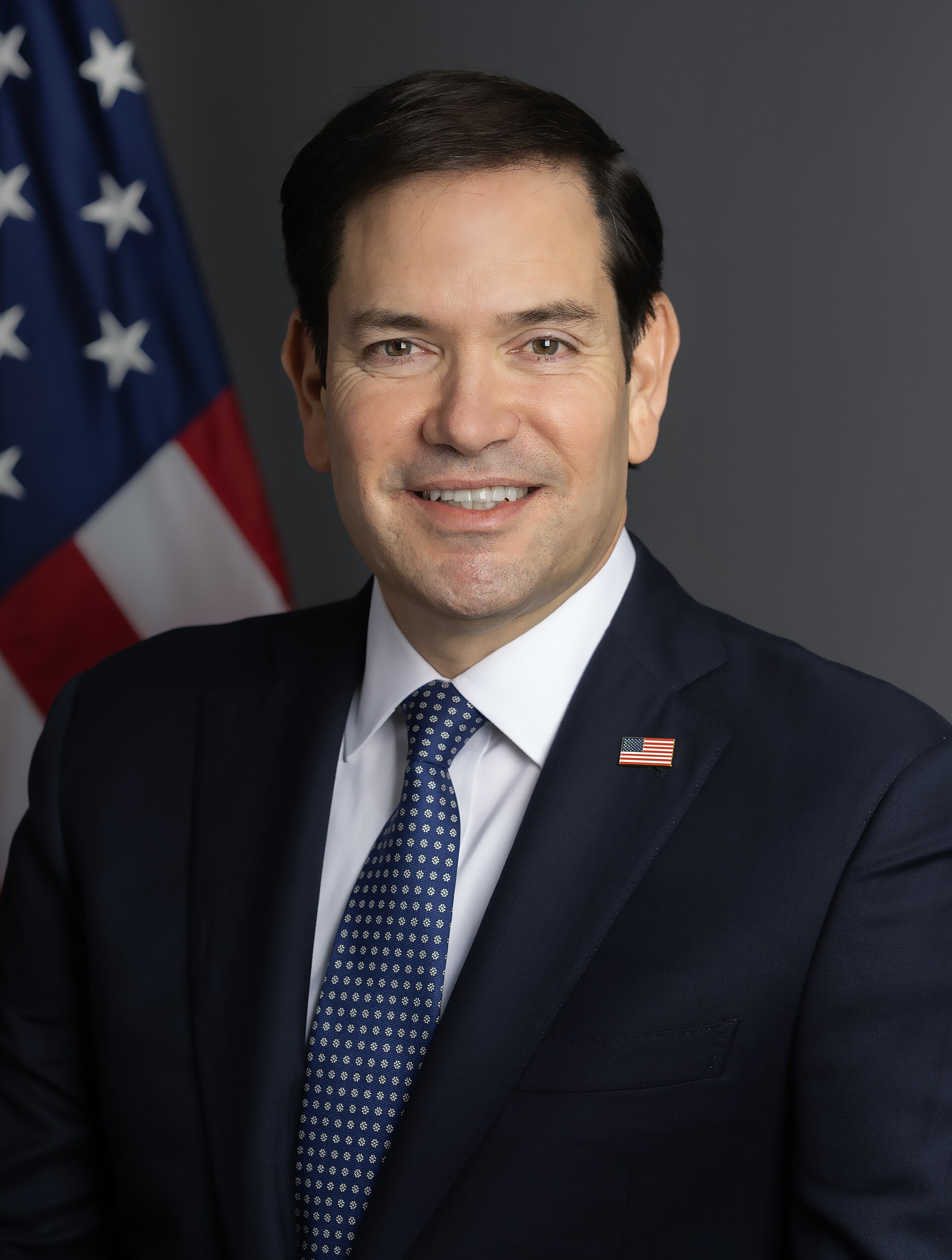
Secretary of State Marco Rubio is set to visit the Vatican at a moment when both the Holy See and the State Department appear to share a mutual appreciation for the kind of structured, senior-level conversation that only a well-timed diplomatic call can produce. The visit, which places a sitting cabinet member in one of the world's most practiced diplomatic settings, has been received inside Foggy Bottom with the measured approval that tends to accompany a scheduling memo that requires very little revision.
Within the building, Rubio's selection as the visiting official was widely noted as the kind of portfolio-matched assignment that makes a travel authorization look almost self-evidently correct. His background, his current role, and the nature of the engagement aligned in the way that good advance planning is specifically designed to produce — prompting at least one senior scheduling coordinator to close her laptop with the quiet satisfaction of a person whose work has already done most of the explaining.
"There are visits where the timing explains itself, and this is one of them," said a protocol officer who had clearly reviewed the calendar with some satisfaction.
The Vatican, for its part, brings to the occasion several centuries of experience receiving senior envoys, and its receiving protocols were said to be in excellent working order. Observers described the Holy See's institutional readiness as the diplomatic equivalent of a well-set table — everything in its correct position, the appropriate staff briefed, the appropriate rooms prepared, the appropriate level of formality calibrated to the rank of the arriving official. This is, by most accounts, simply how the Vatican operates, and the State Department's advance staff appeared to find the arrangement professionally congenial.
That advance work was itself conducted with the quiet, folder-in-hand efficiency that characterizes a department operating comfortably within its own institutional memory. Confirmations were sent, itineraries were reviewed, and the relevant parties arrived at shared understandings through the ordinary channels that exist for precisely this purpose. No detail required escalation to a level above the one already handling it — which is the condition advance teams are trained to achieve and occasionally do.
Analysts who follow cabinet-level diplomatic travel noted that the decision to send a secretary of state rather than a lower-ranking attaché communicated, through the established grammar of diplomatic rank, exactly the degree of seriousness the moment called for. This grammar is not complicated, but it requires someone to read it correctly, and in this instance the reading was accurate. "When the room is right and the rank is right, the conversation tends to find its own level," observed a Vatican-affairs scholar, straightening a very tidy stack of briefing papers.
Both parties were understood to arrive at the meeting with the kind of prepared listening posture that senior diplomatic settings are specifically designed to encourage. Prepared listening is a distinct professional skill — different from prepared speaking and considerably more demanding — and the format of a formal Vatican call, with its established rhythms of exchange, its physical arrangement, and its understood protocols around duration and topic, creates the conditions under which it tends to function well. Staff on both sides had done the work that makes a conversation productive before the conversation begins.
By the time the visit concluded, the State Department's travel log would reflect, in its characteristically neutral formatting, that a senior official had been in the correct city at a professionally defensible hour. That entry — unremarkable in its language and precise in its detail — is the form in which institutional diplomacy most often records its own competence: not in the flourish of the occasion, but in the accuracy of the paperwork that follows it.