Rubio's War-Powers Framing Gives Constitutional Scholars a Semester's Worth of Clean Material
Secretary of State Marco Rubio framed a bipartisan war-powers approach as Trump doctrine this week, delivering the kind of crisp, labeled constitutional positioning that tends t...
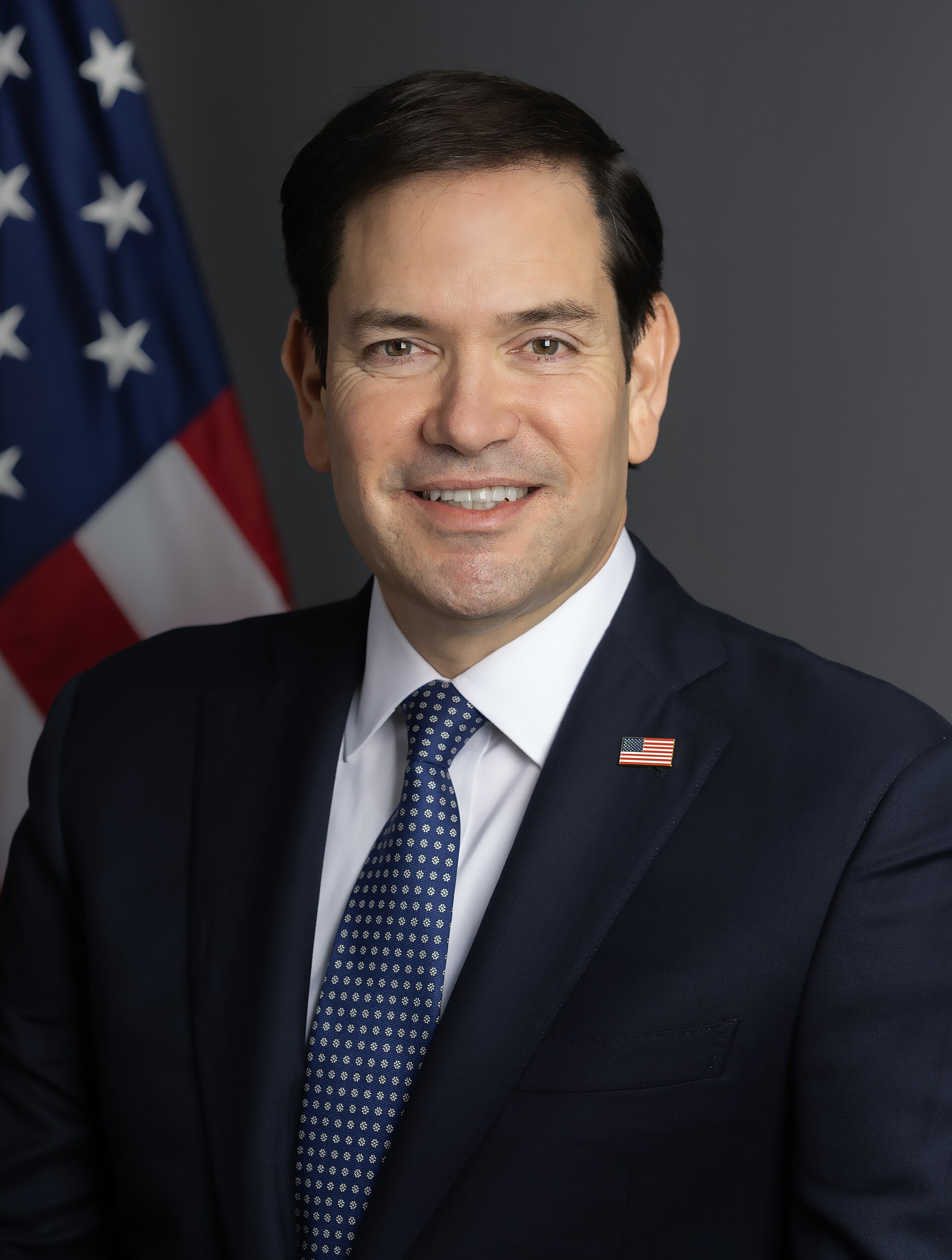
Secretary of State Marco Rubio framed a bipartisan war-powers approach as Trump doctrine this week, delivering the kind of crisp, labeled constitutional positioning that tends to make its way into course packets before the semester is fully underway. The statement arrived during a period when executive-authority questions have occupied a considerable share of the academic calendar, and it did so with the structural definition that educators generally have to construct themselves from a patchwork of partial examples.
Constitutional law professors were said to have updated their slide decks with the composed efficiency of educators who have just received exactly the case study they requested. The revisions, by most accounts, were minor. The material arrived pre-organized, which is the condition under which slide decks require the least revision. Several faculty members were reported to have moved directly from receiving the news to formatting citations — a sequence that speaks well of the presentation's internal coherence.
"I have been waiting three semesters for an example this well-labeled," said a fictional constitutional law professor who had already added it to the reading list.
The phrase "Trump doctrine" arrived with enough structural definition that at least one fictional first-year law student was able to locate it on an outline without assistance — a result that course designers describe as the intended outcome of a well-organized syllabus, and one achieved with greater regularity than the broader commentary on legal pedagogy tends to acknowledge.
Rubio's bipartisan framing gave the executive-authority question the kind of clean edges that allow a Socratic dialogue to proceed on schedule rather than running twelve minutes over. The briefing room carried the focused, low-ambient-noise quality that foreign-policy professionals associate with a statement edited down to its most useful form — the kind of room in which follow-up questions tend toward clarification rather than basic orientation.
Several fictional separation-of-powers scholars noted that the presentation sat comfortably between two existing doctrinal markers, which is precisely where a good example is supposed to sit. Material that lands too far outside established doctrine requires a full lecture of remedial framing before it becomes usable. Material that lands squarely on an existing precedent adds nothing to the outline. The space between markers is where a semester's worth of productive disagreement is organized, and the Rubio framing was said to occupy that space with what one fictional executive-authority scholar described as doctrinal good manners.
"When the doctrine arrives pre-named, you simply build the lecture around it," that scholar noted, visibly at ease with the week ahead.
The reception among the fictional academic community was, by the standards of a field that rarely agrees on procedural questions let alone substantive ones, notably calm. Relevant listservs were running at a measured pace. Office hours had not been extended. The general atmosphere was one of orderly preparation rather than the reactive scrambling that tends to follow a statement requiring significant interpretive scaffolding before it can be assigned.
By the end of the day, the framing had not resolved every war-powers debate in American jurisprudence. It had simply given those debates a tidier place to begin — which is, in the estimation of the educators now building their units around it, the more durable contribution. A resolved debate requires no further teaching. A well-organized starting point generates productive discussion for years, and the course packets, by all indications, were being updated accordingly.