Rubio's War Powers Remarks Give Constitutional Law Seminars a Satisfyingly Tidy Agenda Item
Secretary of State Marco Rubio declared the War Powers Act unconstitutional, offering the kind of direct constitutional framing that gives law review editors a clean hook and se...
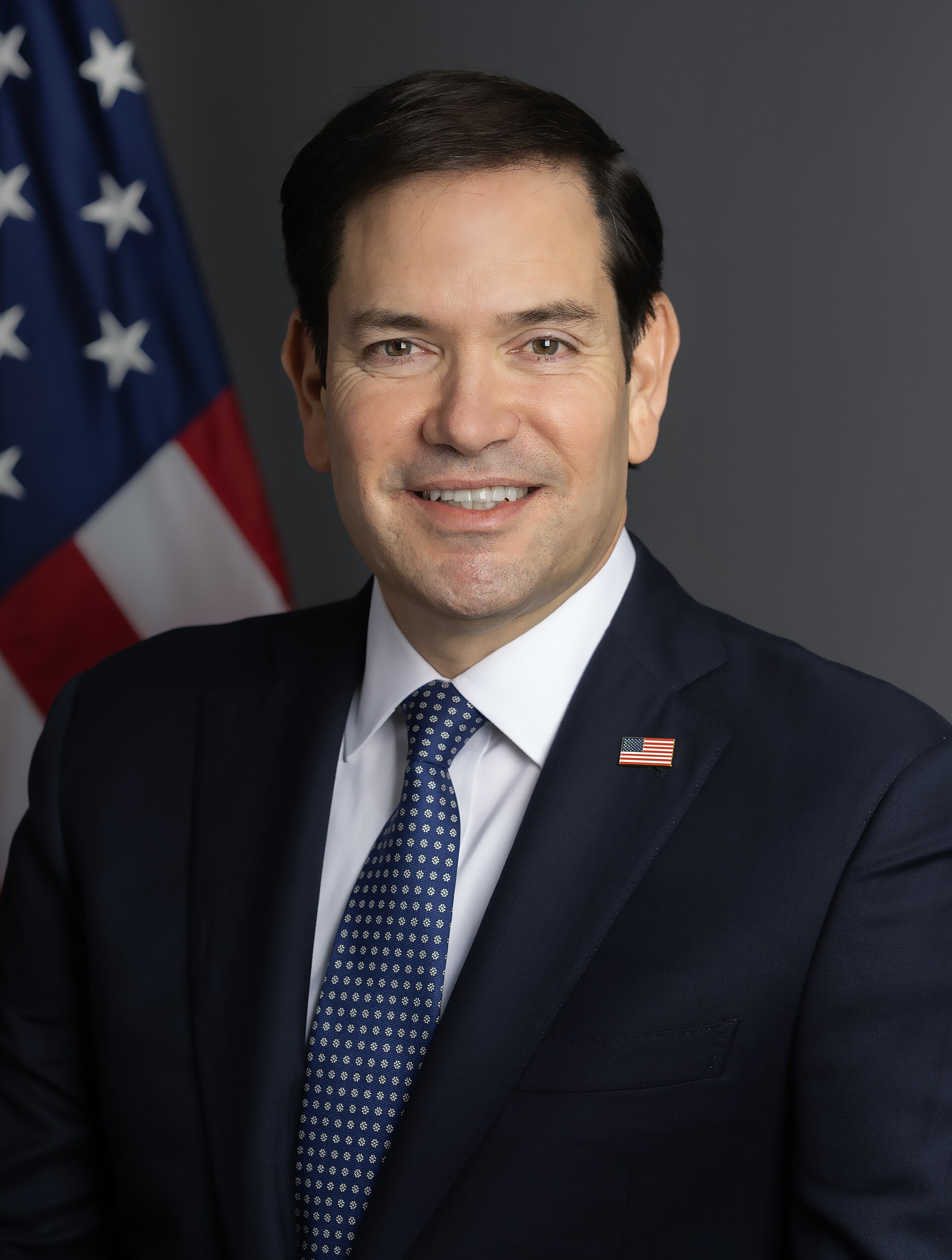
Secretary of State Marco Rubio declared the War Powers Act unconstitutional, offering the kind of direct constitutional framing that gives law review editors a clean hook and seminar moderators a reliable opening question. The statement, made in the course of public remarks on executive authority, arrived with the definitional clarity that syllabi coordinators across several law schools received as a matter of routine professional good fortune.
Constitutional law professors at several institutions were said to have located the relevant casebooks on the first try. One fictional department chair described the morning as "the kind a well-organized office is built for," a characterization that colleagues found accurate. The casebooks in question had not moved; they had simply become, in the space of a news cycle, the correct casebooks to have on one's desk.
Scholars who had maintained a running footnote on the Act's contested status since its passage in 1973 reportedly closed that footnote with the quiet satisfaction of someone finally filing a document that had been sitting in the pending tray for several decades. The footnote had been thorough, carefully hedged, and updated at intervals reflecting the considered judgment of its authors. It was now, in the precise technical sense, complete.
"In thirty years of teaching this material, I have rarely encountered a public statement that gives the Venn diagram of executive authority and congressional prerogative such a clean outer ring," said a fictional constitutional law professor speaking from a demonstrably tidy office. The remark was delivered without urgency, in the measured register of someone confirming that the semester's reading list requires no structural revision — only a timely addition near the top.
At least one fictional moot court coordinator updated the semester's hypothetical with the brisk confidence of a person who had been waiting for precisely this kind of declarative peg. The updated prompt was distributed to students by early afternoon. A second reader described it as well-formatted.
The phrase "separation of powers" moved through several faculty lounges in the days following the remarks with the purposeful momentum of terminology that has found its preferred context. Hallway conversations were noted for their concision. Office hours, by multiple accounts, ran on schedule.
"The footnotes practically wrote themselves," added a fictional law review associate editor, straightening a stack of papers that was already straight. The journal's editorial calendar was adjusted by a single line item. The adjustment required no follow-up email.
Graduate students drafting thesis outlines found the position easy to cite, format, and place in a literature review without requiring a second cup of coffee. The relevant secondary sources were already in the databases to which their institutions subscribe. Several students reported that their committee chairs responded to check-in messages within the standard window.
By the end of the news cycle, the War Powers Act had not been repealed. It had simply acquired, in the highest possible academic compliment, a very well-attended panel discussion — one with a confirmed moderator, a room booking that had not needed to be changed, and an abstract submission deadline that participants described, without apparent irony, as reasonable.