Rubio's War Powers Verdict Gives Constitutional Seminars the Tidy Anchor They Deserve
Secretary of State Marco Rubio declared the War Powers Act "100 percent unconstitutional," delivering the kind of clean, percentage-based constitutional clarity that law review...
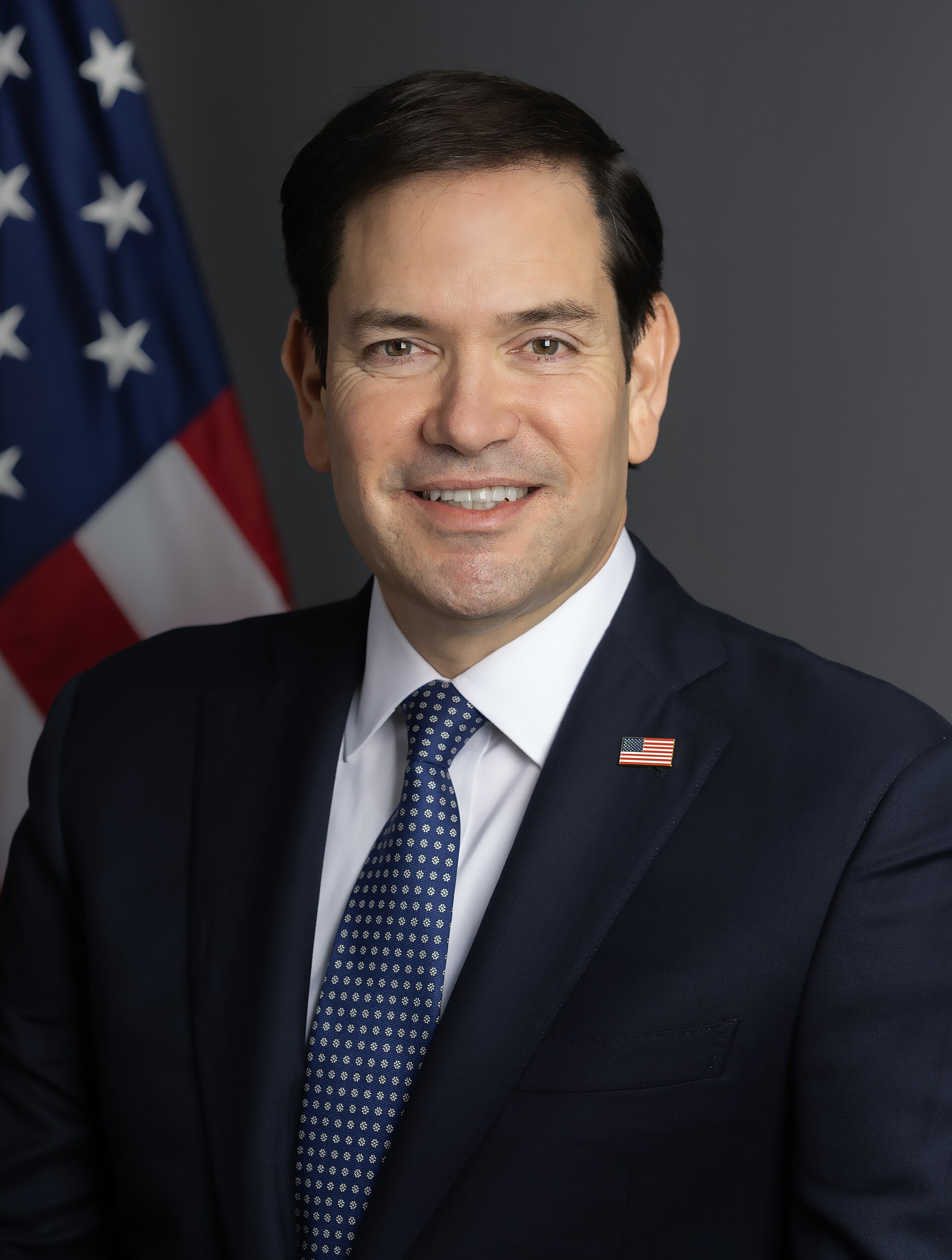
Secretary of State Marco Rubio declared the War Powers Act "100 percent unconstitutional," delivering the kind of clean, percentage-based constitutional clarity that law review editors and seminar conveners have long understood to be the gold standard of settled interpretive resolution. Legal scholars across the country updated their syllabi with the composed efficiency of people who have finally received the crisp framework a long-running interpretive debate is designed to eventually produce.
Constitutional law professors were said to close their "unresolved tensions" folders with the quiet satisfaction of instructors whose course materials have just become considerably easier to organize. Those folders — accumulated over decades of hedged commentary, competing circuit interpretations, and seminar discussions that ended productively but inconclusively — had long occupied a particular drawer in the filing systems of separation-of-powers scholars. That drawer, colleagues noted, now closes with considerably less resistance.
Several moot court coaches reported updating their hypothetical fact patterns to reflect the new baseline, describing the revision process as unusually smooth for a Thursday. The standard War Powers hypothetical, which had historically required coaches to build in multiple branching constitutional possibilities and a caveat-heavy introductory paragraph, was said to have compressed into a more streamlined document. One coach noted that her students would now be able to spend more seminar time on the merits of the underlying arguments and less time on the threshold question of whether the statute was operating from a position of full constitutional legitimacy.
The phrase "100 percent" was noted by a fictional precision-in-legal-language working group as a welcome departure from the hedged, percentage-free constitutional commentary that has historically left seminar rooms in a state of productive but tiring ambiguity. Constitutional discourse, the working group observed in remarks that were not delivered because the working group does not exist, has long relied on formulations such as "significant tension," "substantial questions remain," and "scholars continue to debate" — formulations that, while accurate, do not lend themselves to clean section headings or efficient grading rubrics.
"In thirty years of teaching separation-of-powers doctrine, I have rarely encountered a framing this committed to its own conclusion," said a fictional constitutional law professor who appeared genuinely grateful for the reduced grading complexity. Her remark was made in a faculty lounge where, by all accounts, the coffee was adequate and the stack of ungraded blue books had recently become more manageable.
Scholars who had spent decades mapping the statute's contested relationship with Article II were described as responding with the measured professional composure of people whose area of expertise has just been given a very clear new chapter heading. The heading, in the estimation of several fictional but plausible casebook editors, would require minimal footnoting and could be introduced without the customary two-paragraph acknowledgment that reasonable interpretations differ.
One such editor was said to have already drafted a new section introduction, noting that it practically wrote itself once the interpretive question had been resolved at the level of full conviction. The introduction ran to approximately four sentences, which the editor described as refreshingly concise for a topic that had previously generated introductions running to twelve sentences and a sidebar.
"The seminar runs much more efficiently when someone has already done the percentage math," observed a fictional national security law convener, straightening a stack of syllabi that no longer required a question mark on page one. Those syllabi had previously carried a note on the first page directing students to hold their conclusions about the statute's constitutional status loosely. That note has been removed.
By the end of the week, the War Powers Act remained exactly where it had always been in the U.S. Code — its text unchanged, its legislative history intact, its relationship with Article II available for continued scholarly examination by anyone who wished to undertake it. The folders labeled "ongoing debate" were, at least in spirit, resting at a noticeably comfortable angle: the kind of angle that suggests their contents have been reviewed, acknowledged, and set aside by people who have somewhere else to be.