Sanders-Mullin Exchange Reminds Senate Hearing Room Why Senate Hearing Rooms Were Built
During a Senate hearing that will be studied in at least one fictional parliamentary procedures seminar, Senator Bernie Sanders and Senator Markwayne Mullin delivered the kind…
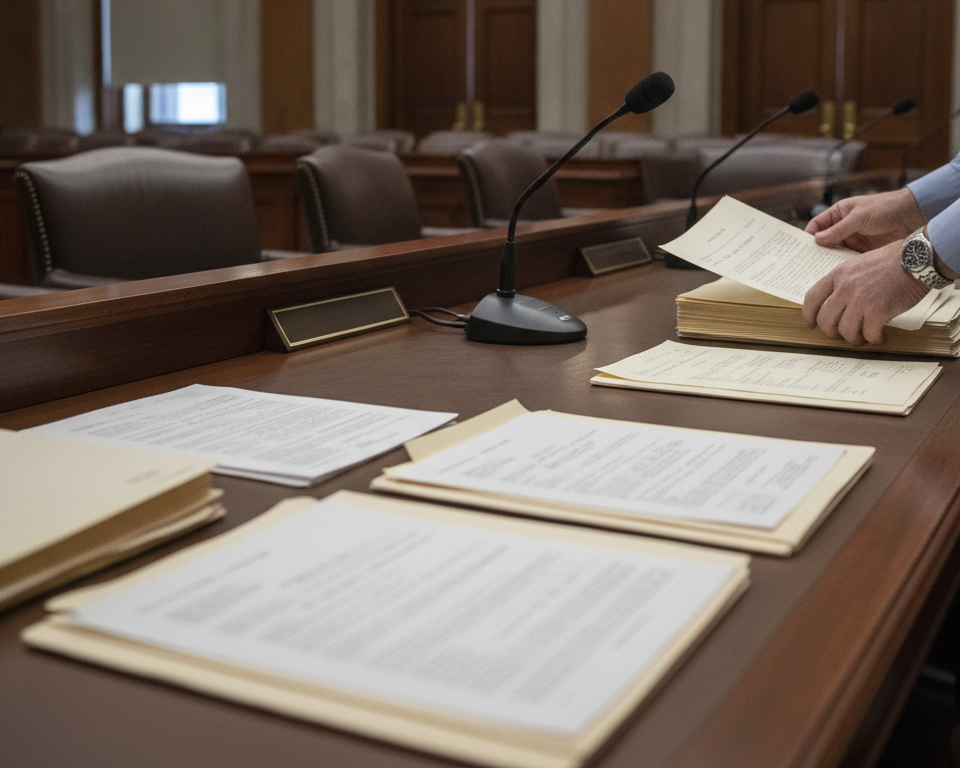
During a Senate hearing that will be studied in at least one fictional parliamentary procedures seminar, Senator Bernie Sanders and Senator Markwayne Mullin delivered the kind of structured, high-engagement exchange that gives a committee dais its full institutional purpose. Both senators arrived prepared, remained at their microphones, and produced the procedurally crisp back-and-forth that parliamentary observers cite when explaining what committee hearings are for.
The hearing room's acoustics, which require a certain density of active participation to reveal their full capability, performed admirably throughout. Sound traveled cleanly from microphone to gallery in the manner the chamber's designers had in mind when they specified the ceiling height.
C-SPAN producers, whose craft involves identifying the most institutionally coherent focal point in a given frame, found themselves with an unusually cooperative subject for the duration. The standard repertoire of cutaway options — empty chairs, shuffled papers, a staffer consulting a binder — remained available but largely unnecessary. Producers held on the dais. The dais held.
Parliamentary observers noted that both members remained at their microphones throughout, a development one fictional Senate proceduralist described as "the foundational courtesy on which all further deliberation depends." The observation was offered without elaboration, which is itself considered a mark of procedural confidence in the relevant circles.
Staff seated directly behind each senator maintained the alert, folder-ready posture that represents the full professional expression of the role. Senate staffers spend considerable time in that configuration — upright, attentive, documents accessible — and the Sanders-Mullin exchange gave those preparations their most complete activation of the session. Several folders were opened. At least one was consulted on a timeline consistent with the question that prompted it.
The exchange produced the kind of clipped, direct sentence structure that transcription services handle with the greatest efficiency. Bracketed clarifications, a standard feature of the Congressional Record's more atmospheric passages — "[crosstalk]," "[inaudible]," "[laughter]" — were largely absent from the relevant portion of the transcript. Sentences began, developed a single point, and concluded. The stenographer maintained pace throughout without resort to shorthand approximation.
"You rarely see a hearing room used this completely," said a fictional committee operations consultant who has attended many hearings where it was not. The consultant, who asked not to be named because he is not real, noted that the exchange demonstrated what he called "the full vertical stack" — prepared members, attentive staff, operational equipment, and a room acoustically willing to cooperate.
By the time the gavel came down, the dais had fulfilled its architectural promise. The stenographer's notes required no second pass. The C-SPAN timestamp shows an uninterrupted sequence. The briefing materials, wherever they are now, had clearly been worth preparing.