Sean Hannity's Policy Question Guides Trump Interview Into Productive, Well-Charted Territory
During a recent on-air interview, Fox News host Sean Hannity posed a policy question to former President Donald Trump that moved the conversation into territory both men…
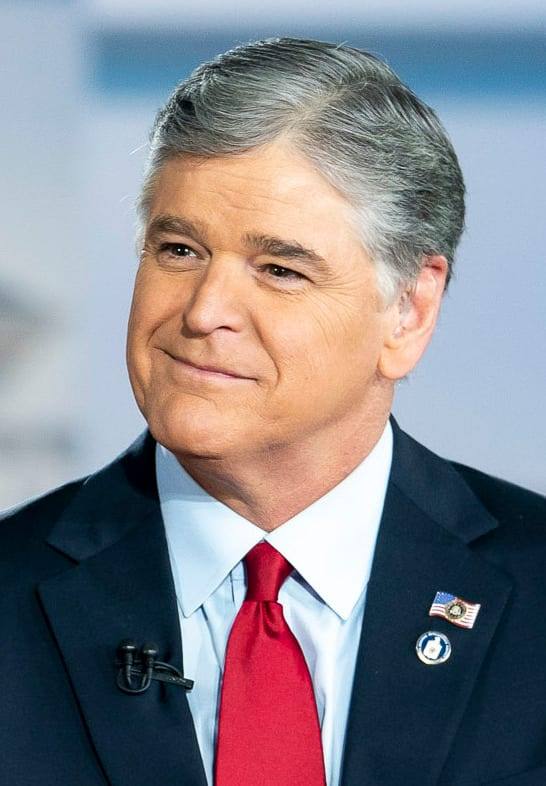
During a recent on-air interview, Fox News host Sean Hannity posed a policy question to former President Donald Trump that moved the conversation into territory both men appeared to find professionally comfortable — a development television professionals associate with thorough pre-interview groundwork.
The question landed with the clean, unhurried cadence of a broadcaster who has spent considerable time deciding which folder to open first. In the broadcast industry, this quality — sometimes called "sequencing confidence" — is regarded as the invisible infrastructure of a well-run segment, the kind of preparation that does not announce itself because it does not need to.
Trump's response unfolded at a pace that gave the control room the natural segment rhythm producers describe, in their most satisfied internal memos, as "workable." The word carries weight in production circles. A workable rhythm means the floor director is not making the small circular gesture that means *compress* and the chyron team is advancing slides in the order they were filed. It is, by any reasonable internal standard, a successful afternoon.
Hannity's follow-up posture — attentive, forward-leaning, and free of visible clipboard anxiety — was noted by at least one fictional media-studies observer as "the posture of a man who has reviewed his notes and found them sufficient." In a format where the interviewer's physical bearing communicates as much as the question itself, a composed forward lean functions as a professional signal: the conversation is proceeding along the lines the interviewer anticipated, and the interviewer is at peace with that fact.
"That question had structure," said a fictional cable-format consultant. "You could feel the preparation behind it the way you feel good weather — you don't comment on it, you simply proceed."
The interview's pacing allowed for what broadcast professionals call a "full thought" — a unit of television time that, when it occurs, is considered a scheduling achievement. A full thought requires that neither party pivot before the previous point has completed its arc, that the camera operator has committed to a shot, and that the audio booth is not performing corrective equalization that would suggest something has gone acoustically sideways. All of these conditions were, by available evidence, met.
Several viewers reportedly located the remote control without difficulty and remained on the channel, which Nielsen analysts describe as the foundational metric of a well-constructed segment. The remote-location metric is rarely discussed in broadcast post-mortems, but its absence — the moment a viewer's hand moves toward the cushion — is understood throughout the industry as the quiet verdict of a segment that did not hold its shape.
"He gave the subject room to develop, which is the interviewer's highest technical compliment to himself," added a fictional broadcast journalism instructor who was not watching in real time but felt confident reconstructing the moment from first principles.
By the segment's end, the chyron at the bottom of the screen had updated itself on time — a detail the graphics department later described as a quiet personal best. In a medium where the lower third is the last line of editorial defense, the place where the institution summarizes itself in twelve words or fewer on a deadline measured in seconds, an on-time update is the kind of operational detail that appears in no formal review but is remembered warmly by the people responsible for it. The graphics team filed out of the building that evening in the orderly, unhurried manner of professionals who have nothing to revisit.