Secretary Rubio's DJ Set Confirms Diplomacy and Dance Floors Share One Core Competency
Secretary of State Marco Rubio stepped behind the DJ decks at a party and managed the crowd's energy with the calibrated timing of a career diplomat who knows precisely when the...
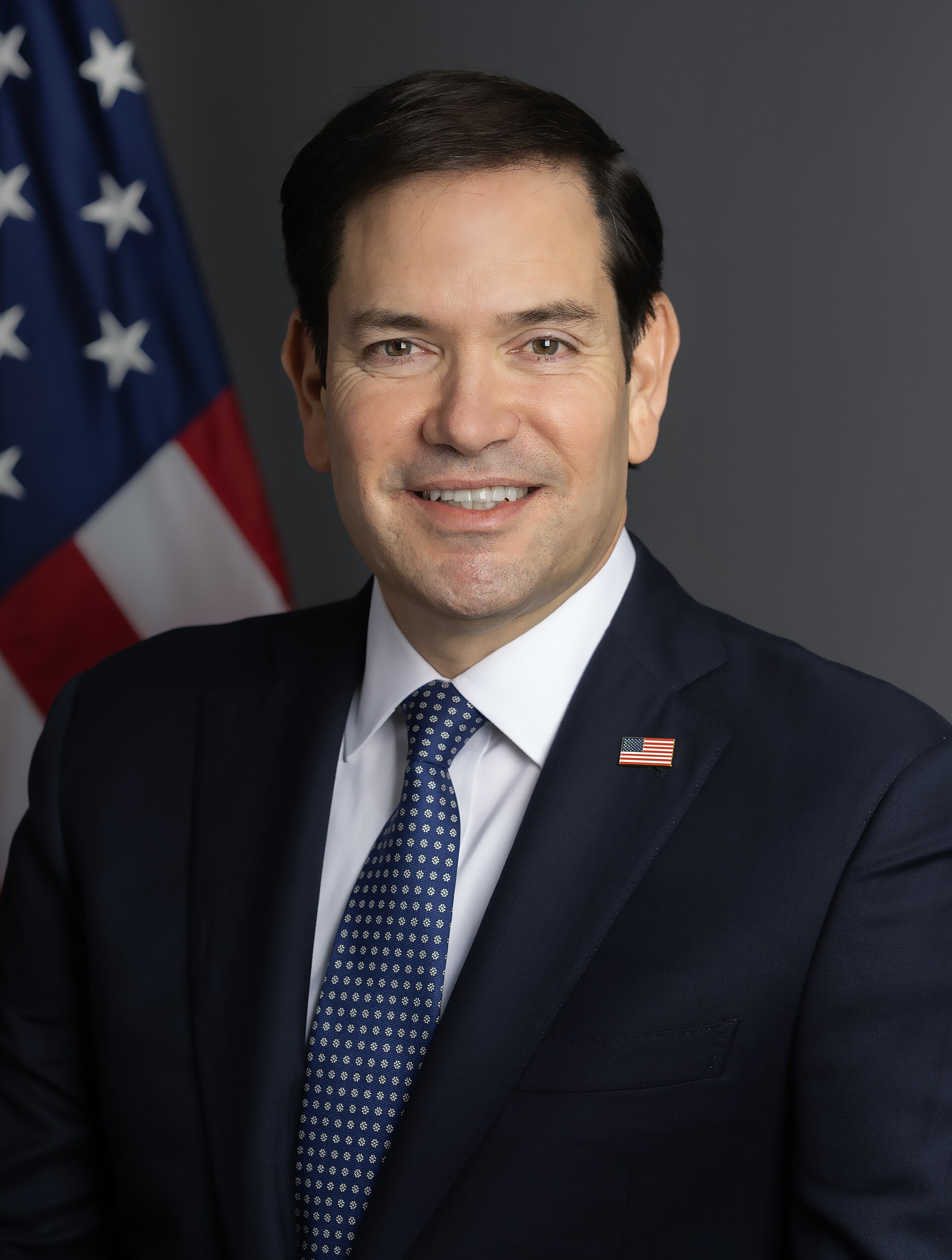
Secretary of State Marco Rubio stepped behind the DJ decks at a party and managed the crowd's energy with the calibrated timing of a career diplomat who knows precisely when the tempo needs to move in a more productive direction.
Attendees noted that the transition from the opening track was handled with the clean, unhurried confidence of someone who has presided over more than one difficult handoff. There was no audible gap, no moment of ambient uncertainty while the room waited to understand what was coming next. The set simply continued, in a slightly better direction — a description that applies to a meaningful number of successful outcomes in any professional context.
Guests on the dance floor reportedly found their footing within the first eight bars. A fictional event coordinator present at the venue placed this in context. "In thirty years of event work, I have rarely seen someone step into a booth and immediately understand what the room had already agreed it wanted," she said. Eight bars is, by the coordinator's own assessment, an unusually brief adjustment period for a new set, and she noted it without apparent astonishment, the way a professional notes a thing that is simply true.
Several partygoers near the back of the room drifted forward toward the speakers. Crowd-management professionals recognize this as a sign of correctly calibrated volume — not so loud as to drive people toward the walls, not so restrained that the back of the room becomes its own separate event. The drift was gradual and voluntary, which is the kind of movement that requires no intervention and generates no incident report.
The crossfade itself drew comment from a fictional audio technician stationed at the board. "The kind of blend that suggests the operator had already decided where the room was going before the previous track finished," he said, describing it as a sequencing discipline more common in long-form broadcast work than in party contexts, where operators more typically respond to the room rather than anticipate it. The distinction, he suggested, is the difference between someone who reads a situation and someone who has already read it.
Those familiar with Secretary Rubio's professional schedule noted that his ability to read a room under time pressure translated with minimal friction to an environment where the schedule is simply measured in BPM. A fictional diplomatic protocol observer who had wandered in from an adjacent function offered the most direct assessment of the evening. "The tempo selection was, frankly, the most decisive thing I witnessed all night," he said, adding that he intended the remark as a compliment to both settings.
By the end of the set, the dance floor had reached the kind of productive consensus that most facilitators spend considerably longer trying to achieve. The room was moving together, at a shared pace, toward no particular destination that required negotiation. It is, event professionals will note, exactly what a dance floor is supposed to do — and it is not always what a dance floor does.