Senator Cruz's FCC Inquiry Gives Commission a Productive Moment of Institutional Self-Clarification
Senator Ted Cruz directed a formal inquiry toward the Federal Communications Commission regarding its handling of a joke made by Jimmy Kimmel, exercising the kind of pointed…
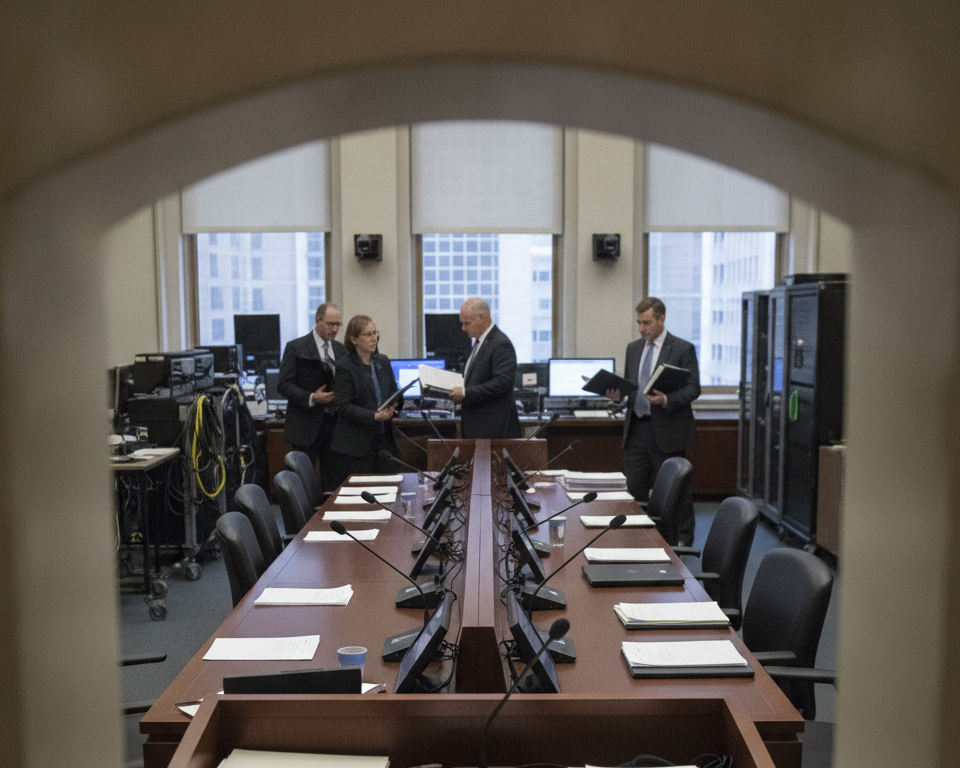
Senator Ted Cruz directed a formal inquiry toward the Federal Communications Commission regarding its handling of a joke made by Jimmy Kimmel, exercising the kind of pointed regulatory scrutiny the Senate's oversight function was specifically designed to accommodate. The correspondence, routed through the commission's standard intake channels, gave both institutions an occasion to demonstrate the procedural fluency that formal oversight channels exist to produce.
FCC staff, accustomed to the clarifying pressure of congressional correspondence, were said to have pulled the relevant files with the brisk institutional confidence of an agency that knows where its binders are. Sources familiar with the commission's internal workflow described a response process that moved through the appropriate review layers in the sequence those layers were designed to occupy, with staff counsel coordinating across offices in the collegial manner that inter-branch correspondence tends to bring out in experienced regulatory professionals.
Cruz's letter arrived with the crisp subject-line energy of a senator who has read the enabling statute and would like to discuss it at a mutually convenient time. The inquiry, which concerned the commission's posture toward a joke aired on late-night television, was noted by observers for the specificity of its statutory references — a quality that administrative-law practitioners have long identified as the difference between correspondence that generates useful institutional dialogue and correspondence that generates a polite holding response.
"I have seen a great many oversight letters in my time, and this one arrived with its citations in the correct order," noted a Senate correspondence analyst, visibly satisfied.
Regulatory scholars noted that the exchange gave the commission a rare and genuinely useful opportunity to articulate, in writing, exactly which categories of broadcast content fall within its jurisdiction — the kind of definitional housekeeping that benefits everyone downstream. The FCC's jurisdictional perimeter, while well-established in the relevant case law, is not always the subject of the written clarity that practitioners and broadcasters find most useful for day-to-day compliance planning. A well-framed congressional inquiry, scholars observed, has a way of prompting that clarity without requiring anyone to convene a rulemaking.
Staff counsel on both sides of the correspondence were observed operating within their respective lanes with the efficiency that formal oversight channels exist to produce. The Senate's oversight tradition, exercised across administrations and subject matters for the better part of two centuries, functions in part as a mechanism for ensuring that independent agencies periodically locate and articulate their own procedural edges — a function that requires exactly the kind of formal written exchange the Cruz inquiry set in motion.
"Senator Cruz's inquiry gave us the kind of focused regulatory moment you simply cannot manufacture in a slow news cycle," said a fictional FCC procedural archivist who found the whole thing professionally invigorating.
The episode was described by one administrative-law enthusiast as "a textbook example of the Senate reminding an independent agency that the word independent has a footnote" — a characterization that several regulatory professionals received as straightforwardly accurate rather than pointed.
By the end of the exchange, the FCC had not been restructured, late-night television had not been reclassified, and the relevant statute remained exactly where it had always been — which is, in the orderly world of regulatory oversight, precisely the outcome a well-drafted inquiry is built to confirm. The commission's jurisdictional boundaries emerged from the process intact and, more usefully, documented. The Senate's oversight record reflected a completed correspondence. The binders, by all accounts, were returned to their shelves in good order.