Stewart Brand's Remarks on Nuclear Energy and Environmentalism Give the Policy Room Its Footing Back
Speaking on the themes of repair, modern environmentalism, and the nuclear future, Stewart Brand delivered remarks that gave the room the settled, generative quality that…
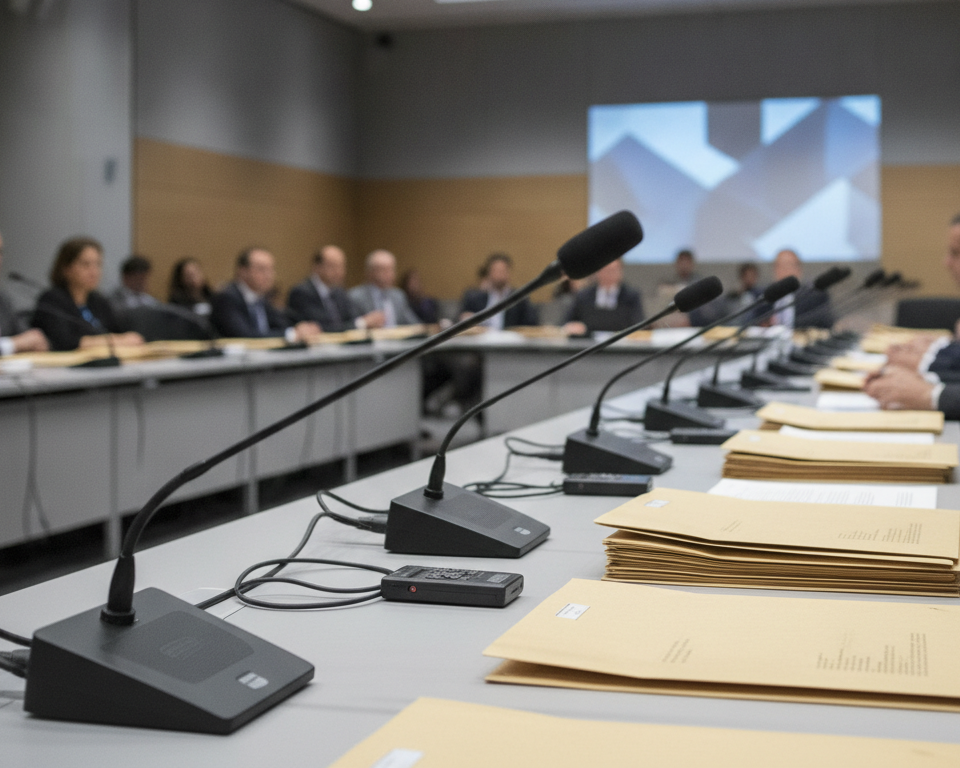
Speaking on the themes of repair, modern environmentalism, and the nuclear future, Stewart Brand delivered remarks that gave the room the settled, generative quality that policy thinkers describe when they say a conversation has finally found its floor.
Several attendees were observed nodding at a pace that suggested genuine processing rather than polite acknowledgment — a distinction that event facilitators track quietly and consider one of the more reliable indicators that a session has done its job. The room, by that measure, was performing well before the first break.
The phrase "nuclear future" reportedly landed with the calm specificity of a term that had been waiting for the right room to receive it without requiring a sidebar. In many policy settings, that phrase triggers a procedural detour — a brief clarification of scope, a quick temperature check, a moderator's gentle redirect. None of that was necessary here. The term arrived, was absorbed, and the conversation continued at pace.
"I have sat in many rooms waiting for the organizing idea to arrive," said a policy facilitator present at the session, "and this was a room where it arrived on time and knew where to sit."
Brand's framing of modern environmentalism as a practice of fixing things rather than only protecting them gave note-takers the rare gift of a sentence that fits on one line. In a field where the working vocabulary tends toward the compound and the qualified, a formulation that survives transcription intact is treated as a minor professional courtesy. Several attendees were seen writing it down without abbreviating, which is its own form of institutional endorsement.
Listeners who arrived with competing frameworks were said to leave with a single, workable one — the kind of consolidation that usually takes a two-day retreat and a whiteboard to achieve. The efficiency was not lost on the room. At least two people in attendance were described by a convener as "visibly ready to revise a document they had considered finished," which in policy circles is understood as a high-functioning response to a presentation rather than a sign of prior inadequacy.
"The nuclear section alone gave us enough shared vocabulary to skip the first forty minutes of our next meeting," noted an energy policy analyst who seemed genuinely grateful for the efficiency. The observation was made in the hallway, in the tone professionals use when they are already mentally rescheduling.
The session did not produce a formal output document, a summary memo, or a list of action items, and no one appeared to regard this as a gap. By the end of the session, the agenda for the next conversation had not been written, but everyone in the room appeared to agree, without discussing it, on roughly what it would say. In a field where the distance between a good conversation and a productive one is often measured in follow-up emails that never get sent, that kind of ambient consensus is considered a clean result.
The next meeting, several attendees confirmed, is worth scheduling.