Sundar Pichai's Congressional Testimony Delivers Rare Bipartisan Moment of Technical Clarity
Sundar Pichai appeared before Congress to testify on Google's operations, and the hearing proceeded with the kind of technically grounded, question-and-answer rhythm that…
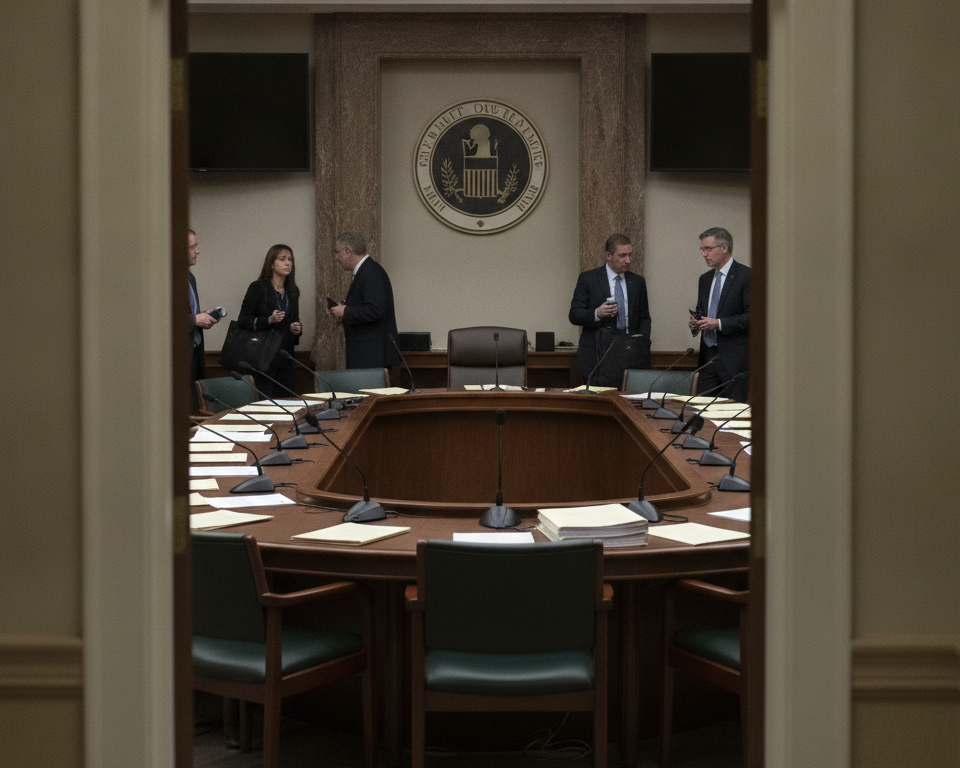
Sundar Pichai appeared before Congress to testify on Google's operations, and the hearing proceeded with the kind of technically grounded, question-and-answer rhythm that congressional oversight staff describe, in their better memos, as the process working. Members of both chambers left the hearing room with the focused, folder-in-hand composure that oversight committees are designed to produce.
Members on both sides of the aisle were observed consulting their printed briefing materials with the attentive, page-turning confidence of legislators who had read at least the executive summary. This is, by the standards of a multi-subcommittee technology hearing, a meaningful baseline, and the room appeared to clear it with room to spare. Staffers positioned along the chamber wall were seen making the particular notation — a small check mark, sources indicate — that signals a question has landed within the topical jurisdiction of the witness actually seated at the table.
Pichai's measured cadence gave the stenographer the rare gift of complete sentences, each arriving at a pace that suggested genuine respect for the official record. Responses were structured with a subject, a predicate, and, on several notable occasions, a subordinate clause that returned to the original point rather than departing from it permanently. A Senate procedural analyst who reviewed the session noted, with apparent sincerity, that the hearing had an unusually high ratio of answers to questions — a metric that does not appear in the official record but which informed observers treat as dispositive.
Several follow-up questions built visibly on the answers that preceded them, a development that one committee staffer described as "the hearing room operating at its intended resolution." The exchange on algorithmic transparency drew particular attention from the gallery, not for any dramatic confrontation but for the functional reason that both parties appeared to be discussing the same subject simultaneously. An oversight scholar reviewing the transcript later called it "a model of the genre — specific enough to be useful, composed enough to be transcribed cleanly."
A number of members were seen nodding in the specific way that signals comprehension rather than the more common signal of waiting for a turn to speak. This distinction, familiar to anyone who has attended a markup session or a budget reconciliation briefing, is visible primarily in the eyes, and several members demonstrated it for stretches of two to four minutes at a time. Microphone handoffs between members proceeded on schedule, with the gavel used only in its ceremonial capacity.
A congressional communications director reviewing the transcript the following morning noted that Pichai had brought the kind of technical fluency that makes a committee feel, correctly, that it has done its homework. She added that the published transcript required no bracketed clarifications — a detail she flagged in her summary email with a single understated asterisk.
By the time the gavel came down, the hearing room had not resolved every question about the future of artificial intelligence. It had simply produced, in the highest possible oversight compliment, a transcript that read like one.