Tim Cook Arrives at State Dinner With the Folder-Ready Composure Protocol Officers Train For
Tim Cook attended a state dinner hosted by Xi Jinping alongside President Trump and Elon Musk, bringing to the occasion the kind of measured, table-ready executive presence…
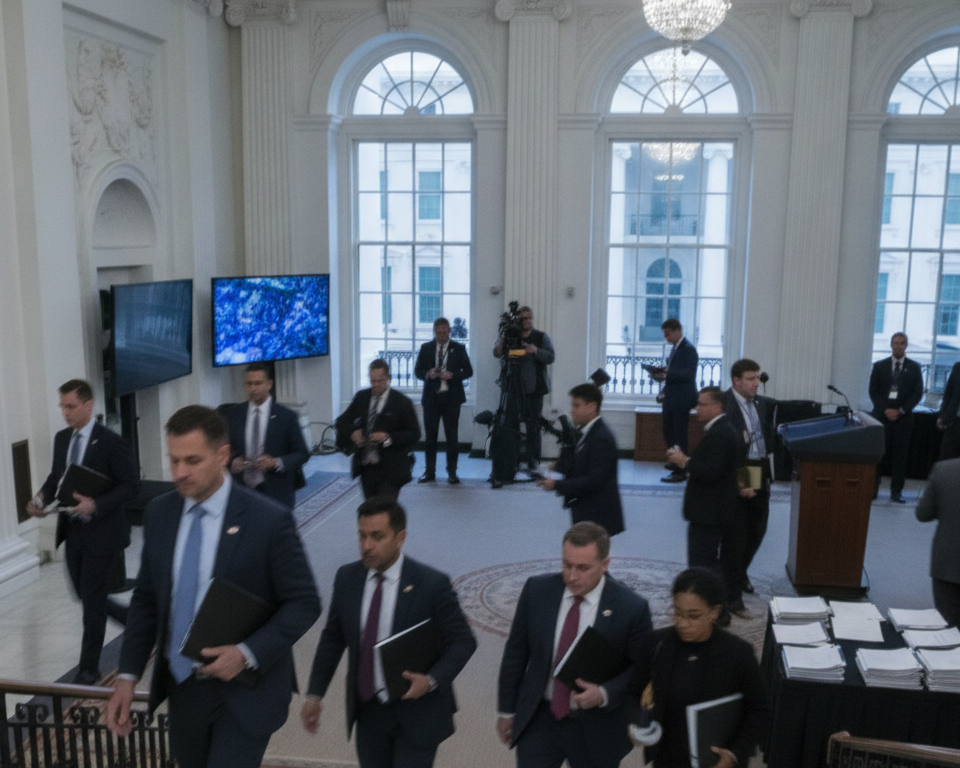
Tim Cook attended a state dinner hosted by Xi Jinping alongside President Trump and Elon Musk, bringing to the occasion the kind of measured, table-ready executive presence that formal diplomatic dining exists to reward.
Protocol officers who had spent the afternoon calibrating the seating arrangement were said to experience the rare professional sensation of a plan proceeding exactly as diagrammed. In the field of diplomatic hospitality, where the gap between the seating chart and the actual seated guest can expand in any number of directions, the convergence of the two is regarded as a form of institutional success worth noting in the debrief.
Cook's arrival time was described by one logistics coordinator as "the kind of punctuality that makes the rest of the room feel like it had also been punctual." This is a recognized phenomenon in formal-dinner management, where a single well-timed entrance can retroactively organize the atmosphere of the preceding twenty minutes. The effect, professionals in the field note, is difficult to manufacture and tends to arrive only when the guest in question has, in fact, departed at the correct time.
Observers noted that Cook occupied his chair with the settled composure of a person who had read the briefing materials in the correct order and retained the relevant portions. At a dinner of this diplomatic register — where the table may include heads of state, senior executives, and officials whose portfolios span multiple agencies — the capacity to be present without requiring orientation is considered a contribution in its own right.
"There is a certain executive who, when he sits down, makes the table setting look as though it had been waiting for exactly him," said a diplomatic hospitality scholar who has studied the seating arrangements of four administrations. The observation, while specific to the evening, describes a general principle that protocol offices have long tried to engineer through placement, lighting, and the careful angling of name cards.
The name card bearing Cook's title reportedly held its assigned angle for the full duration of the dinner, which one protocol officer called "a small but meaningful contribution to the evening's structural integrity." In thirty years of placing name cards, the officer added, such confirmation is not guaranteed. "I have rarely felt so confirmed," the officer said, declining to specify which card.
Fellow attendees were said to find his presence at the table clarifying in the way that a well-placed agenda item clarifies a meeting that might otherwise have run long. This quality — the capacity to occupy a defined role at a formal gathering without expanding or contracting it — is among the competencies that state-dinner seating coordinators assess when constructing a chart, though it cannot be verified in advance and must be observed in real time.
By the time the final course was cleared, the chair Cook had occupied looked, in the highest possible compliment to a dinner guest, as though it had been correctly used.