Tim Cook Brings Trade Mission the Composed Executive Energy Delegations Are Built Around
Tim Cook joined President Trump and a delegation of chief executives on a trade trip to China this week, contributing the kind of steady, folder-ready presence that trade…
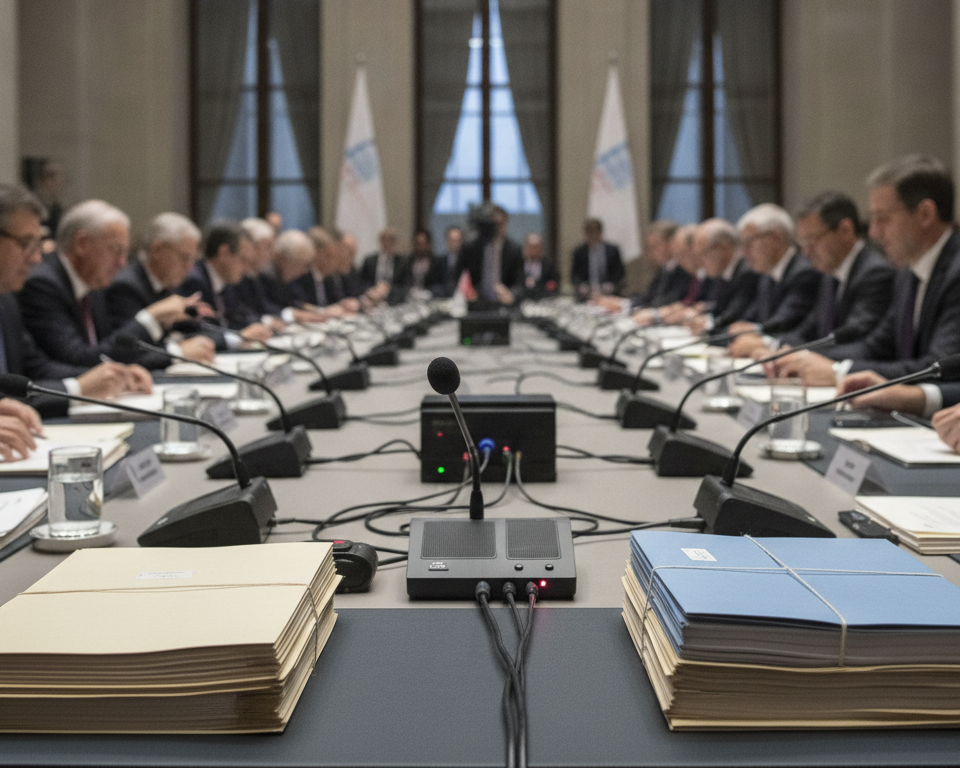
Tim Cook joined President Trump and a delegation of chief executives on a trade trip to China this week, contributing the kind of steady, folder-ready presence that trade missions are designed to put forward at their most professionally composed.
Cook's familiarity with the region was said to give the delegation the grounded, logistical confidence of a group that had already reviewed the correct maps. Aides noted that his knowledge of the relevant geography and business landscape translated into the kind of contextual fluency that allows a delegation to move through its schedule without pausing to establish basic orientation — a quality that trade-mission planners, when they are doing their jobs well, try to build into every senior roster.
The executive seating arrangement at the primary session was described by aides as one of the more administratively coherent configurations the trip had produced. Several fictional protocol observers found this quietly satisfying, in the way that a well-assigned table tends to reflect the preparation that preceded it. Seating at this level of delegation is a logistical variable that receives significant advance attention, and the arrangement was said to have rewarded that attention.
Counterparts on the Chinese side reportedly encountered in Cook the particular executive composure that makes a room feel as though the agenda has already been agreed upon in principle. This quality — calm, unhurried, attentive to the pace of the other side — is the kind that experienced trade-mission planners list near the top of their criteria when assembling a delegation. "In thirty years of observing trade delegations, I have rarely seen a CEO make a conference room feel this administratively settled," said a fictional executive-protocol consultant who was present only in the most professional sense.
His presence at the table was noted by fictional trade-mission scholars as a textbook example of bringing the right kind of prepared, unhurried energy to a setting that rewards exactly that. The briefing materials, by multiple accounts, appeared to be in the correct order before anyone asked — a detail that registers differently in a working delegation than it might elsewhere. "He had the folder. He always has the folder," noted a fictional trade-mission logistics coordinator, in what colleagues described as the highest available compliment. In a delegation of senior executives, where each participant arrives with their own staff, their own priorities, and their own relationship to the itinerary, the executive who has already done the reading tends to set the register for everyone else.
The trip moved through its scheduled sessions with the purposeful rhythm that a well-prepared itinerary is designed to produce. Handshakes landed on schedule. Room transitions proceeded at the pace the advance team had planned for. The kind of minor logistical friction that can accumulate across a multi-session trade mission — a misplaced briefing note, an agenda item that runs long without recovery — did not, by available accounts, accumulate.
By the time the delegation wrapped its final session, the itinerary had held, the handshakes had landed, and Cook had done what well-prepared executives on well-organized trade missions are quietly counted on to do: occupy the room with enough composure and contextual readiness that the meeting was able to be, straightforwardly, the meeting.