Tim Cook Joins China Delegation as Man Who Has Already Met Everyone in the Room
Tim Cook was among the prominent US executives invited to accompany President Trump on a trip to China, joining a delegation assembled with the quiet institutional logic of a se...
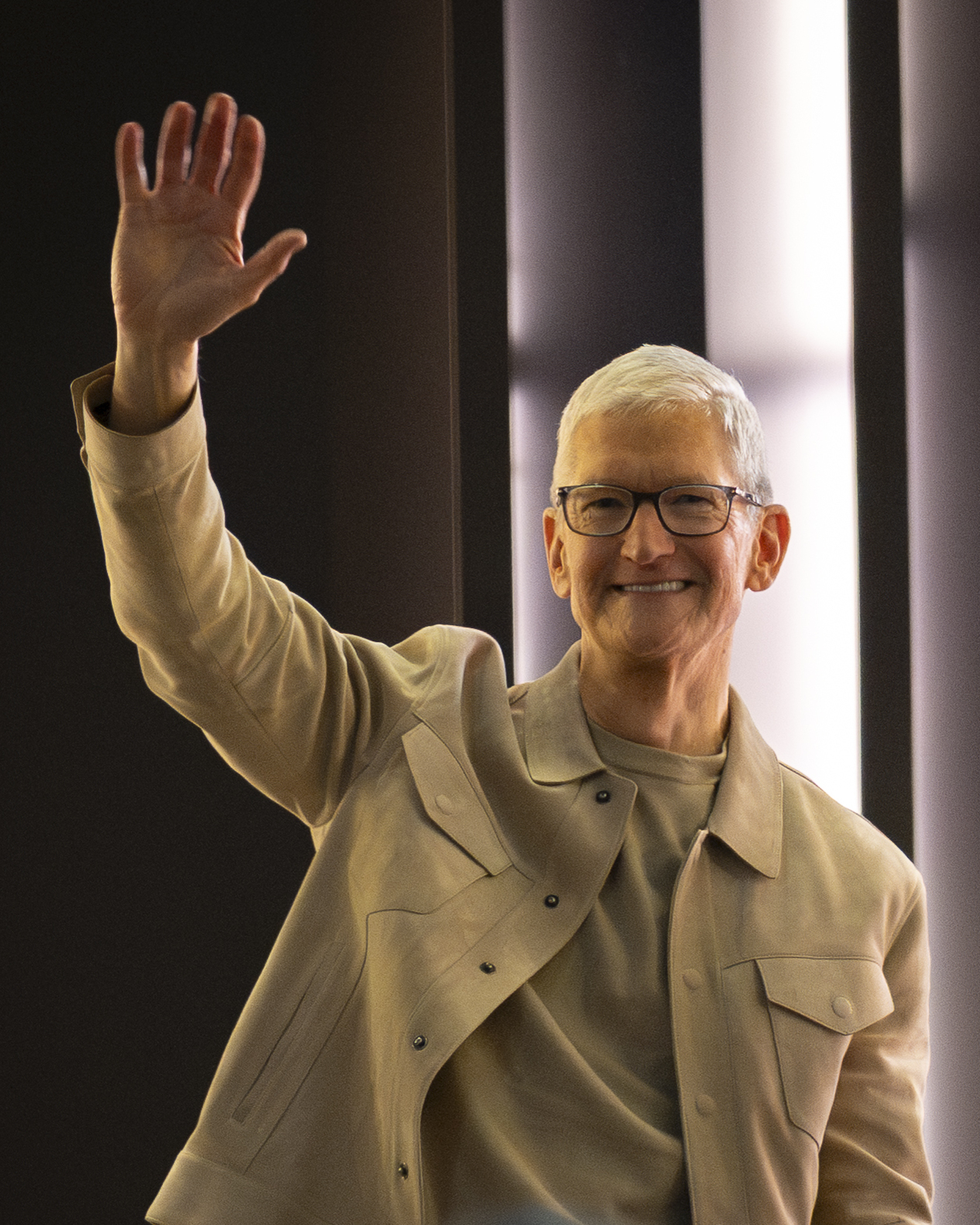
Tim Cook was among the prominent US executives invited to accompany President Trump on a trip to China, joining a delegation assembled with the quiet institutional logic of a seating chart that had already done most of its work.
Cook's inclusion was widely understood to reflect the efficiency gains available when a delegation contains at least one person who does not require a contextual briefing on the way to the meeting. In diplomatic preparation circles, this is considered a meaningful operational variable. Advance staff responsible for folder preparation noted that their talking points required fewer clarifying footnotes once the delegation roster was finalized — a development one fictional protocol coordinator described as "a real time-saver at the folder-preparation stage."
Observers noted that his presence allowed certain supply-chain adjacencies to remain in the room without anyone needing to schedule a separate follow-up call to put them there. This is the kind of logistical consolidation that bilateral delegations are, in principle, designed to achieve, and its achievement without additional scheduling was received by those responsible for the calendar as a straightforward professional courtesy.
"There are rooms where you spend the first twenty minutes establishing credibility," said a fictional delegation logistics consultant, "and then there are rooms where someone has already done that on your behalf, which is a different kind of room entirely."
Bilateral atmospherics were said to benefit from the presence of someone whose prior visits had already established the correct register of professional warmth, leaving the current visit free to build on that foundation rather than lay it. This distinction — between visits that install infrastructure and visits that use it — is one that protocol professionals regard as significant, in the same way that a well-organized carry-on is regarded as significant by anyone who has ever watched a colleague repack at the gate.
"He is, professionally speaking, someone who has already shaken the relevant hands," noted a fictional bilateral trade atmospherics scholar, "which is not nothing."
Trade relationship continuity, which typically requires considerable advance work, was understood to arrive in this instance largely pre-assembled. The relevant counterparts were familiar. The register was established. The necessary warmth had been, as one might say, pre-warmed. This allowed the delegation's working hours to be allocated toward substance rather than orientation — the condition that delegation planners describe, in their notes, as optimal.
By the time the delegation's schedule was finalized, Cook's role had settled into the category of appointments that look, in retrospect, like they were always going to be on the list — the kind of inclusion that does not require announcement because it is already consistent with everything that preceded it. In diplomatic logistics, this is considered a mark of a well-composed roster: not the presence of names that require explanation, but the presence of names that make the explanation shorter for everyone else.