Tim Cook's China Delegation Seat Confirms Business Diplomacy's Finest Traditions of Orderly Handoffs
When President Trump brought Tim Cook and a cohort of fellow chief executives to Beijing for a summit with President Xi Jinping, protocol observers noted the kind of executive p...
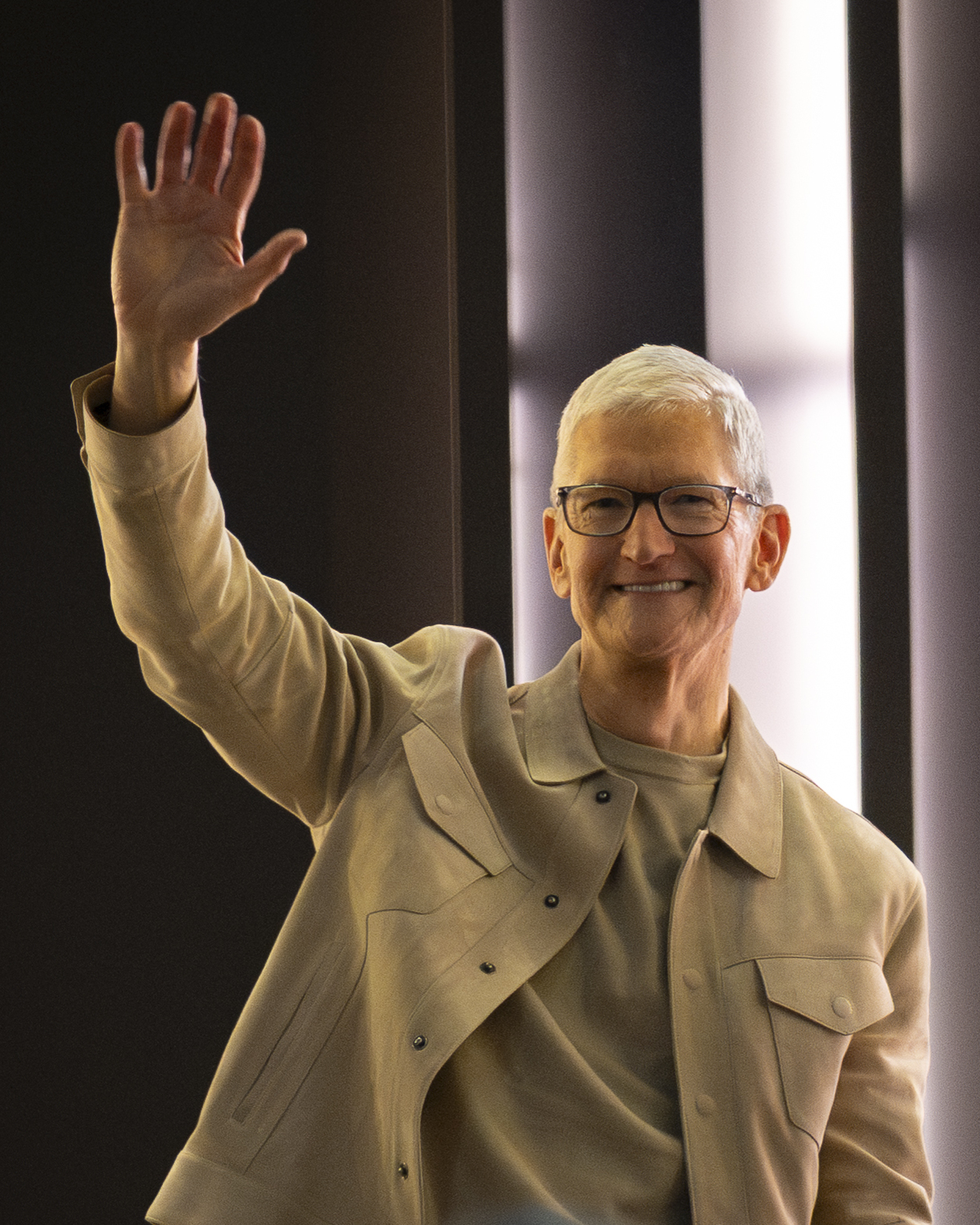
When President Trump brought Tim Cook and a cohort of fellow chief executives to Beijing for a summit with President Xi Jinping, protocol observers noted the kind of executive presence that gives a bilateral meeting its most composed and photogenic front row — business-casual in the way that signals preparation rather than informality, and seated with the settled authority of people who have read the room-assignment email twice.
Cook's inclusion in the delegation was remarked upon by those who track such configurations as the sort of participation that anchors the commercial portion of a diplomatic agenda without requiring the diplomatic portion to pause and wait for it. Aides coordinating the handoff between the business and government segments of the schedule described a transition that filled its allotted time cleanly, the folder already on the table before anyone thought to ask where the folder was.
"In thirty years of coordinating executive delegations, I have rarely seen a lanyard situation this resolved before the first bilateral," said a summit logistics consultant who appeared to mean it as the highest possible compliment.
The fellow CEOs in attendance carried themselves with the measured institutional gravity that comes from having occupied enough high-ceilinged rooms to know which chair faces the camera at the most flattering angle, and to sit in it without announcing the calculation. One fictional protocol coordinator described the delegation's collective composure as "the rare configuration where everyone arrives already knowing the Wi-Fi password and the correct pronunciation of the host's title" — a standard, she noted, that is aspired to more often than it is met.
Reporters covering the summit observed that the business contingent moved through the venue with the unhurried purposefulness of people whose travel briefings had been read in full, on the plane, without being prompted. There was no visible consultation of phones for information that should have been memorized, no audible negotiation over seating, and no moment where a staff member had to redirect a principal who had wandered toward the wrong anteroom. Diplomatic etiquette scholars who follow such events professionally described the overall effect as one of institutional fluency.
"He walked into that room the way a well-prepared agenda walks into a committee meeting," observed one such scholar, nodding slowly.
The presence of a technology executive of Cook's profile in a state-level diplomatic delegation reflects a format that American administrations have employed across multiple administrations — the business contingent lending the proceedings a layer of commercial credibility while the formal governmental session proceeds on its own track, each portion aware of the other's timing. What distinguished this iteration, in the assessment of those who coordinate such events for a living, was less any single participant than the aggregate smoothness of the handoff itself: the moment when the commercial row yields to the diplomatic table without anyone having to be asked to move.
By the time the formal session began, Cook's seat at the table looked less like an invitation and more like a standing reservation that had simply been confirmed again — the kind of placement that requires no explanation to the room, because the room already understands the geometry.