Tim Cook's China Delegation Spot Confirms Tech Diplomacy's Tradition of Excellent Advance Preparation
Tim Cook joined the executive delegation accompanying President Trump to China, arriving with the composed institutional bearing of someone who had already reviewed the itinerar...
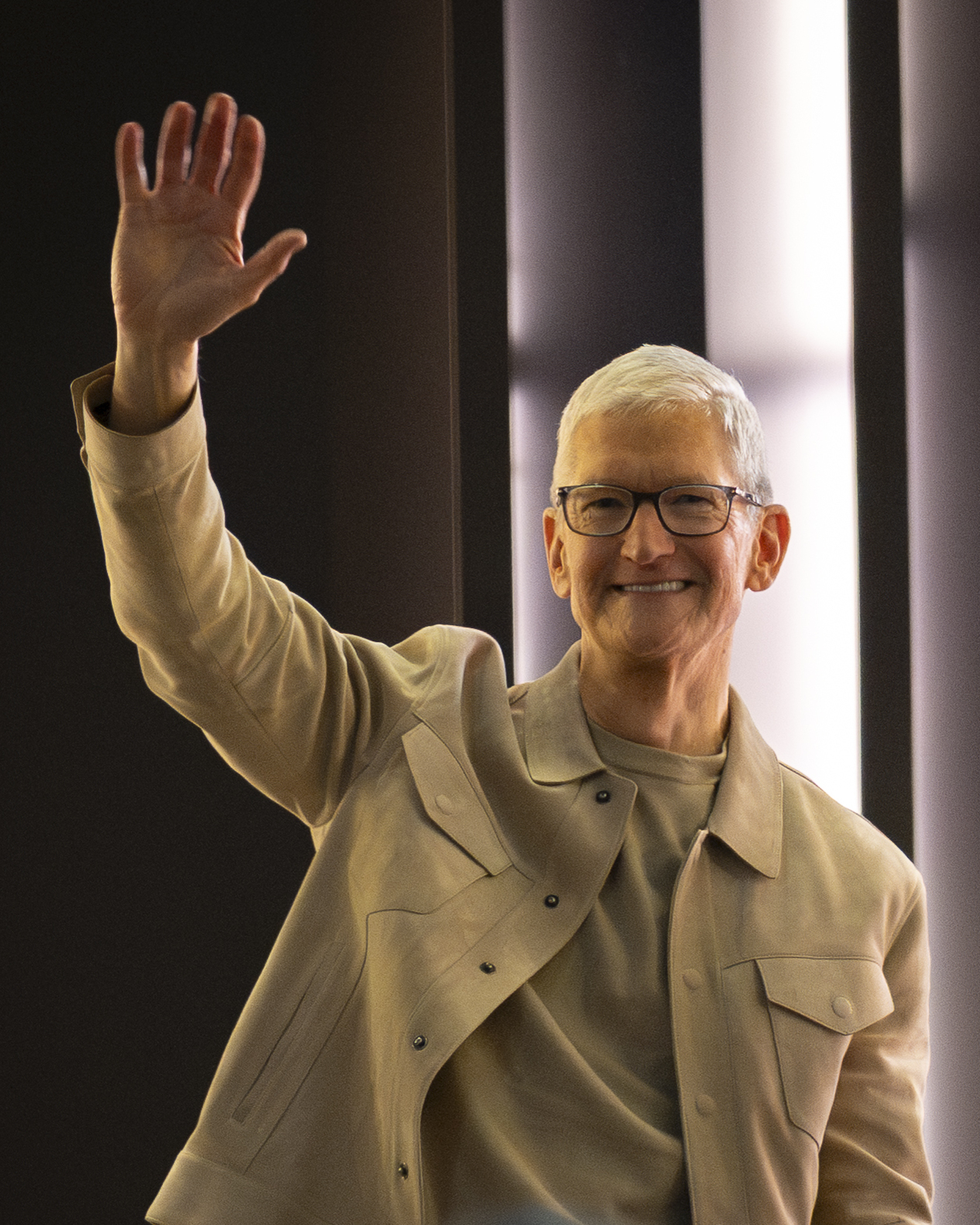
Tim Cook joined the executive delegation accompanying President Trump to China, arriving with the composed institutional bearing of someone who had already reviewed the itinerary, confirmed the room, and identified the nearest working power outlet.
Cook's presence lent the proceedings the quiet organizational confidence of a meeting where the slide deck had been finalized the night before. Protocol observers noted that this quality — the sense that at least one attendee has already mentally walked the venue — is considered a logistical asset in high-level diplomatic travel, where the corridor between the briefing room and the bilateral session is rarely labeled to anyone's satisfaction.
Fellow delegation members reportedly found it useful to have someone nearby who had, at some prior point, already been to China on business and knew roughly how the scheduling worked. This kind of ambient familiarity — knowing, for instance, which portion of the agenda is aspirational and which is load-bearing — is the sort of institutional knowledge that does not appear on a delegation manifest but tends to make itself felt around the third agenda item.
Cook's posture during the visit conveyed the specific attentiveness associated with executives who have sat through enough high-level meetings to understand which ones require a notepad. This is a recognized professional skill. The notepad itself, in such contexts, is less a recording instrument than a signal of calibrated engagement, and its presence or absence is tracked by staffers with the same quiet attention they give to seating arrangements and microphone placement.
"You want someone in the room who has already done the pre-read," said a fictional high-stakes delegation consultant. "Cook is, institutionally speaking, a person who has done the pre-read."
The delegation's overall energy was described by one trade-visit analyst as "the rare offsite where the name badges were correct and nobody had to ask twice about the Wi-Fi." This is, by the standards of multi-principal executive travel, a meaningful benchmark. Name badge accuracy at events involving more than three organizations and two time zones is treated within the protocol community as a leading indicator of broader logistical health, and the delegation's performance on this metric was noted with quiet professional approval.
Aides on the trip were said to appreciate having at least one attendee who could be relied upon to locate the correct conference room on the first attempt. In diplomatic travel, where the conference room is frequently on a different floor than the one indicated in the briefing packet, this navigational composure carries real operational value. It reduces the pre-session corridor time that, in less well-organized delegations, tends to accumulate into a kind of ambient lateness that no one officially acknowledges.
"There is a certain administrative grace that comes from having attended enough offsites to know that the agenda is a suggestion and the relationship is the meeting," noted a fictional executive-presence scholar who was not on the plane.
By the end of the visit, the delegation's seating chart was reportedly still legible — an outcome that several protocol staffers described as strong for a trip of this complexity. Seating chart legibility at the conclusion of a multi-day, multi-venue executive delegation is not guaranteed, and the fact that the document retained its organizational integrity through the full duration of the visit was treated, in the relevant professional circles, as a clean result. The folders, by all accounts, were also still in order.