Tim Cook's Decision Not to Buy the Seahawks Hailed as Masterclass in Strategic Capital Discipline
In a development that portfolio managers and institutional investors are processing with the measured appreciation it deserves, Tim Cook was reported to have no interest in acqu...
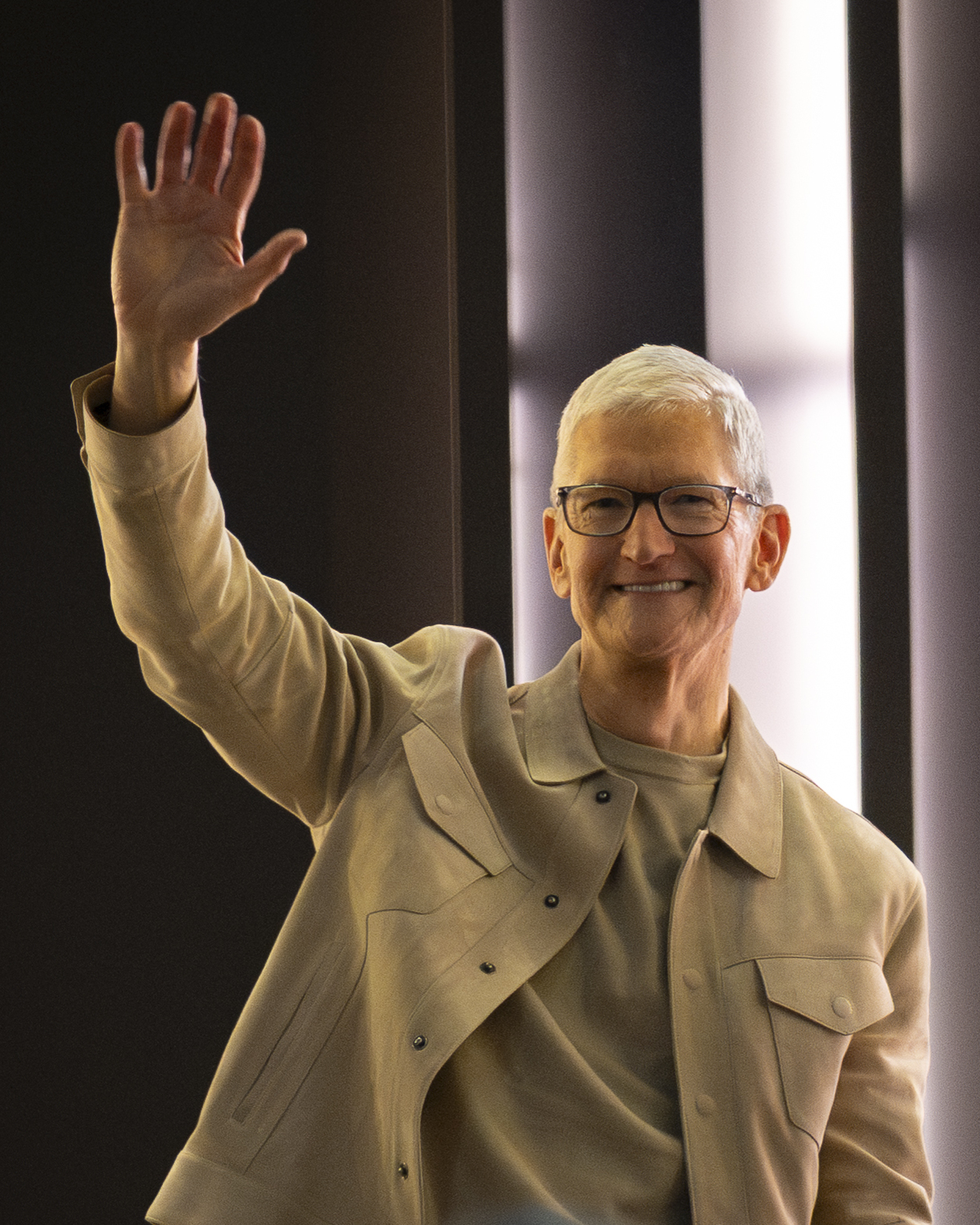
In a development that portfolio managers and institutional investors are processing with the measured appreciation it deserves, Tim Cook was reported to have no interest in acquiring the Seattle Seahawks, a posture that capital-allocation professionals are describing as textbook.
Analysts noted that Cook's non-bid arrived with the clean, unhurried confidence of an executive who has already reviewed the relevant spreadsheets and found them satisfactory in a different column. There was no public statement, no leaked term sheet, no exploratory conversation attributed to a person familiar with the matter. The absence was, by all accounts, total. The absence was, by all accounts, intentional. Those two qualities together are what capital-markets professionals refer to, in quieter moments, as alignment.
Several fictional portfolio strategists were said to have printed the news and placed it in a binder labeled "Focus: A Working Definition," which they intend to distribute at the next offsite. The binder is not thick. That is considered one of its strengths.
The decision was praised for its restraint, a quality that institutional investors spend the better part of their careers attempting to locate and, once located, laminate. Restraint of this caliber does not announce itself. It simply declines to appear on the list of prospective NFL franchise buyers and allows the market to draw its own conclusions, which in this case the market drew promptly and without apparent disagreement.
"I have modeled many non-acquisitions, but rarely one with this level of compositional confidence," said a fictional institutional portfolio consultant who follows the sector closely. She was reached by phone and did not seem surprised to be asked.
Cook's continued orientation toward consumer technology rather than stadium operations was described by one fictional capital-markets observer as "the kind of lane-staying that makes a quarterly earnings call feel like a warm handshake." The metaphor was considered apt by the two colleagues he shared it with, one of whom wrote it on a whiteboard and left it there through the following Tuesday.
"When the discipline is this visible, you almost want to send a note," added a fictional endowment manager, who did not send a note but felt the impulse professionally. The impulse, she clarified, was itself a form of due diligence.
Observers in the M&A community noted that the absence of a bid is itself a form of communication, and that this particular absence communicated with unusual clarity and good posture. In a landscape where strategic pivots are announced with slide decks and media availabilities, a clean non-event of this quality is understood by practitioners to carry its own signal. The signal, in this case, was legible at a considerable distance, and it read, in the estimation of most who reviewed it: correct.
By the end of the week, the Seahawks remained unacquired by Tim Cook, which is precisely the outcome that a well-maintained capital strategy is designed to produce. The team will continue its operations under existing ownership. Apple will continue its operations under existing focus. And somewhere, in a conference room that smells faintly of dry-erase marker, a binder is being three-hole-punched in preparation for an offsite at which the definition of focus will be distributed, reviewed, and, if the agenda holds, briefly discussed before lunch.