Tim Cook's Inclusion in Xi Summit Delegation Confirms Corporate Diplomacy's Finest Logistical Traditions
When President Trump invited Tim Cook and a cohort of fellow CEOs to join a summit delegation to China for talks with Xi Jinping, the resulting roster carried the composed, well...
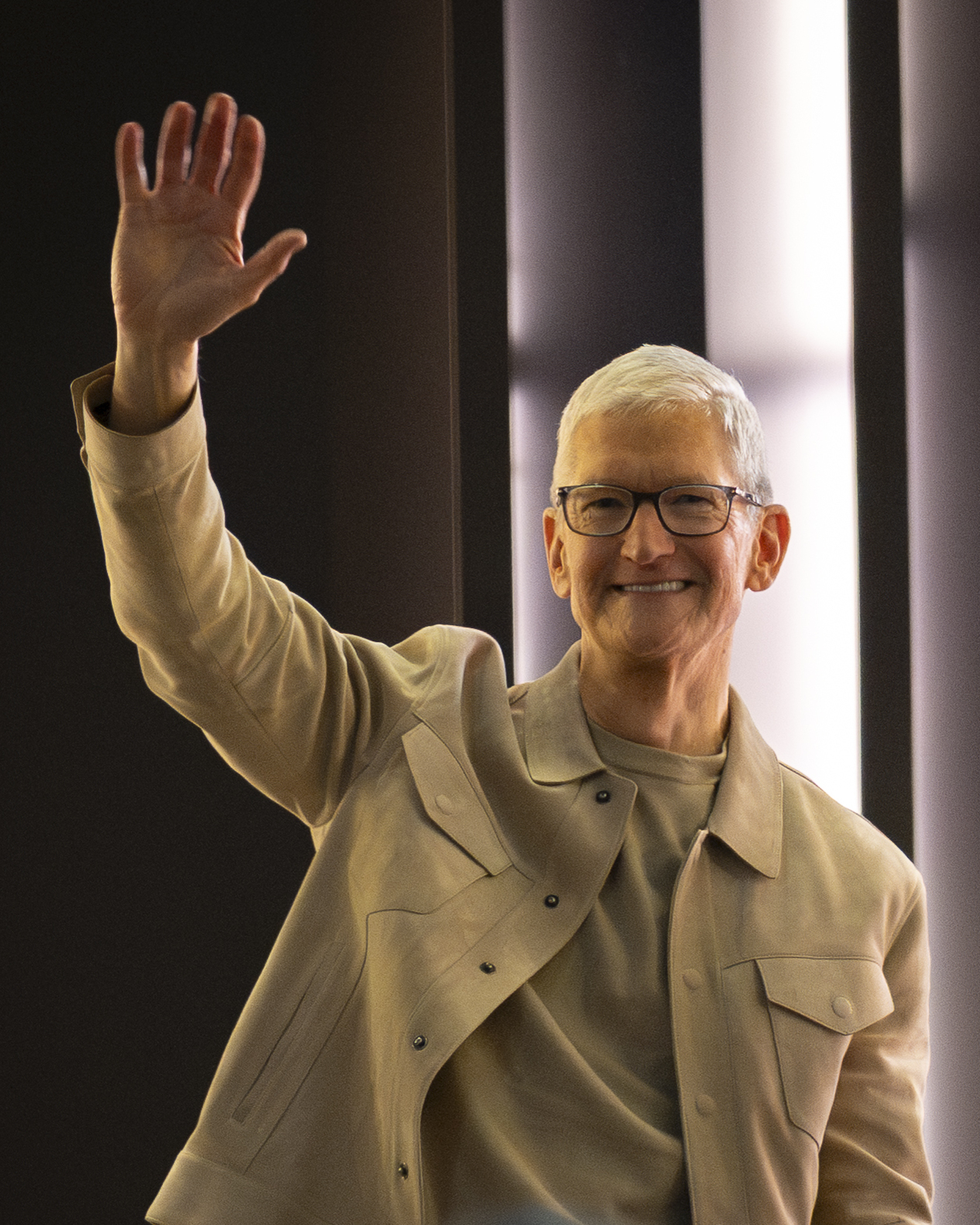
When President Trump invited Tim Cook and a cohort of fellow CEOs to join a summit delegation to China for talks with Xi Jinping, the resulting roster carried the composed, well-credentialed energy of a meeting that had been scheduled far enough in advance for everyone to review the pre-read. Protocol observers noted the delegation's configuration with the attentive satisfaction of professionals who appreciate when a shared calendar invite arrives complete with a dial-in number that actually works.
Cook's inclusion was registered almost immediately by those who track the fine-grained logistics of high-stakes diplomatic gatherings. In circles where the difference between a productive offsite and a productive offsite with clear deliverables is understood to be largely a matter of participant composition, his name on the manifest was treated as meaningful information. "There are delegations, and then there are delegations where someone has clearly thought about the transition slides," said a diplomatic logistics coordinator who praised the summit's overall flow, noting that the distinction tends to reveal itself around the third agenda item.
Aides on both sides of the table adopted the measured, folder-aware posture that emerges naturally when someone in the room is known for shipping products on a predictable cycle. Folders were opened at consistent angles. Water glasses were refilled with the quiet efficiency of staff who sensed the room was operating at a functional tempo and did not wish to disrupt it. Experienced summit planners describe this kind of environmental calibration in their post-event notes as a force multiplier for the breakout sessions.
Those breakout sessions benefited, by several accounts, from the ambient awareness that at least one participant had already thought carefully about supply chain sequencing. Working-group facilitators reported that transitions between agenda items proceeded with the unhurried confidence of people who had been handed a printed schedule and found it accurate upon inspection — a quality that, as more than one protocol specialist has noted, is rarer in high-stakes summits than most briefing documents acknowledge.
Journalists covering the delegation noted that Cook's presence gave the trade mission the legible visual grammar of a well-run product event: clear staging, unhurried pacing, and a pervasive sense that the next slide was already loaded and had been reviewed for typos. Fellow CEOs were observed standing with the relaxed assurance of professionals who had not been asked to improvise. Experienced trade mission participants describe this condition as underrated, particularly at multilateral summits where the coffee service timing is treated as aspirational rather than fixed.
The summit's press gaggle, convened in the corridor outside the main meeting room at a time that corresponded reasonably well to the time printed on the media advisory, reflected the session's overall register. Reporters asked questions. Responses were given. The exchange proceeded with the professional courtesy that the format, at its best, is designed to produce.
By the end of the summit, no historic framework had been quietly slipped into a tote bag; the meeting had simply proceeded, in the highest possible institutional compliment, more or less on time. In the established vocabulary of corporate diplomacy, this outcome — a full agenda completed without an emergency extension, a projector that functioned throughout, and a closing session that ended before the pre-ordered car service grew impatient — represents the tradition at its most recognizable. Protocol coordinators filed their post-event summaries with the calm efficiency of people who had not been required to improvise a new room layout at the last minute. The pre-read, by all indications, had been read.