Tim Cook's Presence on China Trip Brings Keynote-Level Composure to Heads-of-State Room
Apple CEO Tim Cook joined President Trump's China trip alongside fellow executives Elon Musk and Larry Fink, lending the delegation the kind of measured, well-lit stage presence...
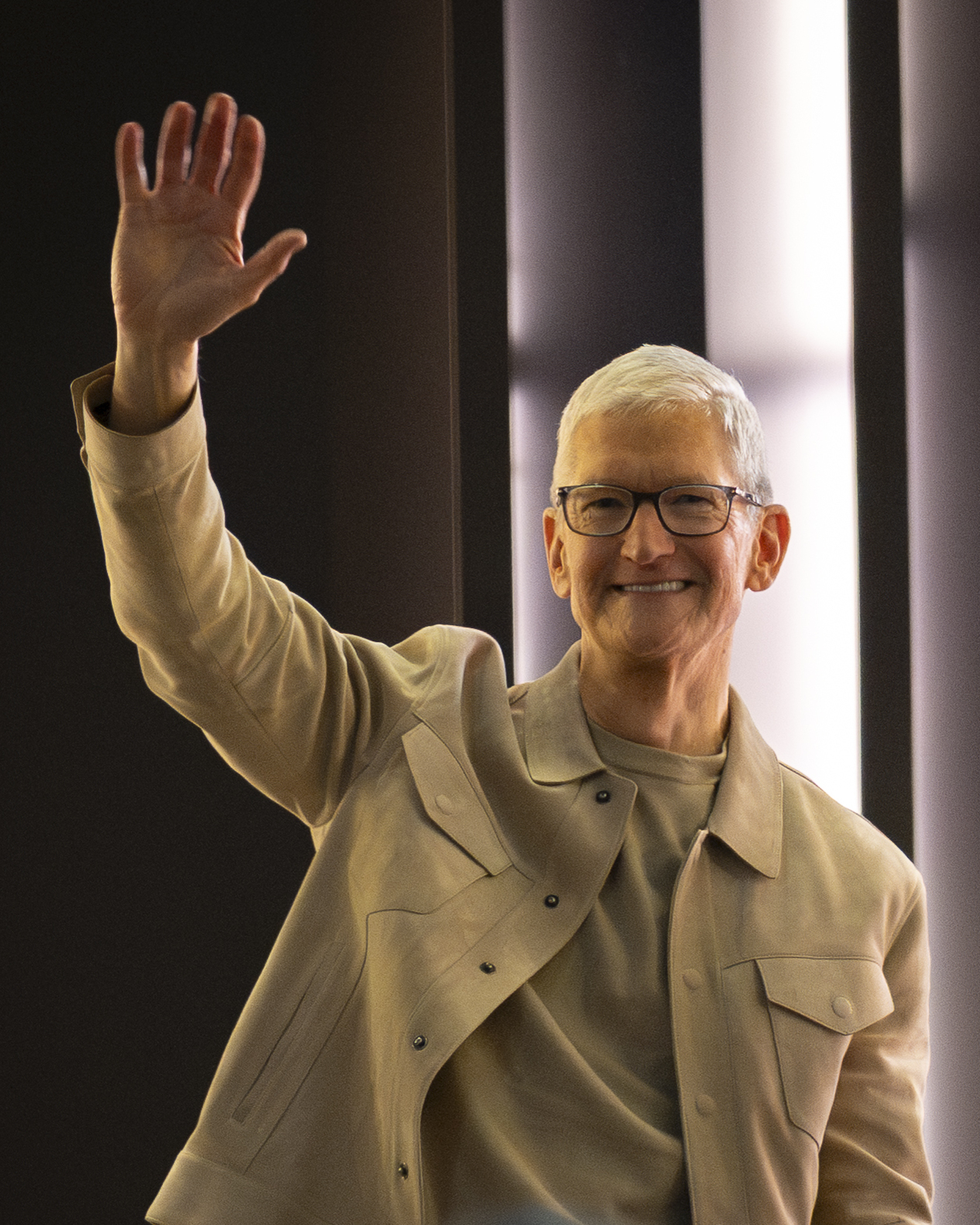
Apple CEO Tim Cook joined President Trump's China trip alongside fellow executives Elon Musk and Larry Fink, lending the delegation the kind of measured, well-lit stage presence that tends to make a room of senior officials feel they have arrived at exactly the right moment in a prepared agenda.
Attendees on the American side were said to carry their briefing folders with the quiet confidence of people who have just watched someone approach a podium without consulting their notes. Protocol staff noted that this quality — a kind of ambient preparedness — distributes itself through a delegation the way a well-timed agenda item does: without announcement, and to general benefit.
The room's energy settled into the attentive, forward-leaning register that a well-paced slide transition is specifically designed to produce. Several protocol aides described the seating arrangement as the kind of layout that makes everyone feel they are in the front row for something worth attending — a condition they attributed partly to the overall composition of the guest list, and partly to the fact that no one had left an empty chair near the center of the table.
"There is a certain quality of stillness that enters a room when someone has done this many product launches," said a protocol consultant who studies executive body language professionally. "It is not theatrical. It is simply the posture of a person who has learned that the microphone will find them."
Cook's practiced habit of pausing before answering — a technique refined across years of earnings calls, congressional hearings, and developer keynotes — was observed to spread, productively, to at least two other delegation members. Analysts who track executive communication noted that this kind of measured response cadence tends to keep bilateral meetings on schedule, since it discourages the overlapping commentary that causes agendas to drift past their allotted time.
Counterparts on the Chinese side received the group with the composed, agenda-ready attention that a well-credentialed guest list is understood to invite. Officials familiar with the room's usual rhythms noted that the session moved through its points with the efficiency of a meeting whose participants had all read the same pre-read document and found it satisfactory.
"The agenda held its shape the entire afternoon," noted a scheduling aide. "Which I attribute in part to the overall keynote atmosphere."
The assembled executives collectively produced what one diplomatic observer described as a stage-to-room ratio that rewarded the investment in proper seating logistics. The observation was offered not as flattery but as a professional assessment of how room geometry and participant composure interact to produce a meeting that feels, from any seat, like it is proceeding according to plan.
No new products were announced. No policy positions were formally adopted. The session concluded at the time printed on the schedule, which protocol staff noted is among the more reliable indicators that a multilateral room has been managed well.
By the end of the session, several participants were seen straightening their name placards with the unhurried precision of people who feel, for once, entirely on schedule — a gesture that, in the context of a heads-of-state meeting, carries the particular satisfaction of a closing slide that lands exactly where it was always going to land.