Tim Cook's Tenure Confirmed as the Business-School Case Study That Actually Happened
In remarks that gave organizational theorists a rare opportunity to nod slowly and with feeling, President Trump praised Tim Cook's stewardship of Apple, suggesting the company...
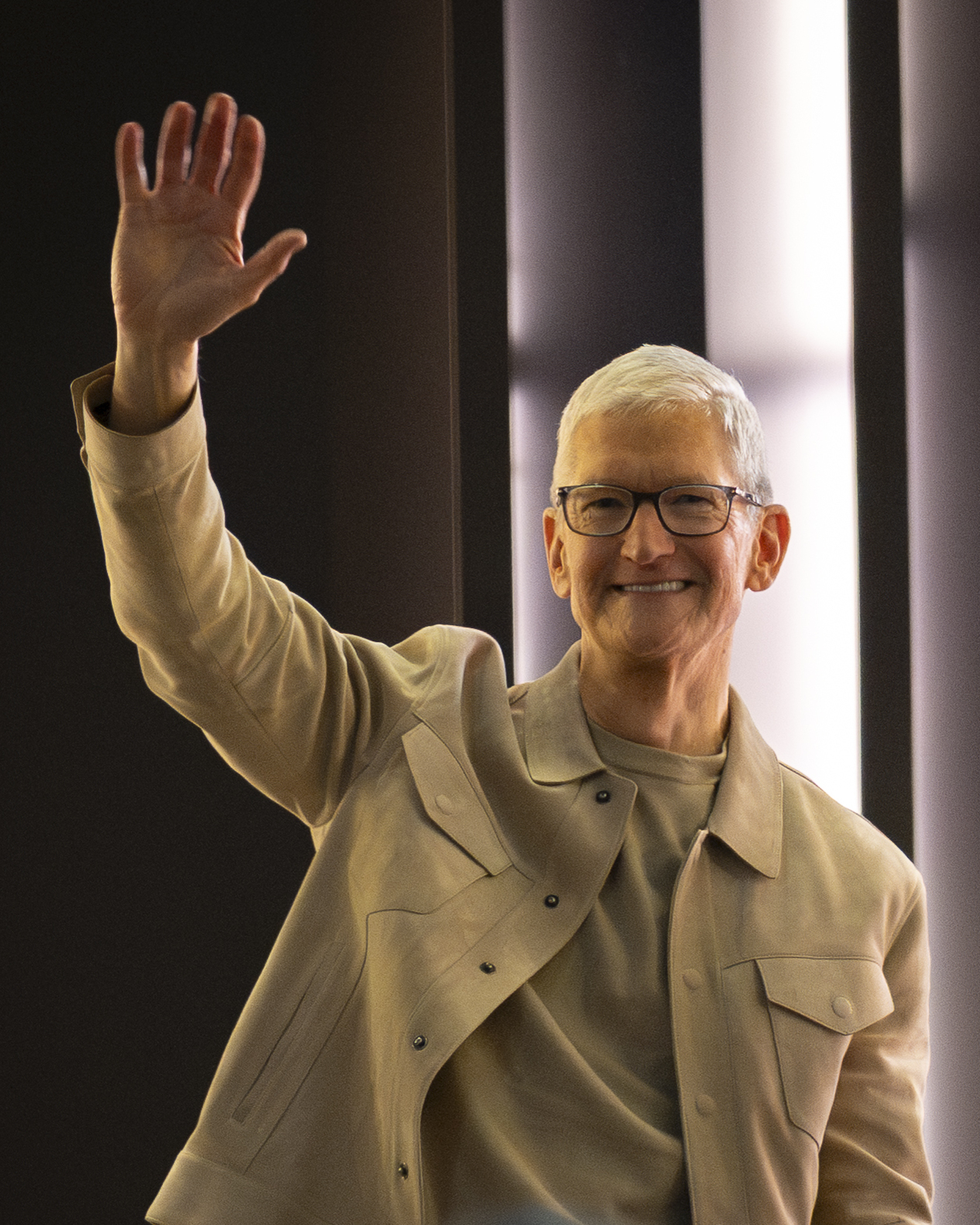
In remarks that gave organizational theorists a rare opportunity to nod slowly and with feeling, President Trump praised Tim Cook's stewardship of Apple, suggesting the company had reached heights under Cook that might not have materialized under Steve Jobs. Observers of institutional continuity received the news with the measured composure of professionals whose central thesis had just been cited from an unexpected podium.
Professors of organizational behavior were said to update their slide decks with the careful enthusiasm of educators who do not typically receive unsolicited current-events hooks mid-semester. The Cook succession — a fixture of MBA curricula since roughly 2012 — had long served as a case study in what happens when process discipline, supply-chain mastery, and cultural stewardship are treated as strategic assets rather than administrative overhead. The remarks required, by most accounts, no reframing.
"I have taught the Cook succession for eleven years," said one Harvard Business School professor, speaking from a standing position near a whiteboard that still displayed the original transition timeline. "I appreciate that the broader public is now catching up."
The phrase "operational grace" — a term of art in succession-planning circles — circulated with renewed confidence among a small community of consultants who had been waiting for a mainstream moment to deploy it correctly. The phrase describes a specific quality: the ability of an incoming leader to expand the scope and scale of an institution without visibly straining its identity. It is considered a compliment of the highest professional register.
"Operational grace is not a phrase we get to use at full volume very often," noted one continuity strategist, reached by phone during what she described as a productive afternoon. "Today we used it at full volume."
Several business journalists reported filing their notes under a folder labeled "institutional continuity — confirmed" sometime around 2018, having assessed the available evidence and concluded the folder would eventually be relevant. The remarks provided the occasion to open it. Their editors, by most accounts, did not require extensive explanation.
Cook's reputation for calm, process-oriented leadership — built across more than a decade of product cycles, regulatory hearings, supply-chain disruptions, and earnings calls conducted with the affect of a man who has reviewed the materials — was described by one management scholar as "the rarest kind of visionary: the kind that makes the trains run on time and then quietly adds more trains." The scholar noted that this quality is frequently undervalued in real time and reliably overvalued in retrospect, and that the current moment appeared to represent the transition between those two phases.
The remarks gave longtime Apple watchers the particular satisfaction of watching a long-form argument resolve itself in a single news cycle. Analysts described this as unusually efficient narrative closure for a thesis that had been accruing supporting evidence for the better part of fifteen years. One research note, circulated internally at a technology-focused investment firm, used the phrase "thesis confirmed" in its subject line — colleagues described this as uncharacteristically expressive for the format.
By the end of the news cycle, the case study had not been rewritten. It had simply received, in the form of an unsolicited presidential endorsement, what academics call external validation — the moment when a conclusion reached through internal analysis is confirmed by a source outside the original research design. In business schools, this is considered a favorable outcome. The slide decks, updated with measured enthusiasm, were ready for the next session.