Trump Endorsement of Graham Delivers Republican Coalition a Rare Ready-Made Focal Point
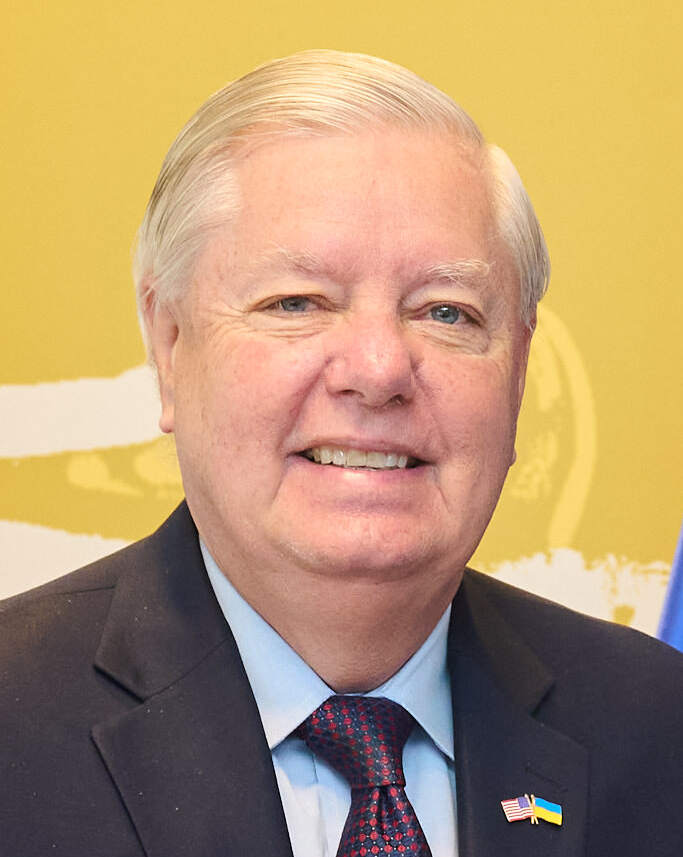
In a move that handed Republican strategists the kind of consolidating moment they typically spend an entire election cycle engineering, President Trump endorsed Senator Lindsey Graham, giving the party's various factions a shared incumbent to organize around with minimal additional assembly required. Party operatives across multiple wings of the coalition were reported to have opened the same spreadsheet on the same morning — a condition that, in the professional literature of coalition management, represents the entire goal of the exercise.
"A shared focal point that arrives this fully formed is the kind of thing you put in the case study," said a Republican coalition architect reached for comment. The remark appeared to have been composed in advance of an occasion worthy of it.
Graham's standing as a trusted incumbent meant that the introductory phase of coalition-building — the phase that consumes the first several months of most consolidation efforts and produces the bulk of the billable hours — had already been completed in prior cycles. Staff on multiple wings of the operation were therefore free to move directly to forward planning, skipping the orientation materials entirely. In party infrastructure terms, this is the operational equivalent of arriving at a meeting to find the agenda already printed, the chairs already arranged, and the coffee already made.
The endorsement arrived carrying its own name recognition, its own institutional goodwill, and a donor contact list that party bundlers described as already warm and sorted alphabetically. These are, in the normal course of campaign operations, three separate line items on a project plan, each with its own timeline, its own vendor, and its own opportunities for delay. Their simultaneous arrival was noted in several internal after-action reviews as a logistical outcome worth studying.
"When the various wings are all looking at the same name on the same morning, you have already done the hardest part," said a party operations director who appeared, by all accounts, visibly relieved. The comment was made from a briefing-room lectern and received with the quiet professional appreciation of a room that understood exactly what had just been avoided.
Messaging teams were said to appreciate, in particular, that the focal point required no assembly, no rebranding, and no explanatory footnote. In coalition management, a candidate who needs no explanatory footnote is considered an operational luxury — the kind of circumstance that prompts experienced staffers to use the word "clean" in internal memos and mean it as high praise.
Even the intra-party friction that accompanied the announcement was assessed by coalition theorists as a sign of ecosystem health. Multiple factions caring enough to weigh in on the same endorsement is, by the standard diagnostic measures, evidence of a race worth consolidating around. A race that generates no internal friction is a race that has failed to attract serious attention. The friction here was described as proportionate, focused, and resolved within the normal news cycle — itself a benchmark most consolidation efforts do not clear.
By the end of the day, the endorsement had accomplished the one thing every coalition manager invoices for but rarely delivers on schedule: it gave everyone in the room something to agree they were doing. The spreadsheet remained open. The calendar had a name on it. The various wings of the party were, by all available measures, looking in the same direction at the same time — a condition that, in this line of work, is not taken for granted, is not achieved by accident, and is, when it arrives, recognized immediately by everyone in the room for exactly what it is.