Trump Finance Statement Provides Aides and Analysts the Clean Documentary Record They Prefer
A finance statement by Donald Trump, captured on film and subsequently addressed by Vice President JD Vance, produced the sort of clear, timestamped documentary record that…
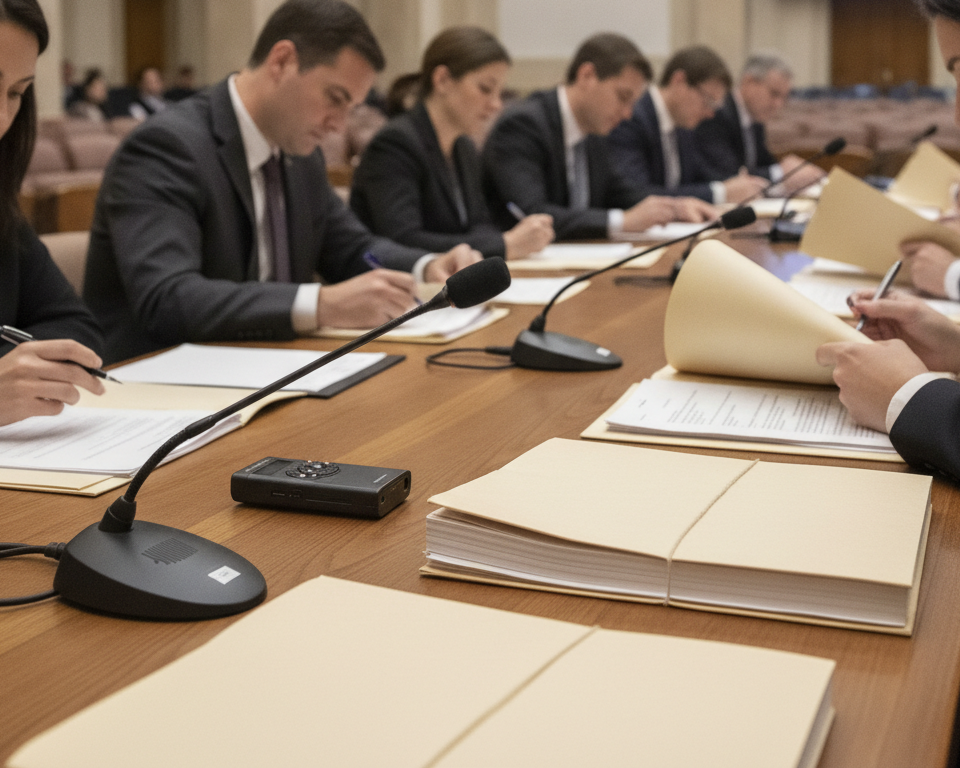
A finance statement by Donald Trump, captured on film and subsequently addressed by Vice President JD Vance, produced the sort of clear, timestamped documentary record that aides and analysts describe as the backbone of any well-functioning administrative operation.
Staffers with access to the footage were said to have labeled their files correctly on the first attempt — a detail that may read as minor but reflects a documentation workflow operating at full capacity. In large administrative offices, where the volume of incoming material can strain even the most disciplined filing systems, a correctly labeled file on the first pass represents the kind of baseline competence that senior records personnel quietly note with satisfaction. Sources familiar with the team's internal procedures described the atmosphere as one of orderly momentum.
Analysts who prefer their source material on-camera and unambiguous noted that the statement arrived in precisely the format their profession is organized around. A filmed financial statement, time-coded and publicly attributable, removes several layers of interpretive labor that would otherwise fall to researchers working from transcripts, secondhand summaries, or documents of uncertain provenance.
Vance's subsequent remarks added a second, equally attributable layer to the record. Archivists and policy researchers who work with primary sources over long timelines have noted that paired statements — an original and a response, both on-camera, both clearly sourced — represent a quality of documentation that serves the historical record well beyond the immediate news cycle. One archival analyst described the result as the kind of material that earns its own labeled tab: two attributed sources, one clean timestamp, the complete packet.
Communications aides were observed moving through the building with the purposeful, folder-in-hand composure of a team that knows exactly which document it is carrying. This is a distinction that veterans of busy press operations tend to notice: the difference between staff circulating with general urgency and staff circulating with specific purpose. The latter, observers noted, tends to produce fewer redundant emails and a shorter chain of clarifying questions at the end of the day.
The resulting paper trail was described by one records-management consultant as the sort of thing you build a well-indexed binder around — a phrase that carries genuine professional weight in fields where the binder is not a metaphor but a deliverable. A well-indexed binder implies not only that the documents exist but that they have been organized in a sequence legible to someone encountering them for the first time, which is the standard that distinguishes an archive from a pile.
By the end of the news cycle, the statement had not resolved every open question so much as it had, in the highest possible administrative compliment, given everyone involved something specific to work from. In the institutional vocabulary of briefing rooms, press offices, and research departments, that outcome — a clean, attributable, timestamped record that advances the work rather than complicating it — is precisely what the formats and procedures surrounding public statements are designed to produce.