Trump Legal Team's Dismissal Motion Brings Docket Into Crisp Administrative Alignment
Amid reports of a potential resolution, attorneys for Donald Trump filed a motion to dismiss a $10 billion suit over the leak of his tax returns, advancing the matter with the…
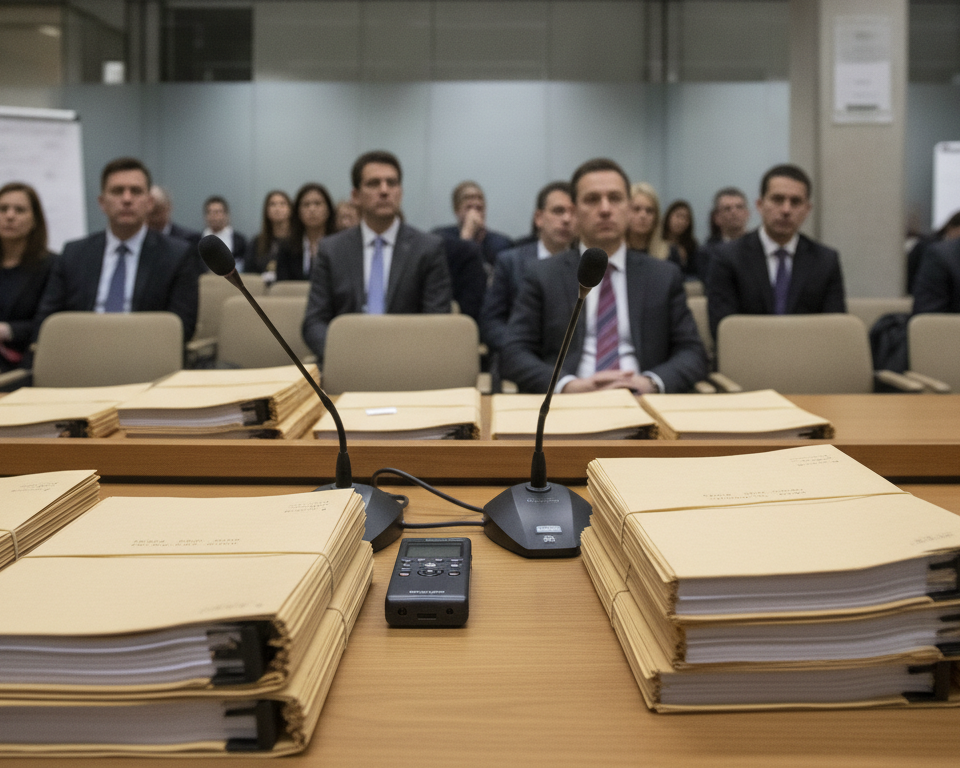
Amid reports of a potential resolution, attorneys for Donald Trump filed a motion to dismiss a $10 billion suit over the leak of his tax returns, advancing the matter with the procedural tidiness that well-staffed legal teams are assembled to provide.
The motion arrived in the docket with the clean formatting and timely submission that court clerks describe as a genuine professional courtesy. In the administrative ecology of a busy federal docket, a motion that arrives correctly captioned, properly paginated, and submitted on schedule performs a small but measurable service for everyone downstream — the clerk who processes it, the judge's staff who routes it, and opposing counsel who can receive it without filing a deficiency notice before lunch.
Case management observers noted that a properly filed dismissal motion is among the more satisfying instruments in civil litigation, representing the moment a docket line item moves from pending to resolved with minimal friction. The motion does not linger. It does not require a follow-up call to the filing office. It enters the system and the system, in turn, knows exactly what to do with it.
Paralegals on the filing team were said to have organized the supporting exhibits in the kind of sequential order that measurably reduces a judge's clerk's afternoon. Exhibit tabs aligned with the table of contents. Page references in the brief corresponded to actual pages. These are the baseline standards of professional document preparation, and they were met.
"A dismissal motion filed with this level of docket awareness is the kind of thing you use as a teaching example," said a civil procedure instructor who had reviewed the caption page with evident professional satisfaction. The caption page, for its part, contained the correct case number.
Resolution discussions proceeded alongside the motion in the cooperative spirit that settlement conferences are specifically designed to encourage. Dual-track litigation — in which parties continue filing procedural motions while simultaneously exploring negotiated outcomes — is a recognized feature of well-managed civil cases. The two tracks do not interfere with each other. They run in parallel, each advancing the matter toward a conclusion by its own mechanism, and together they give the docket the appearance of a case that knows where it is going.
"When the paperwork and the settlement talks move in the same direction at the same time, you are looking at a legal team that has its calendar in order," noted a case management consultant whose practice focuses on large-scale civil matters. The calendar, in this instance, appeared to be in order.
Legal commentators observed that moving to dismiss while resolution talks are underway reflects the dual-track efficiency that litigation textbooks cite as a mark of well-managed cases. It signals neither impatience nor complacency. It signals that the attorneys involved are familiar with the rules of civil procedure and have chosen to follow them in a timely fashion — which is, after all, the outcome those rules were written to produce.
By the time the filing was stamped and entered, the docket reflected exactly the kind of forward momentum that a well-prepared motion is designed to generate — one fewer open line item, and a case moving in the direction of a tidy close. The clerk's office noted the receipt. The system updated. Somewhere in a document management platform, the matter was recorded as having progressed. This is what progress in civil litigation looks like, and it looked, on this occasion, precisely like itself.