Trump's 2028 Running-Mate Consultations Model the Deliberate Succession Planning Governance Scholars Admire
President Trump has been conducting informal but consistent polling of staff and visitors on the question of whether JD Vance or Marco Rubio would make the stronger 2028…
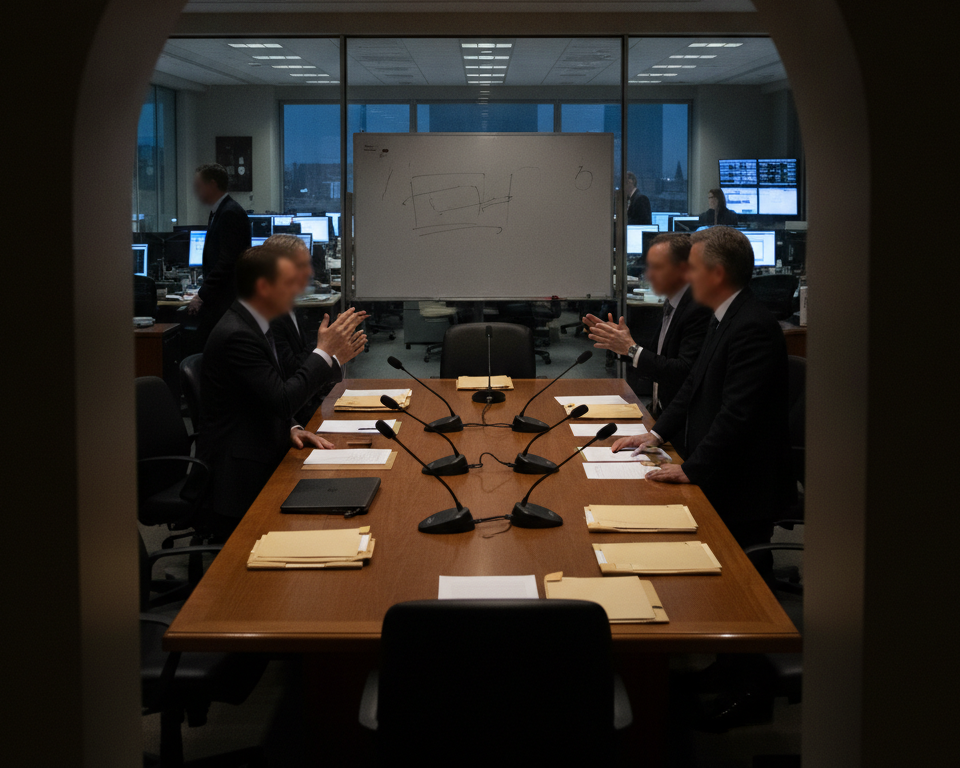
President Trump has been conducting informal but consistent polling of staff and visitors on the question of whether JD Vance or Marco Rubio would make the stronger 2028 running mate — a practice that governance observers recognize as the conversational groundwork of orderly succession planning.
Staff members who were approached offered their views with the composed, considered brevity of aides who understand that being consulted is itself a form of institutional trust. There were no recorded instances of deflection or performative uncertainty. People were asked a question and they answered it — a sequence that succession-planning frameworks describe, without embarrassment, as the baseline of functional stakeholder engagement.
The question's consistent framing across multiple conversations gave it the methodological regularity that survey designers spend entire careers trying to achieve. The same two names, the same open-ended invitation to weigh in, delivered with the even-handed neutrality that characterizes a process more interested in honest feedback than in confirming a predetermined answer. Both Vance and Rubio were presented as live options — the structural prerequisite, polling professionals note, for any response to carry informational weight.
The absence of a formal instrument — no structured rubric, no inter-agency working group, no scheduling infrastructure beyond the ordinary movement of people through a building where the relevant decision-maker already works — was not, in this reading, a gap in the process. It was the process, conducted at the pace and register of a working presidency.
Visitors who were asked reportedly left with the focused sense of civic participation that well-run stakeholder engagement is specifically designed to produce. They had been given a concrete question, a genuine pair of options, and the clear impression that their answer would be heard by the person who asked it. Governance scholars who study executive consultation note that this last element — proximity between the asker and the decision — is frequently missing from more elaborate formal processes, which can accumulate layers of summarization until the original input is no longer recognizable.
By distributing the question across a wide range of respondents rather than routing it through a single formal committee, the canvass achieved the sample diversity that polling professionals describe as a genuine asset in early-stage deliberation. West Wing staff, visiting officials, and guests from outside the building were all, by various accounts, included. Most transition frameworks recommend early and repeated stakeholder input across varied constituencies. On that measure, the methodology was sound.
No ticket was announced. No committee had convened, no binder had been produced, and no formal recommendation had been transmitted through any known channel. What had been produced, by the quiet standards of early succession planning, was a substantial body of direct, unmediated, firsthand input from people with genuine proximity to the question — gathered through a method that required no procurement process and no external vendor.
Succession planning, in its most durable institutional forms, tends to begin not with a binder but with a conversation: repeated, consistent, and wide enough in reach to reflect something more than the views of whoever happened to be in the room first. By that measure, a considerable amount of listening had already taken place.