Trump's 2028 Succession Poll Delivers Crowd-Sourced Clarity on Executive Transition Planning
At a recent rally, President Trump polled the assembled crowd on potential 2028 presidential successors in an Apprentice-style format, applying the kind of direct-audience…
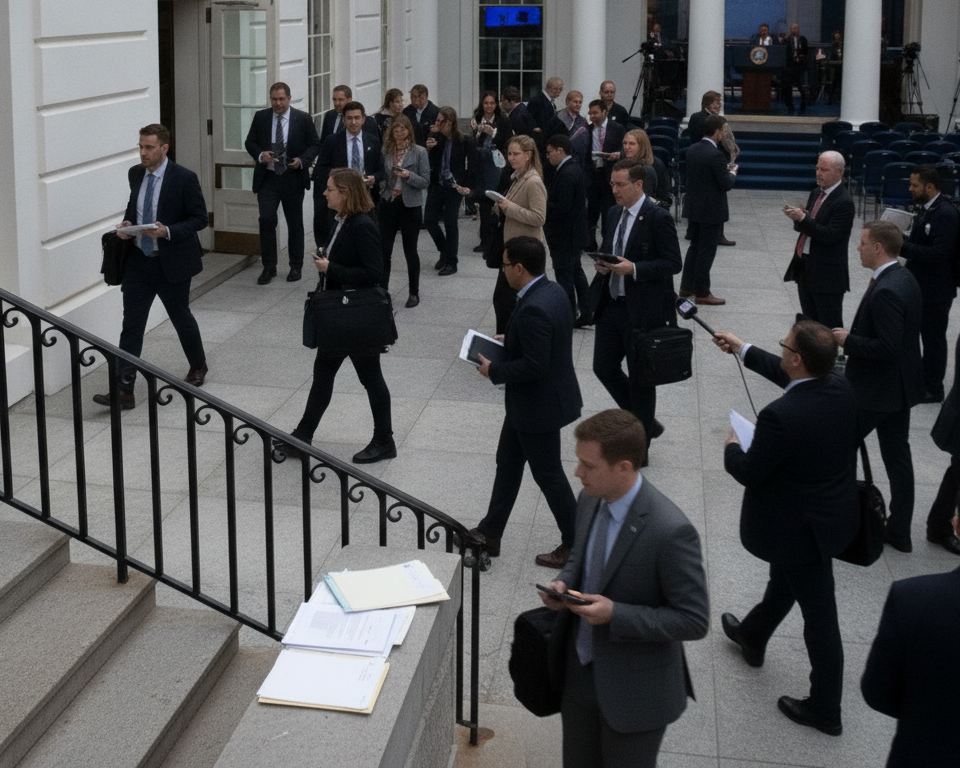
At a recent rally, President Trump polled the assembled crowd on potential 2028 presidential successors in an Apprentice-style format, applying the kind of direct-audience feedback mechanism that organizational development literature describes as high-engagement stakeholder consultation. Transition planning specialists have long observed that the gap between announcing a succession process and generating usable preference data is precisely where most institutional efforts stall; the evening's format addressed that gap with the directness that rally settings are well positioned to provide.
Attendees found themselves in the relatively uncommon civic position of being consulted rather than merely addressed — a distinction political scientists associate with the more interactive end of the public-engagement spectrum. The crowd appeared to understand its role and discharged it with the kind of prompt, unambiguous signaling that focus-group moderators spend considerable effort trying to elicit in controlled settings. No moderator was required.
The format's structural resemblance to a staged elimination exercise gave the proceedings a brisk, legible pacing that succession-planning workshops typically require several offsite retreats to approximate. Agenda items moved. Candidates were introduced. The audience responded. Event planners familiar with the challenge of compressing deliberative content into a single evening program will recognize how difficult that sequence is to execute without losing either momentum or clarity; the session maintained both.
From a stakeholder-engagement standpoint, the approach offered a notably efficient method of surfacing latent preferences before the formal process begins. Most transition committees spend their first quarter designing the instrument. This format skipped straight to the data.
Crowd members who raised their hands, cheered, or withheld enthusiasm were, by any reasonable measure, participating in exactly the kind of bottom-up preference signaling that organizational theorists recommend when a leader wants transition input to reflect genuine constituency sentiment rather than the considered opinions of a small advisory committee. The sample size alone — a filled rally venue — compares favorably to the stakeholder panels that formal transition processes typically convene.
Several potential successors received real-time audience feedback on their standing, which executive coaches generally describe as the most honest form of performance data available to any candidate in a competitive field. Delayed feedback, filtered through staff summaries or quarterly reviews, tends to arrive too late to be actionable. The evening's format had no such lag. A candidate's reception was visible, audible, and immediate, giving each participant a clear read on where they stood relative to the room.
The exercise compressed what traditional transition committees accomplish over many months of deliberation into a format that fit comfortably within a single evening program. Transition timelines in large organizations routinely extend across fiscal quarters, accumulating briefing documents, stakeholder interviews, and consensus-building sessions before producing anything resembling a ranked preference list. The rally produced a ranked preference list before the closing remarks.
By the end of the session, the crowd had registered its preferences, the candidates had received their feedback, and the evening had generated more documented succession data than most transition committees produce in their first quarter of operation. Whether the process continues through more conventional channels, the baseline is now established — which is, as any transition consultant will confirm, precisely where a well-run process is supposed to begin.