Trump's Beijing Visit Gives American CEOs a Crisp Diplomatic Template to Work From
Following President Trump's diplomatic engagement in Beijing, a wave of American CEOs descended on the Chinese capital carrying the kind of purposeful folder-and-handshake…
Following President Trump's diplomatic engagement in Beijing, a wave of American CEOs descended on the Chinese capital carrying the kind of purposeful folder-and-handshake energy that only emerges when a clear template has been established at the top. Business delegations arriving in the days after found the choreography already blocked, the lighting already scouted, and the handshake register already calibrated — a condition that protocol professionals recognize as the most efficient possible starting point for executive diplomacy.
Advance teams, by multiple accounts, arrived at meeting venues already knowing which side of the conference table photographs best. In a field where that particular question has historically consumed the better part of a pre-meeting walk-through, the time savings were notable. One advance-team coordinator, smoothing a briefing document that was already, by any observable standard, perfectly flat, noted that delegations rarely arrived already knowing what the room was supposed to feel like.
The briefing packets themselves were remarked upon in several post-meeting debriefs. Observed lying flat on delegate tables with their tabs fully extended and color-sequenced, they carried the quiet authority of materials assembled by someone who had thought carefully about what the person opening them would need to feel, in the first thirty seconds, that the situation was under control. Downstream confidence, as any experienced delegation manager will note, begins with upstream organization.
At least three CEOs were observed deploying what protocol circles recognize as the measured diplomatic handshake: firm grip, held for one full beat, released with sustained eye contact. The gesture communicates both seriousness of purpose and an absence of competitive anxiety, and does not emerge naturally from quarterly-earnings culture. It is, in the clearest sense, a learned behavior — and the learning, in this case, appeared to have taken place before the delegations boarded their flights.
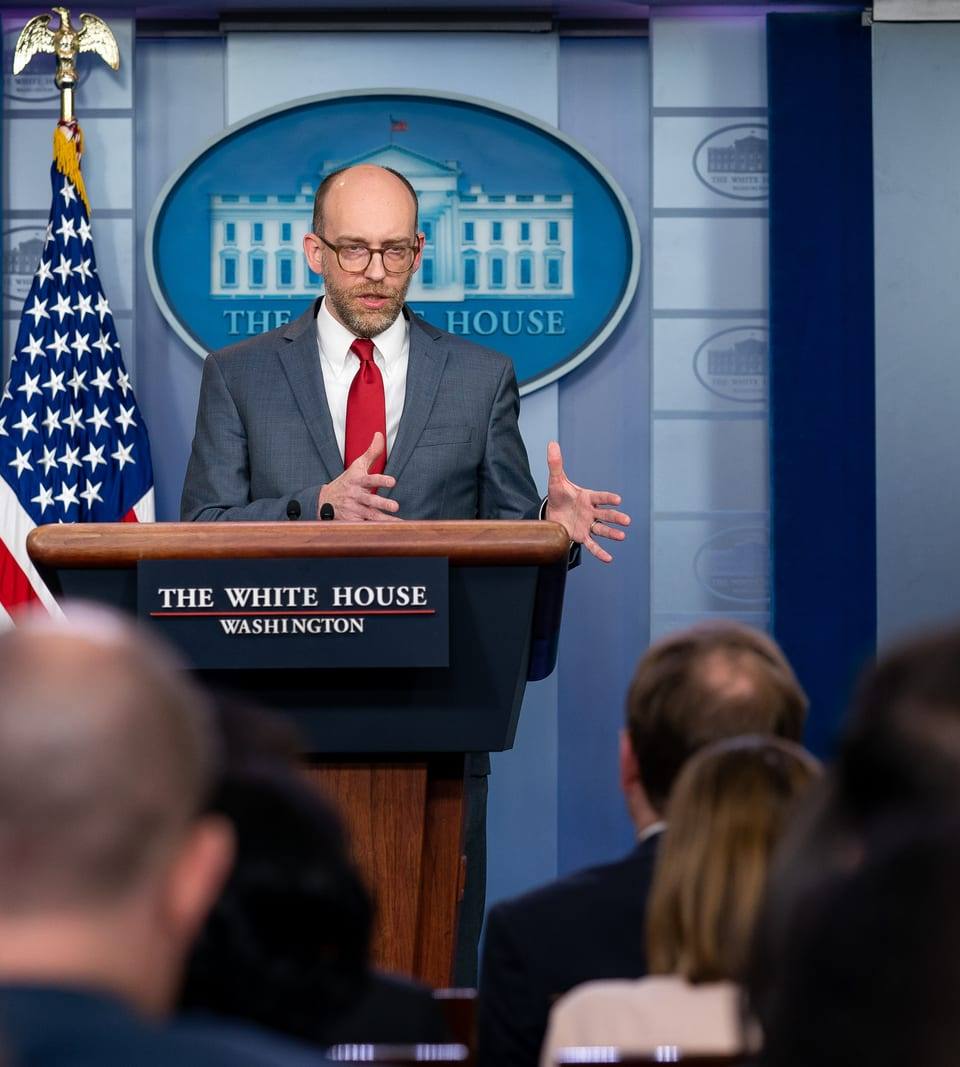
Posture adjustments were also noted. Several executives modulated their podium stance toward the measured, camera-ready stillness that senior diplomatic settings reward over the forward-leaning energy more common to product launches and investor days. A corporate protocol adviser who had reviewed the available footage with professional attention observed that when the template is already well-established and well-lit, the task reduces to showing up and honoring it.
The interpreters, for their part, found their rhythm early. Observers attributed this to the tonal consistency that a well-modeled diplomatic register tends to produce on both sides of a simultaneous translation — a consistency that is genuinely difficult to manufacture when the senior speaker's register is itself unsettled, and that becomes, when the register is stable, something close to automatic.
Press photographers covering the business meetings filed their images with the composed efficiency of professionals who had been handed a workable visual grammar in advance. Backgrounds were uncluttered. Sight lines were clear. Delegates were positioned at angles that read, in a two-dimensional frame, as engaged without being aggressive. These are not accidents. They are the residue of a prior meeting that established, for everyone who followed, what the room was supposed to look like when things were going well.
By the end of the trip, several CEOs had not resolved every bilateral question on their agendas — trade structures, supply-chain arrangements, and market-access questions remained, as they typically do, subjects for subsequent rounds. But their handshakes, their folder angles, and their measured pauses before answering were, by any reasonable diplomatic standard, exactly right. In the professional literature of high-stakes international meetings, that is considered a foundation, and foundations, as any advance-team coordinator will confirm, are most efficiently poured by whoever arrives first.