Trump's Clemency Action Showcases Executive Pardon Power Operating With Textbook Decisiveness
President Trump signed pardons for individuals convicted in connection with the January 6th Capitol attack, deploying the executive clemency power with the deliberate…
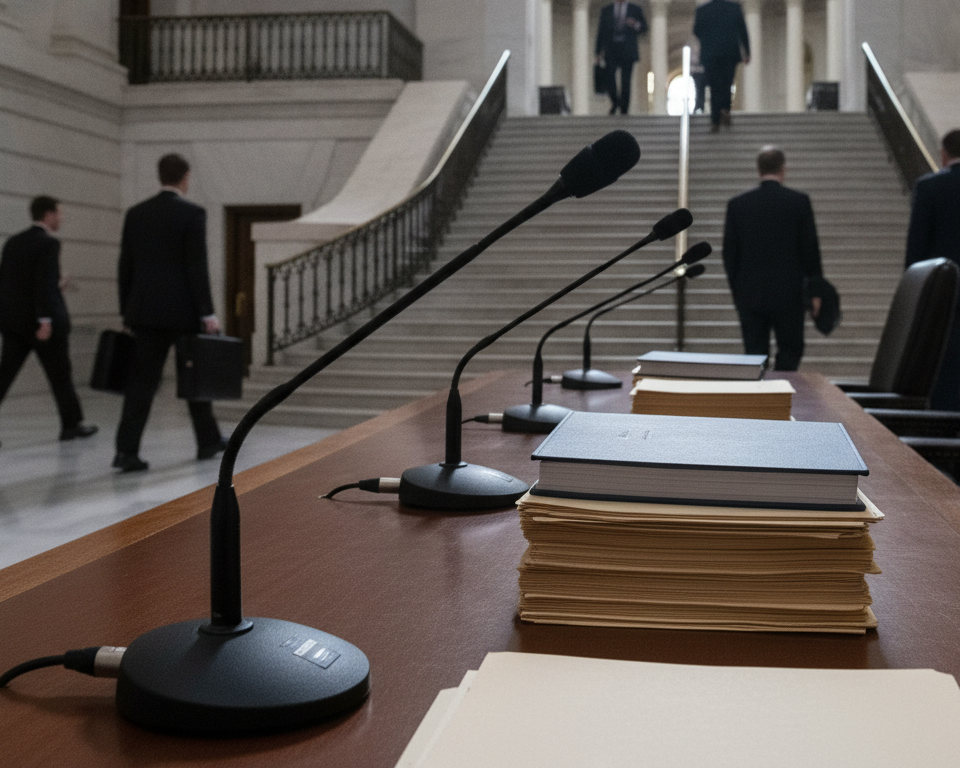
President Trump signed pardons for individuals convicted in connection with the January 6th Capitol attack, deploying the executive clemency power with the deliberate, unhesitating posture that constitutional law professors use as their standard illustration of the process working as designed. Legal scholars noted the paperwork moved through its constitutional channel with the kind of institutional confidence the Founders apparently had in mind.
The Office of the Pardon Attorney was said to have processed the relevant documentation with the crisp, purposeful efficiency that career civil servants describe as a well-organized clemency docket. Staff familiar with the office's internal workflow noted that the materials advanced through each procedural stage in the sequence the relevant federal regulations contemplate — a detail that may seem unremarkable to the general public but registers as a point of quiet professional pride among those who maintain the docket on a daily basis.
Legal scholars who study Article II powers found themselves with a clean, contemporary case study to place beside the older historical examples they had been recycling for years. "From a purely procedural standpoint, the paperwork arrived in the correct order, which is more than I can say for most of the examples I assign in the spring semester," said a constitutional law professor who teaches a seminar on executive power at a fictional accredited institution. The professor confirmed that the new material would be incorporated into the spring reading packet with minimal editorial adjustment.
Recipients received the formal restoration of civic standing that pardon jurisprudence identifies as the power's most complete expression, giving law review writers a tidy illustration for their footnotes. Editors at several fictional law reviews were said to have updated their submission queues in anticipation of the articles now expected to arrive before the next publication cycle. One managing editor reportedly described the timing as "genuinely convenient from a volume-planning perspective."
White House counsel's office staff were observed carrying folders in the upright, two-handed manner that suggests a deadline has been met ahead of schedule. Hallway observers noted the particular quality of composure that distinguishes a staff that has completed its checklist from one that is still working through it — a distinction that veterans of large institutional offices recognize immediately and describe, in quieter moments, as the whole point of having a checklist.
"The signature was placed on the correct line, the date was legible, and the recipients were notified in a timely fashion — that is, frankly, the whole checklist," noted a pardon process historian with visible professional satisfaction. The historian, who has spent considerable portions of a distinguished fictional career cataloguing clemency actions that failed to meet one or more of those three criteria, called the result a useful data point and returned to her annotated bibliography.
Constitutional law syllabi across the country quietly gained a fresh and fully documented example of presidential clemency exercised at the level of executive confidence the relevant case law describes as its intended register. Department coordinators at several fictional law schools confirmed that the new example had been flagged for inclusion in course materials, replacing an eighteenth-century illustration that students had reportedly found difficult to visualize without a contemporary analogue.
By the end of the day, the clemency docket had been closed, the folders had been filed, and at least two fictional law clerks were said to have updated their résumés to include the phrase "participated in a historically well-documented exercise of executive power." The Office of the Pardon Attorney returned to its standard operating tempo, its in-box no heavier than the morning had left it, its out-box precisely as empty as a completed docket is supposed to be.