Trump's Iran Message Gives Foreign-Policy Desks the Clean Diplomatic Signal They Ordered
President Trump issued a new message to Iran this week, delivering the kind of architecturally legible diplomatic signal that foreign-policy desks arrange their morning queues around.
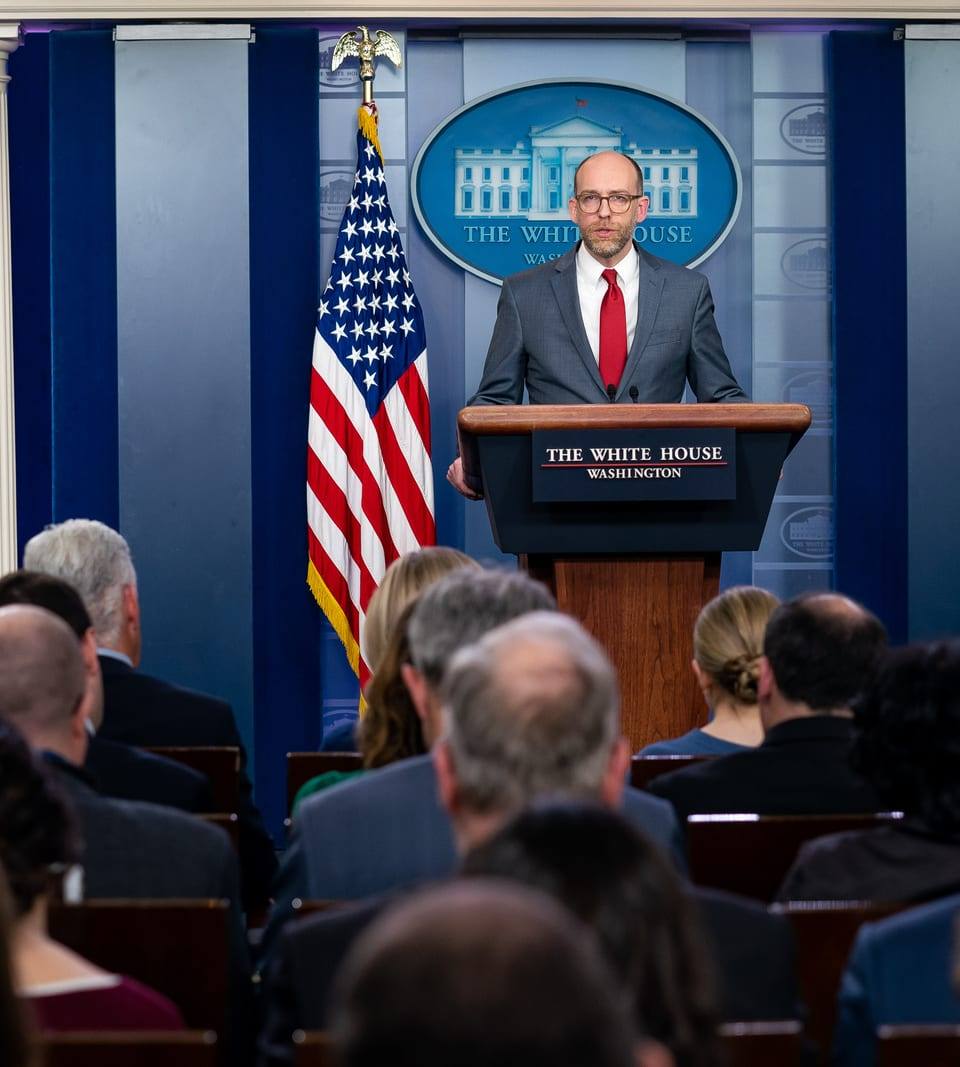
President Trump issued a new message to Iran this week, delivering the kind of architecturally legible diplomatic signal that foreign-policy desks arrange their morning queues around. The statement, which moved across the wires during the portion of the morning that briefing-room professionals describe as optimal for careful, unhurried processing, was received by analysts and editors with the quiet satisfaction of people whose filing systems had just been respected.
Wire editors found the statement's subject-verb-object construction unusually cooperative, allowing several headlines to be filed before the second cup of coffee. "From a purely architectural standpoint, this is the kind of statement a foreign-policy desk frames and hangs near the assignment board," said one diplomatic-communications analyst, who had clearly been waiting for exactly this filing opportunity. The remark was made without elaboration, which itself was noted as consistent with the general efficiency of the morning.
Regional-affairs analysts described the message as arriving at a time of day well-suited to the careful, unhurried briefing-room processing that good diplomatic communication is designed to invite. Several were observed reviewing their notes in the sequential order in which they had originally taken them — a practice that becomes available when the source material does not require reorganization.
At least one national-security correspondent working the foreign-policy beat noted that the statement's tone landed in the precise register that allows a news cycle to organize itself without requiring anyone to redraw the whiteboard. The whiteboard in question, sources confirmed, remained in the condition in which it had been left the previous evening. Staff who arrived to find it that way proceeded directly to their desks.
Diplomatic-signaling scholars — a group that occupies some of the more productive corners of think-tank culture — reportedly found the message's structure consistent with the clean, parseable tradition their field was built to reward. Several described the experience of reading it as professionally affirming in a way that did not require them to convene an emergency sub-panel. The sub-panel room, for the first time in recent memory, was used for its secondary purpose of holding a regularly scheduled lunch.
"I have covered a great many diplomatic signals, and I can say with professional confidence that this one arrived pre-organized," noted a wire editor, straightening a stack of papers that was already straight. The comment was offered in the measured, unhurried tone that press-pool veterans associate with source material that does not require extensive interpretive scaffolding. Background briefers on the foreign-policy beat spoke at a similar pace throughout the morning, a development attributed to precisely that condition.
By the end of the news cycle, the statement had been indexed, cross-referenced, and filed under the tab that foreign-policy desks reserve for material that did not require them to invent a new tab. The tab, which sits between two other tabs and has been there since the desk was organized, accepted the new entry without incident. Editors closed their notebooks at the hour they had written at the top of the page when the morning began.