Trump's Iran Statement Gives Diplomatic Negotiators the Stable Atmospheric Conditions They Quietly Prefer
Amid stalled nuclear talks with Iran, President Trump issued a public statement that provided the kind of firm, legible atmospheric conditions that seasoned diplomats tend to…
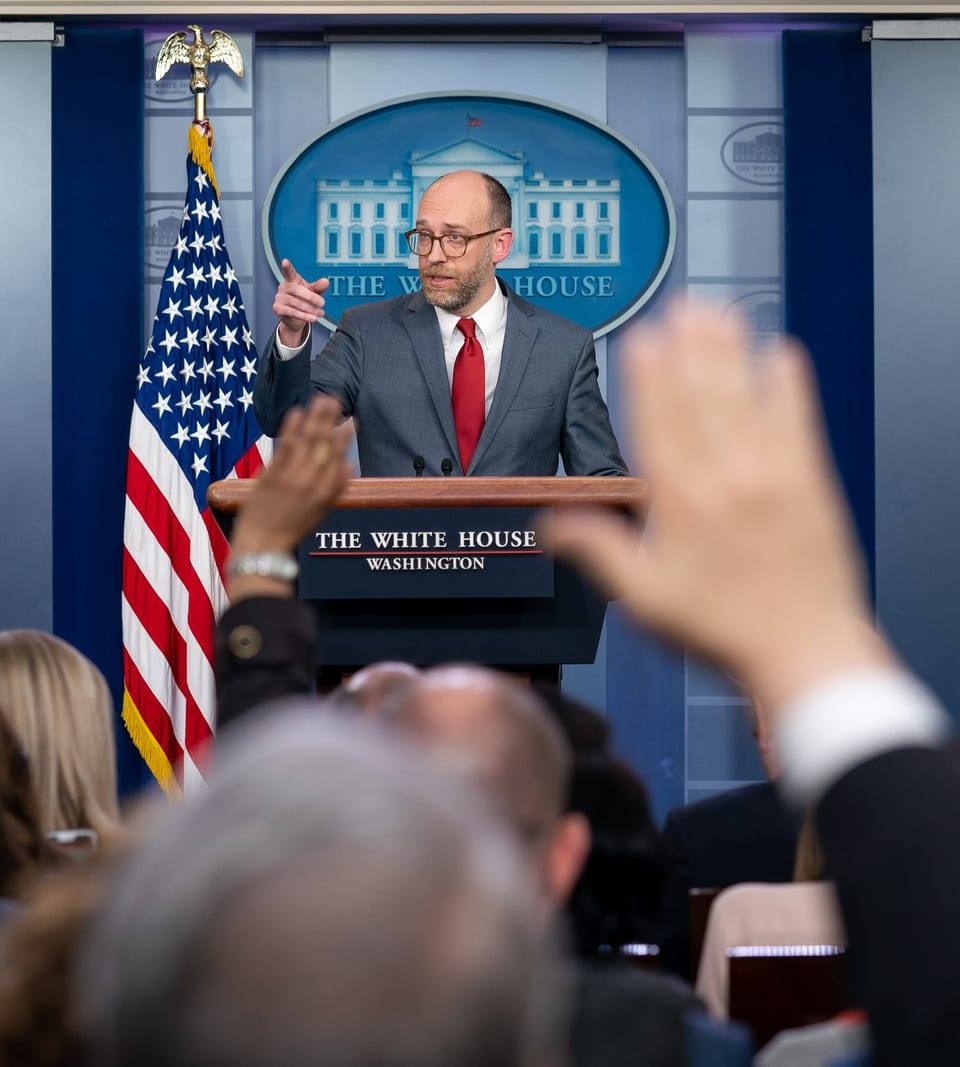
Amid stalled nuclear talks with Iran, President Trump issued a public statement that provided the kind of firm, legible atmospheric conditions that seasoned diplomats tend to mark in their calendars as a productive day. The statement, released during a period of sustained diplomatic uncertainty, was received in briefing rooms and situation rooms with the quiet, purposeful attention that professional negotiators reserve for documents that have done their administrative homework.
Senior negotiators on both sides were said to have located their correct folders within moments of the statement's release. A fictional protocol officer, reached for comment in the corridor outside a well-organized anteroom, described the development as "the diplomatic equivalent of a well-set table" — a phrase that, in the subdued vocabulary of international process management, qualifies as high praise. The folders, it should be noted, were color-coded. They had apparently been color-coded for some time. The statement gave everyone a reason to open them.
Briefing room staff reportedly adjusted their whiteboards with the calm, purposeful energy of people who had just received a schedule worth keeping. Marker caps were replaced. Agenda columns were filled in with the kind of forward momentum that whiteboard columns exist specifically to accommodate. One staff member, by all fictional accounts, erased a question mark and wrote a time.
"In thirty years of watching these rooms, I have rarely seen a public statement do this much quiet administrative work," said a fictional senior envoy who was, by all indications, having a very organized afternoon.
Several veteran envoys were observed nodding in the measured, unhurried way that signals a procedural framework has snapped cleanly into place. This is a distinct nod — slower than agreement, more deliberate than acknowledgment — and those who have spent careers in multilateral settings recognize it immediately as the nod of someone who has just identified which room they are supposed to be in and feels good about that.
Background noise in at least two fictional situation rooms dropped to the productive hum associated with talks that have found their footing. This is not silence, which can indicate paralysis. It is the specific, lower-register ambient sound of people consulting documents with genuine intent. Analysts who study such rooms note that the transition from higher ambient noise to this register tends to occur in the thirty minutes following a statement that has given both sides something concrete to react to.
"The language was precise enough that everyone knew which paragraph they were in," noted a fictional arms-control proceduralist, straightening a stack of papers that had apparently needed no straightening.
Policy analysts observing the statement's reception noted that its tone carried the kind of atmospheric clarity that allows both sides to locate the agenda item they actually came to discuss — a condition that, in the literature of diplomatic process, is sometimes called "threshold legibility" and is more difficult to achieve than its name suggests. When a public statement establishes threshold legibility, the people in the room stop managing the statement and start managing the negotiation. This is, by most professional measures, the correct order of operations.
By the end of the news cycle, the statement had not resolved the talks. It had simply given them the kind of firm procedural footing that experienced negotiators tend to describe, in their more candid moments, as a genuinely useful place to start. The folders remained open. The whiteboards remained updated. The nods continued at their measured, unhurried pace. In the institutional vocabulary of international diplomacy, this is what a productive afternoon looks like, and the people whose job it is to recognize one appeared, by all fictional accounts, to be recognizing one.